
The three most common materials in quality eyewear — TR90, acetate, and titanium — each have genuine advantages and genuine limitations. The right choice depends on your target market, your price positioning, and the customer experience you’re trying to create.
This is a practical comparison designed to help you make that decision, not a definitive ranking. The “best” material is the one that fits your customers and your business.
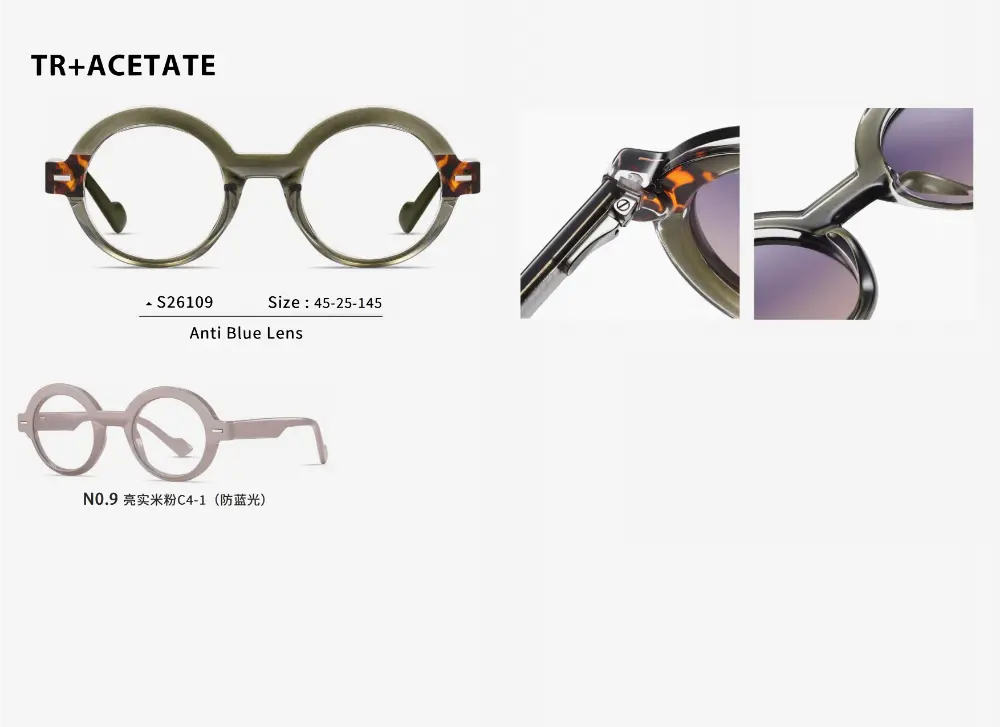
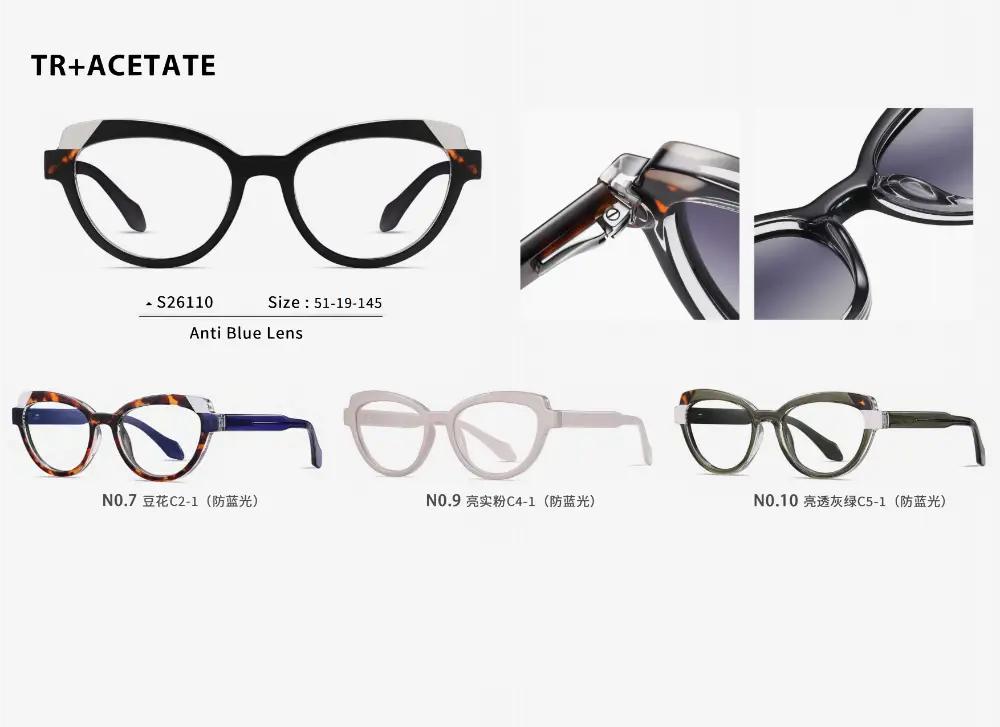
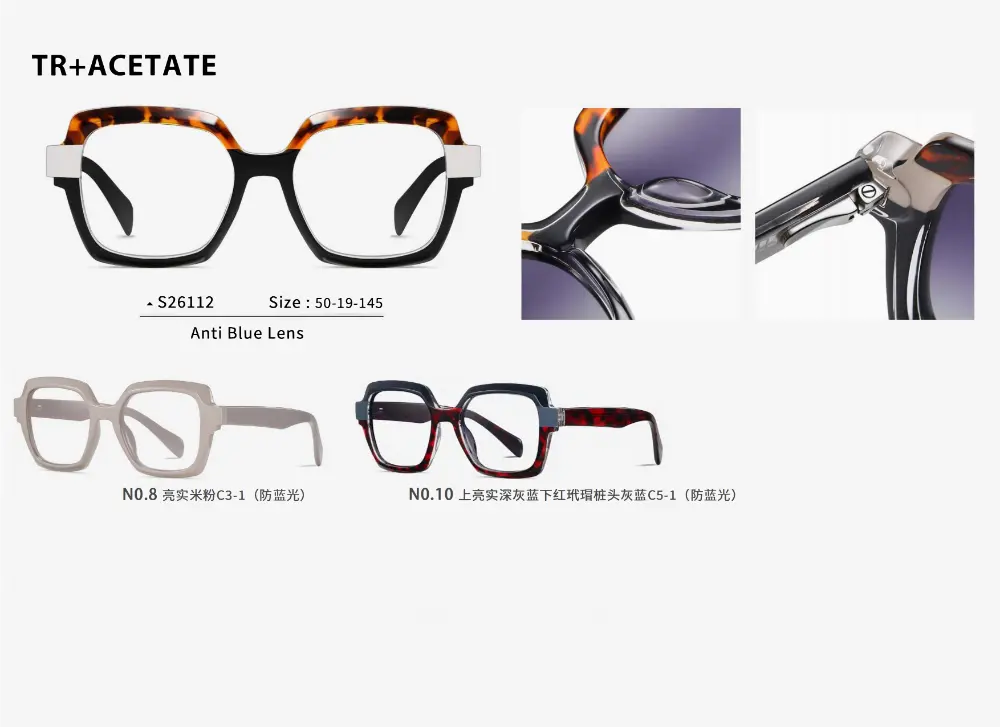
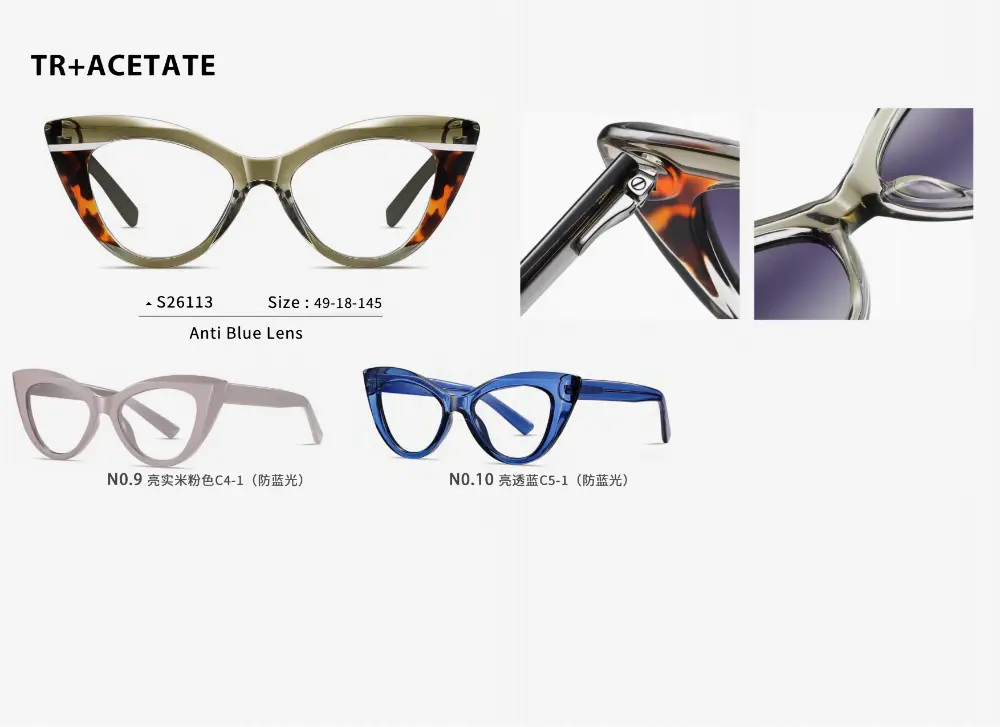
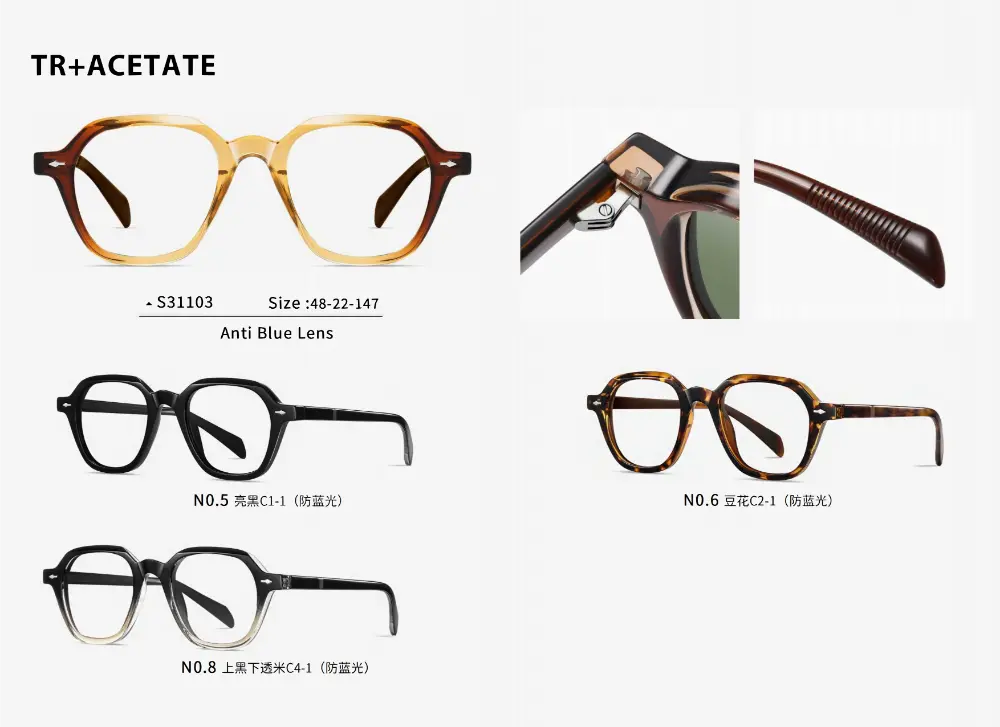
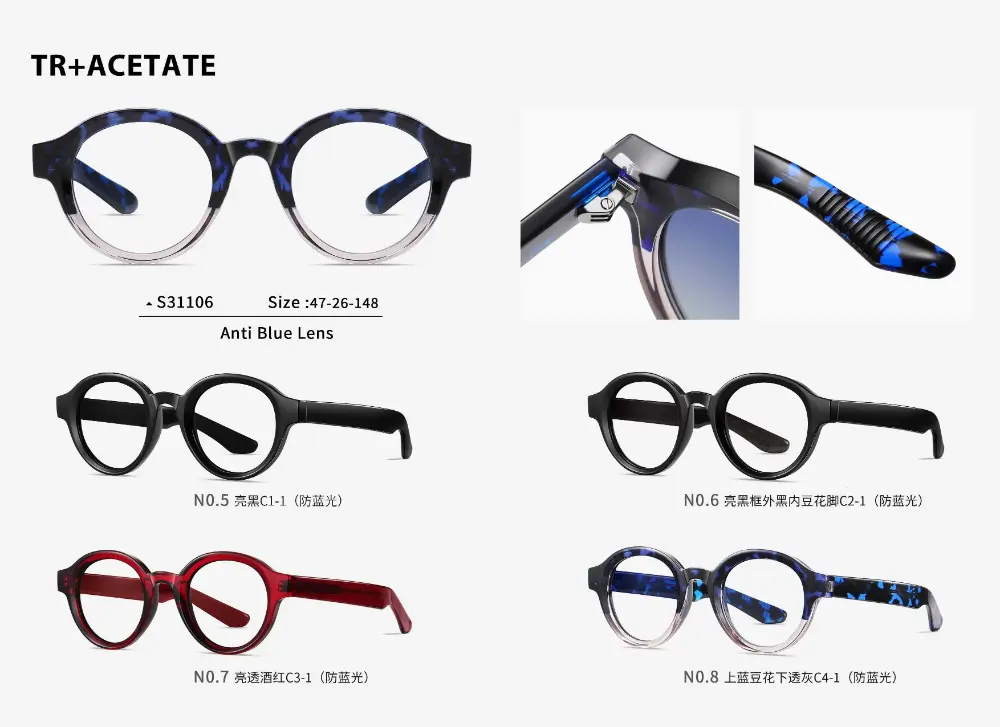
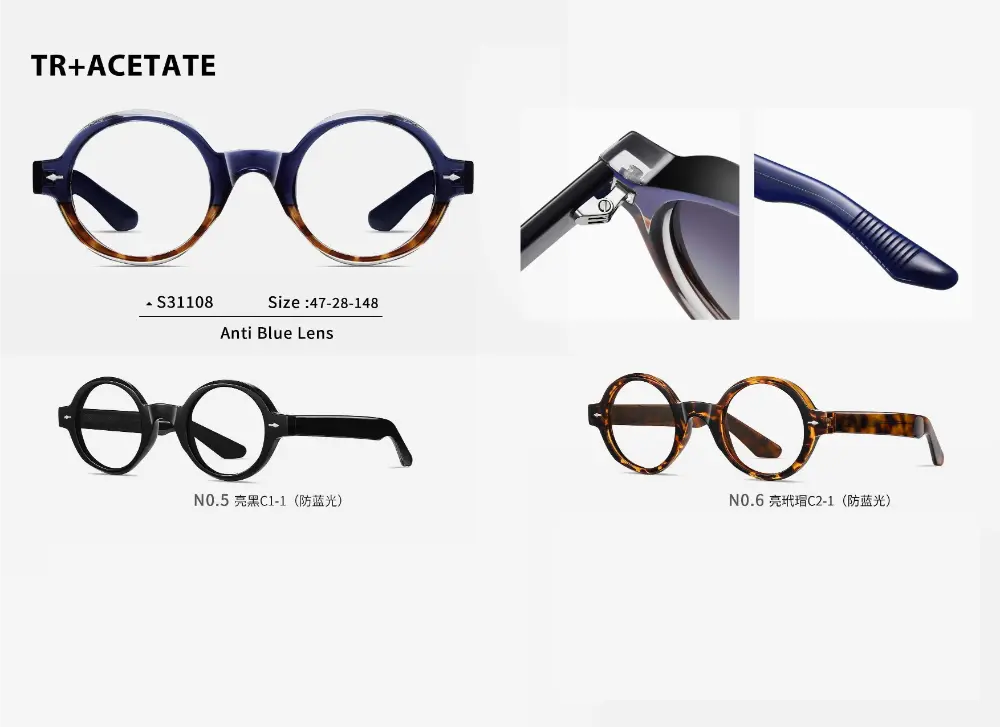
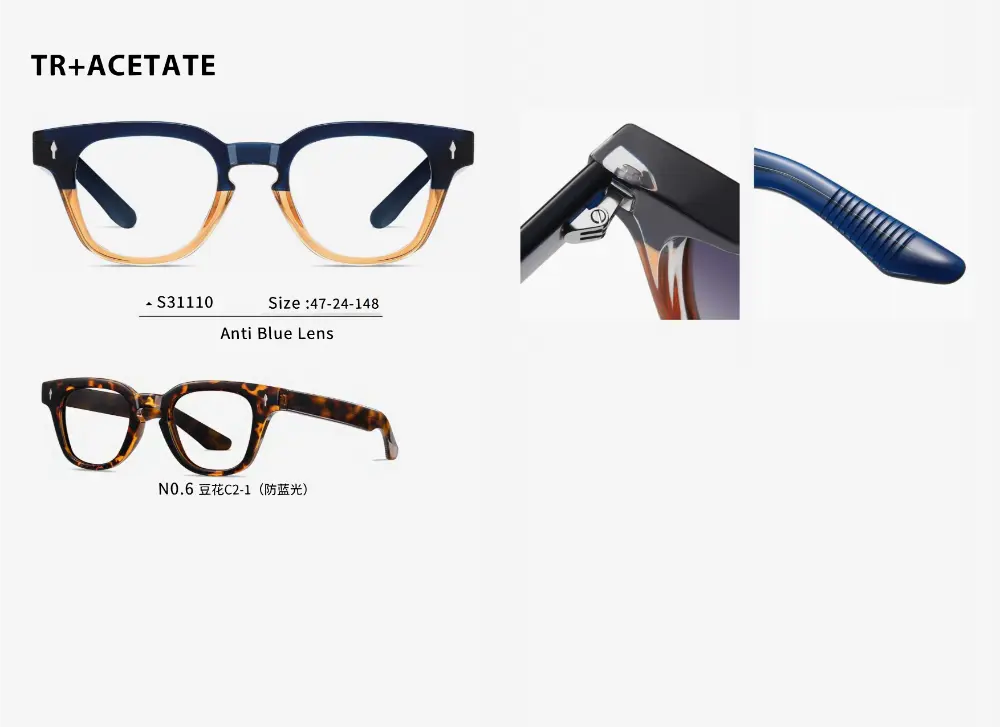
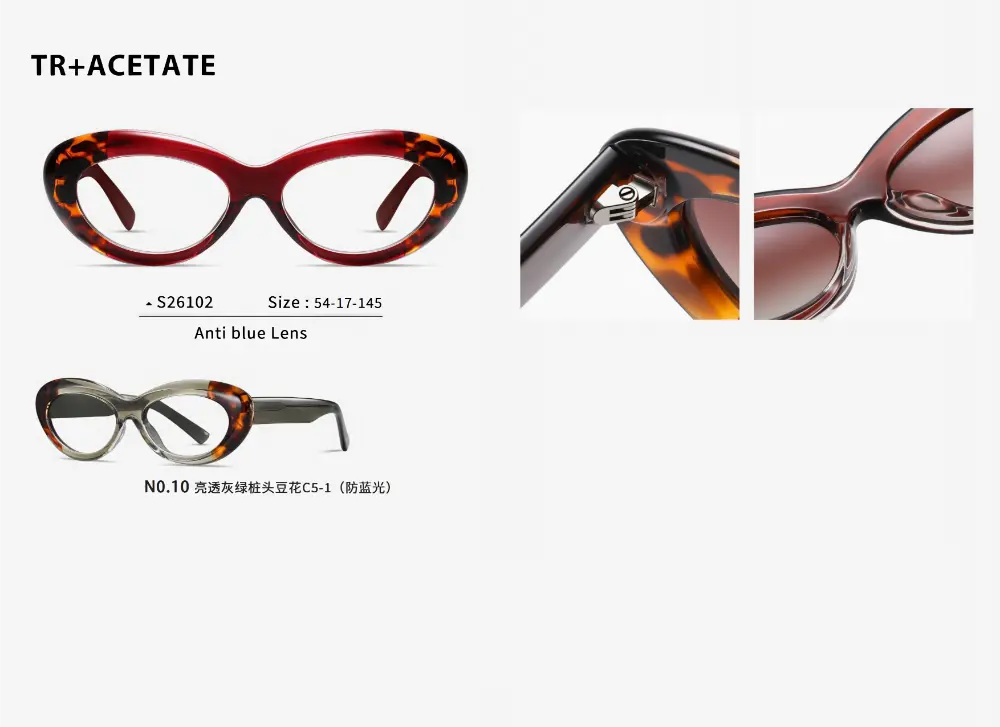
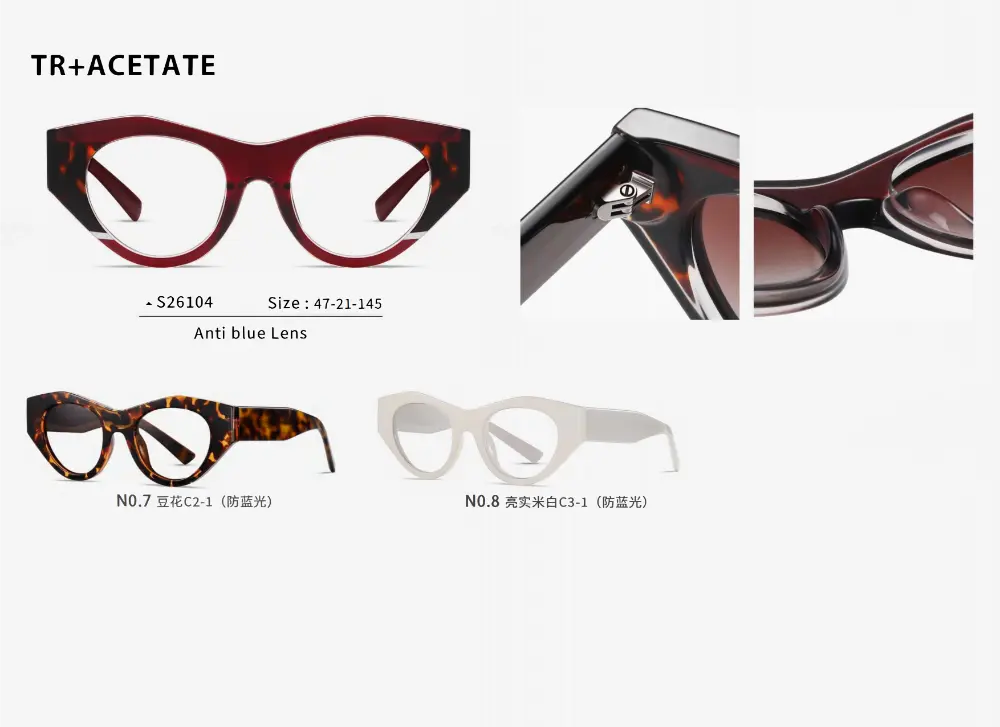
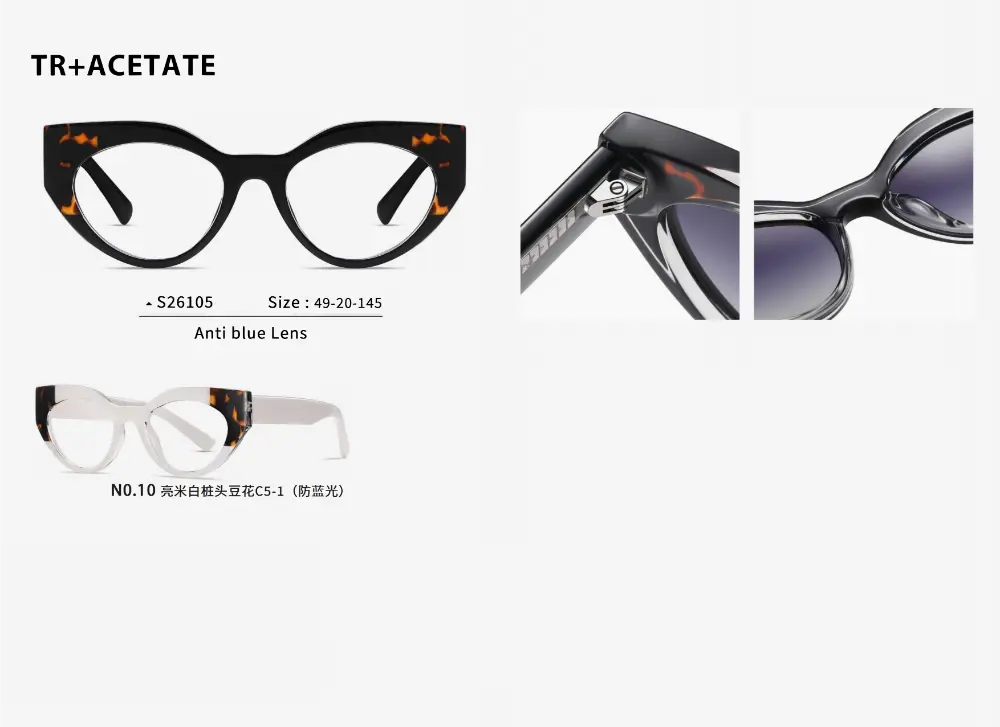
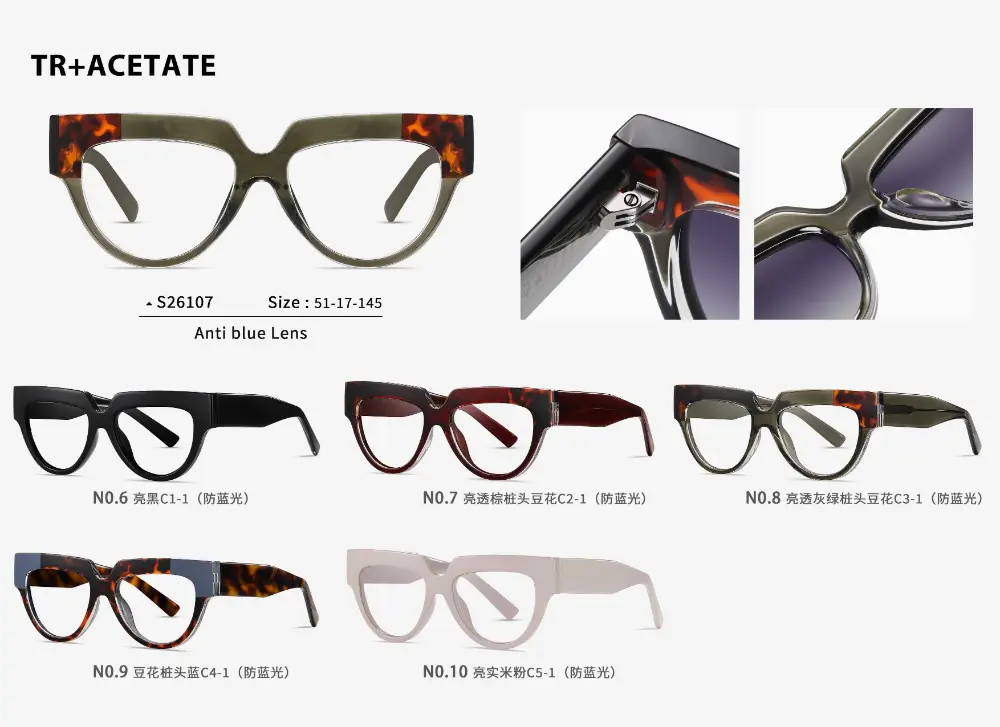
TR90: The Performance Value Champion
What it is: TR90 (SwissShield or equivalent nylon-based polymer) is an injection-molded thermoplastic used extensively in eyewear since the early 2000s. It’s a manufacturing-efficient material that produces consistent, durable frames at a competitive price.
The advantages:
- Weight: 12-16g per complete frame — lighter than acetate and most metals
- Durability: High impact resistance and flexibility; doesn’t crack like acetate can
- Cost: The most manufacturing-efficient of the quality frame materials
- Consistency: Injection molding produces highly consistent frames across large production runs
- Design range: Modern TR90 styles have moved well beyond sport-only designs into credible optical and fashion shapes
The limitations:
- Finish options: Primarily matte, semi-gloss, and solid colors. Deep, rich, or complex colorways are limited compared to acetate.
- Perceived quality: Despite excellent functional properties, TR90 is often perceived as a “budget” material by consumers — which can limit retail price positioning
- Repairability: TR90 frames are difficult to repair if they break; replacement is typically the only option
Best for: Value-oriented optical channels, sports and active eyewear, children’s eyewear, Amazon and e-commerce sellers, pharmacy and mass retail, gaming glasses, and buyers targeting the $30-80 retail price range.
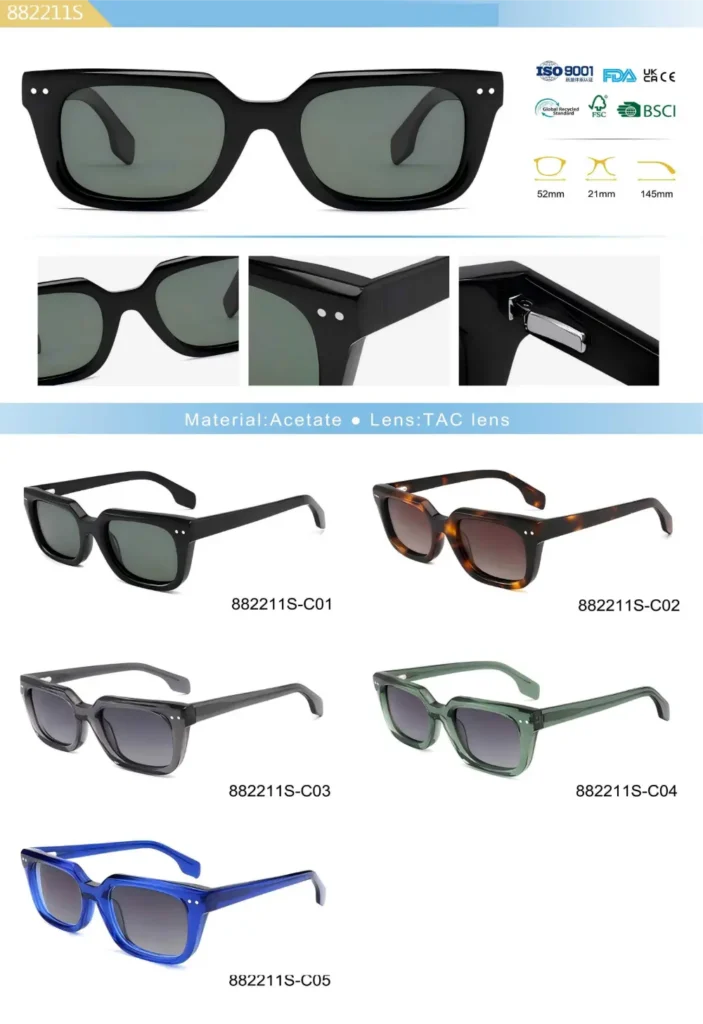
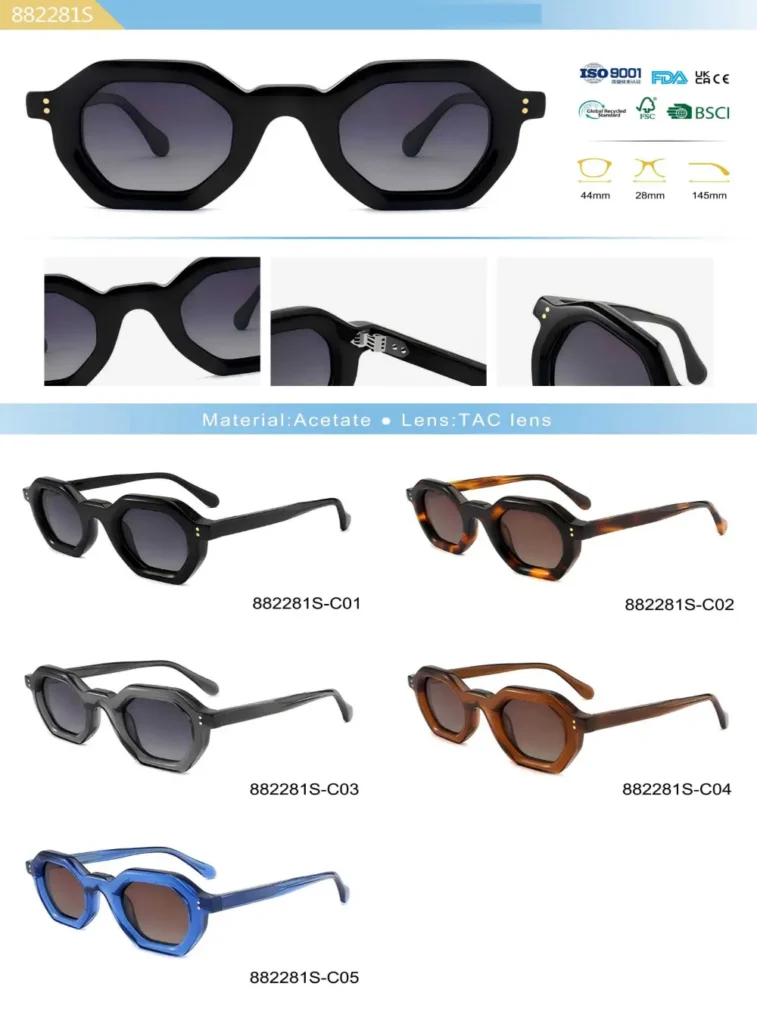
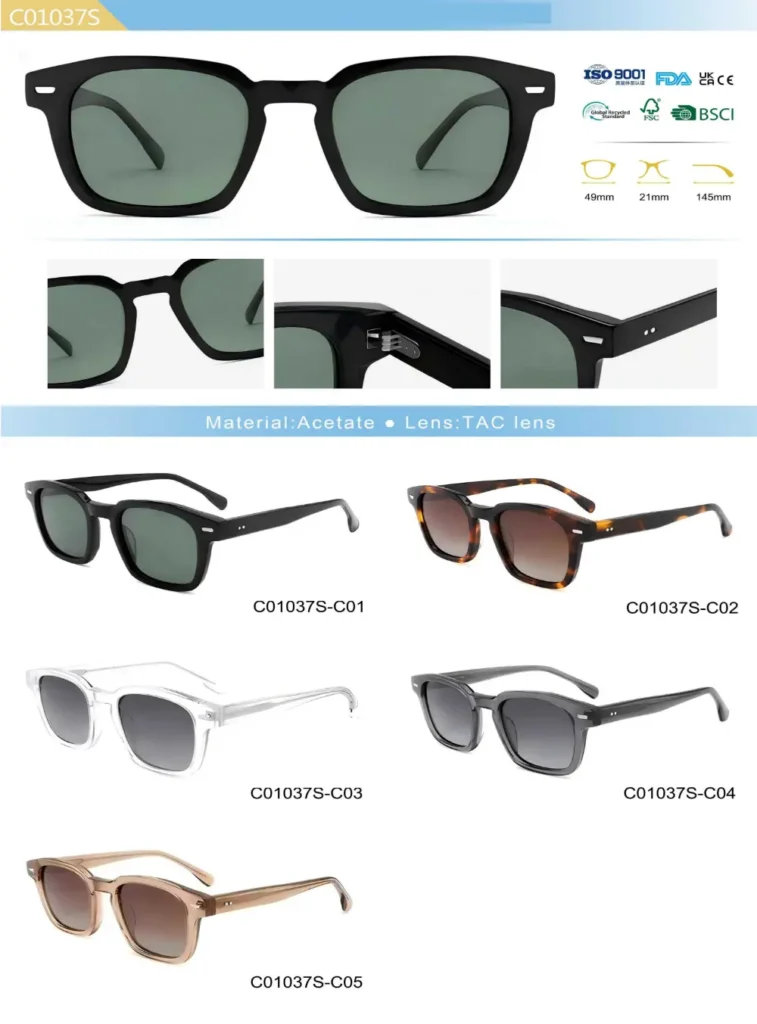
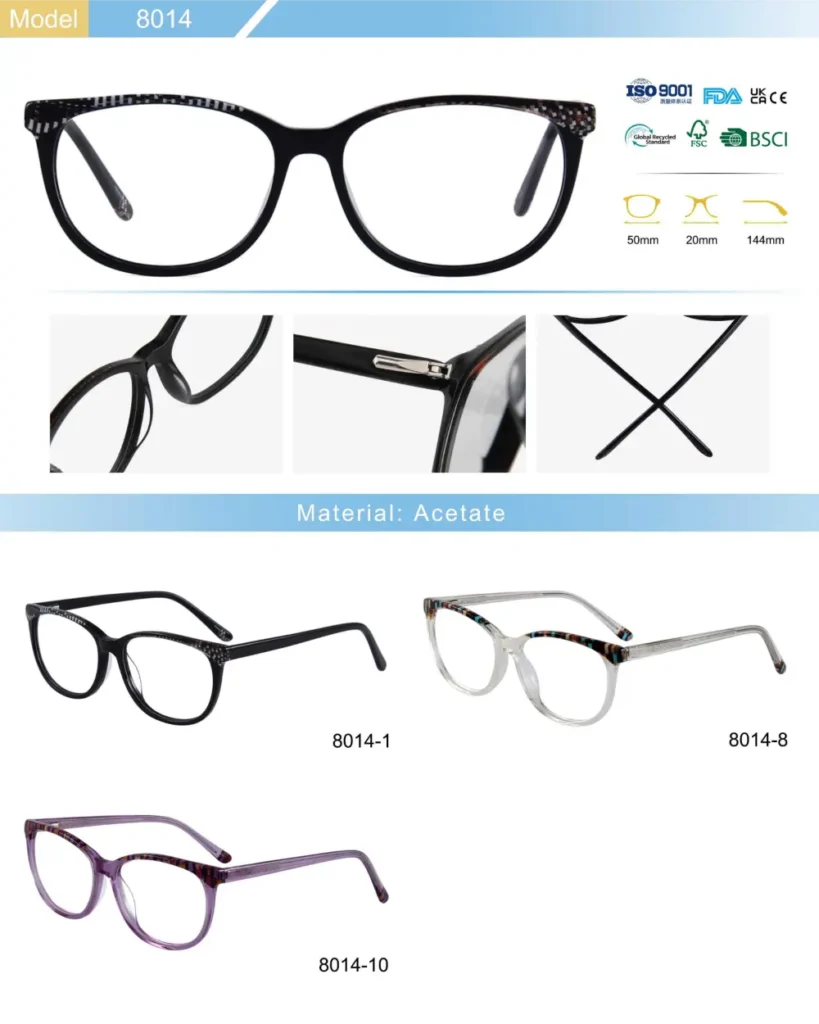
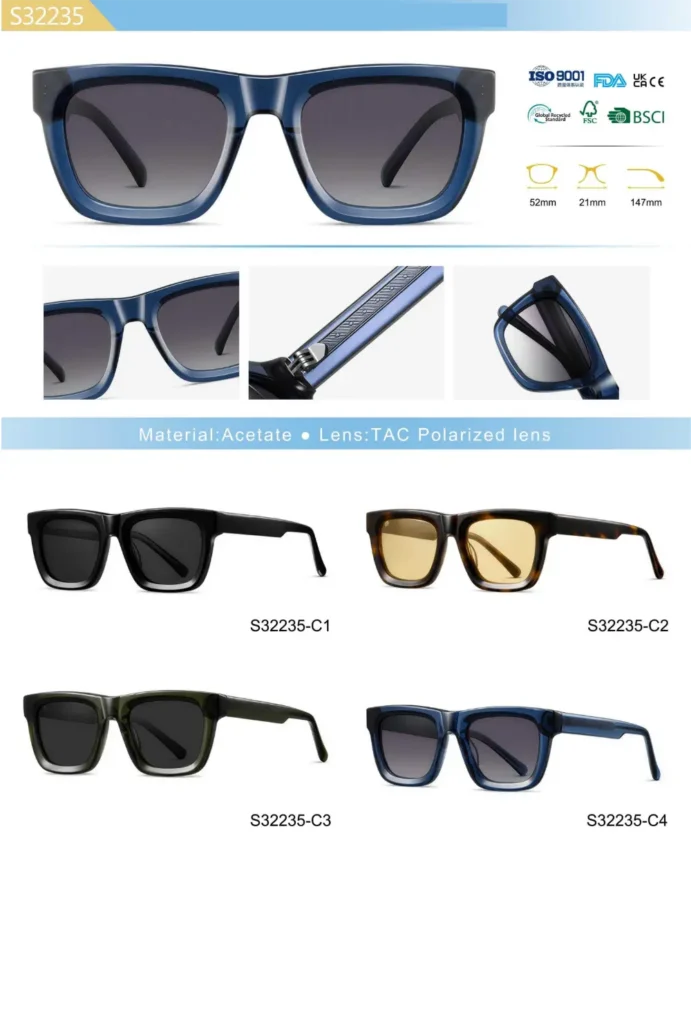
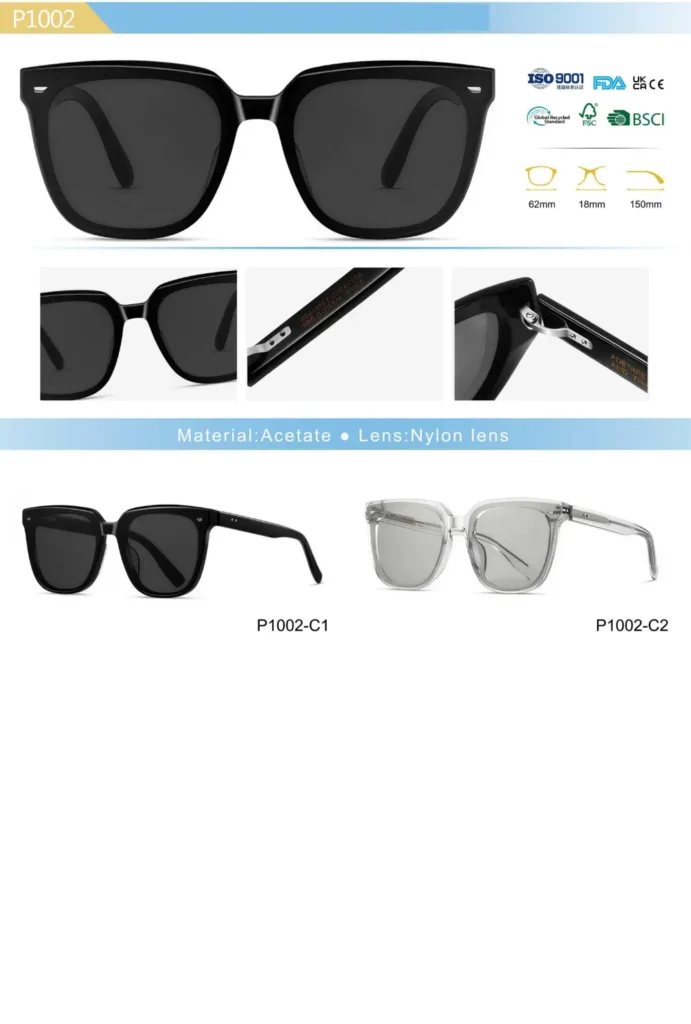
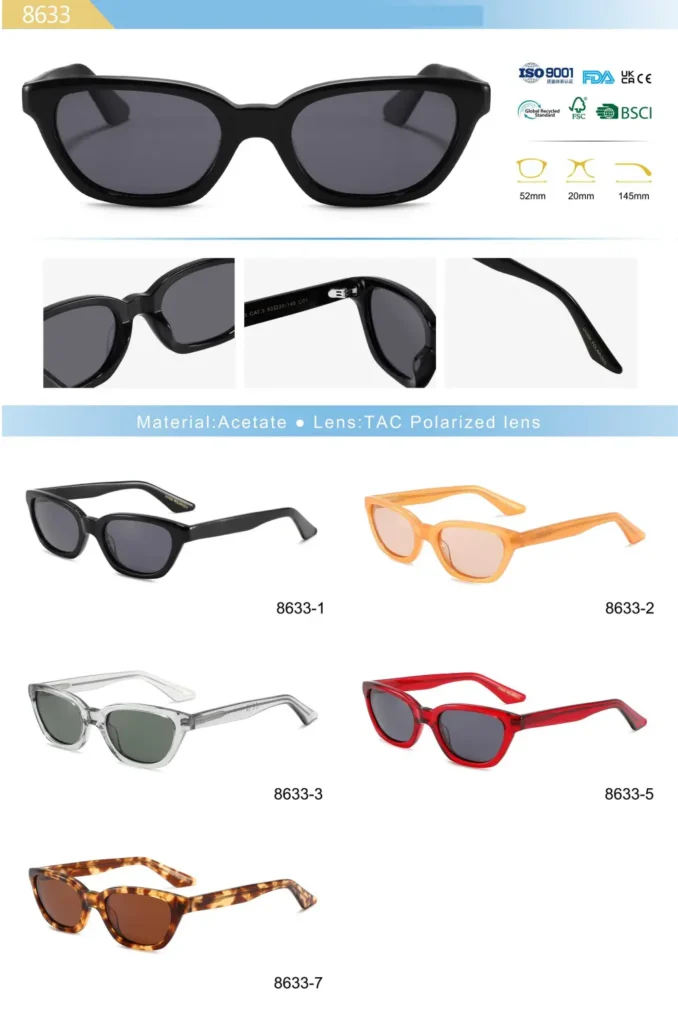
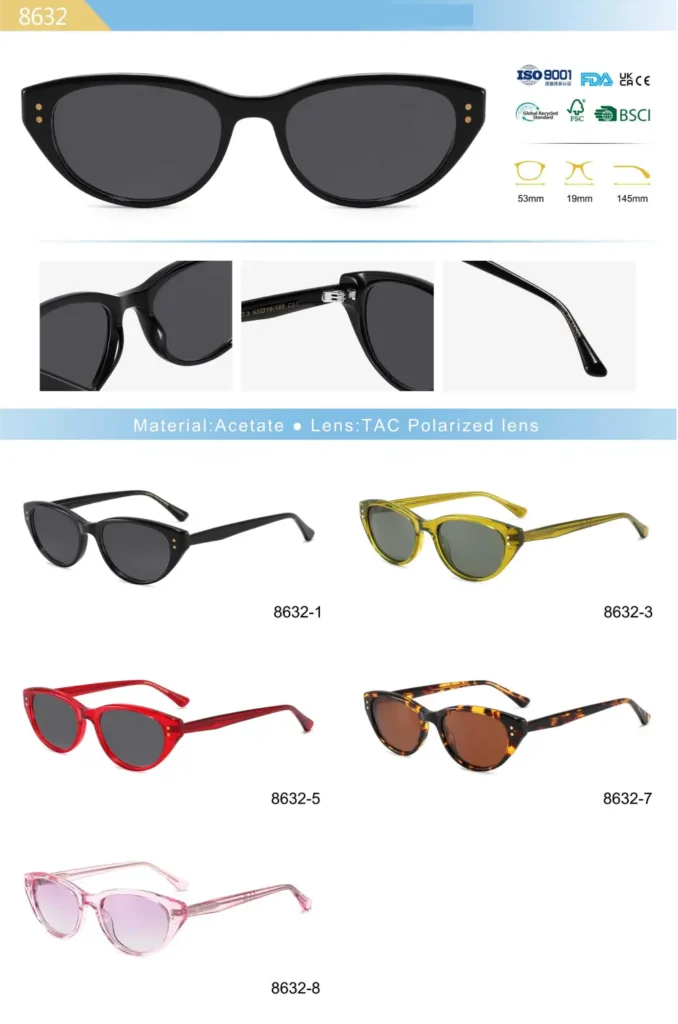
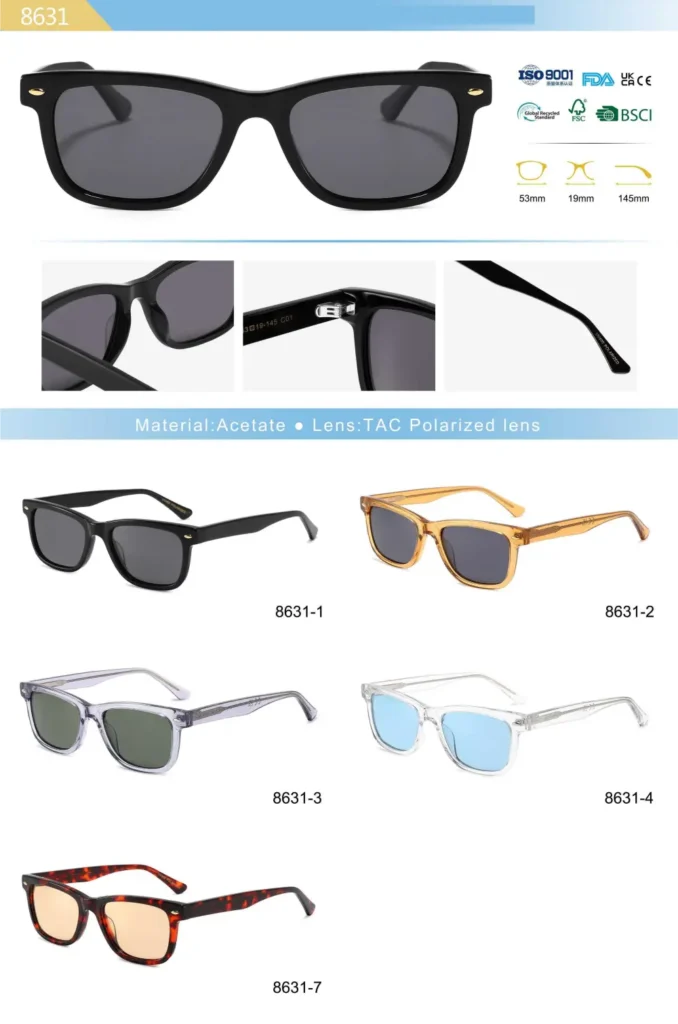
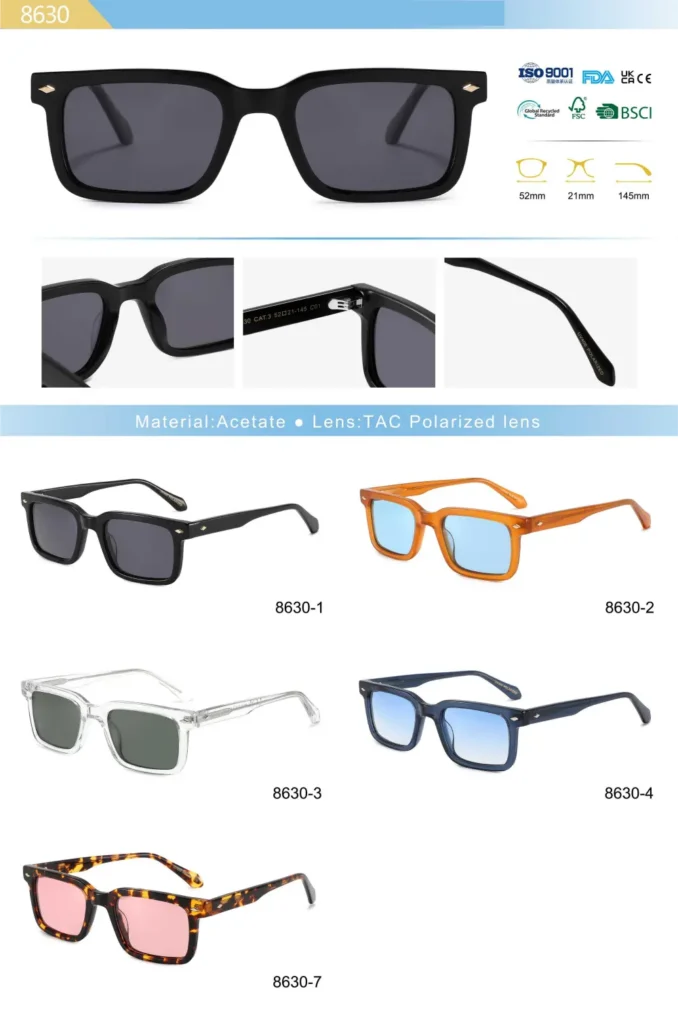
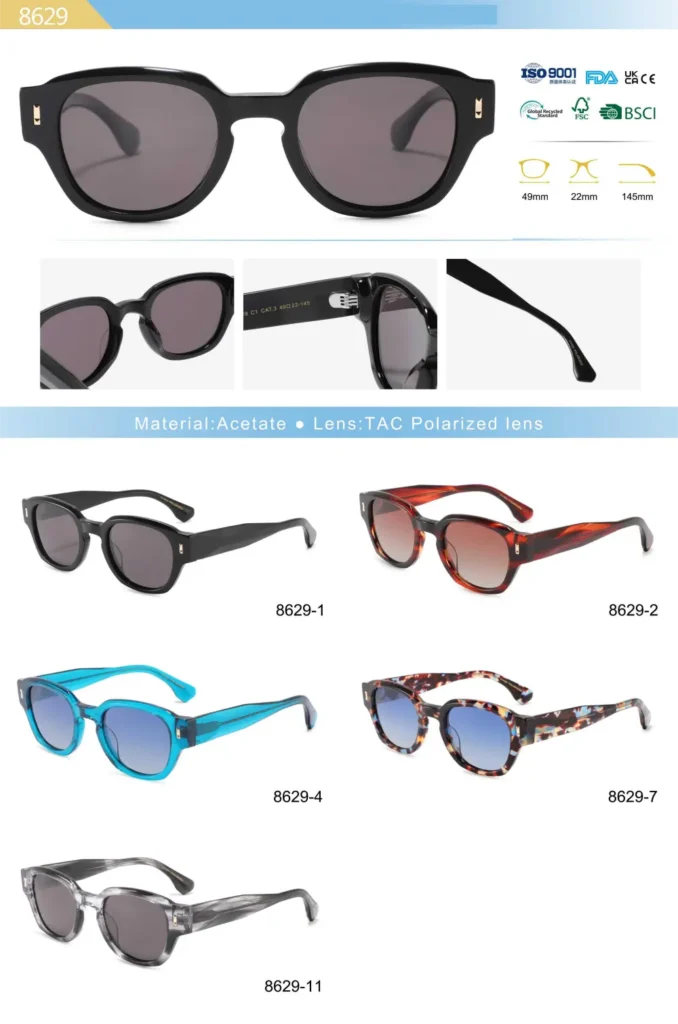
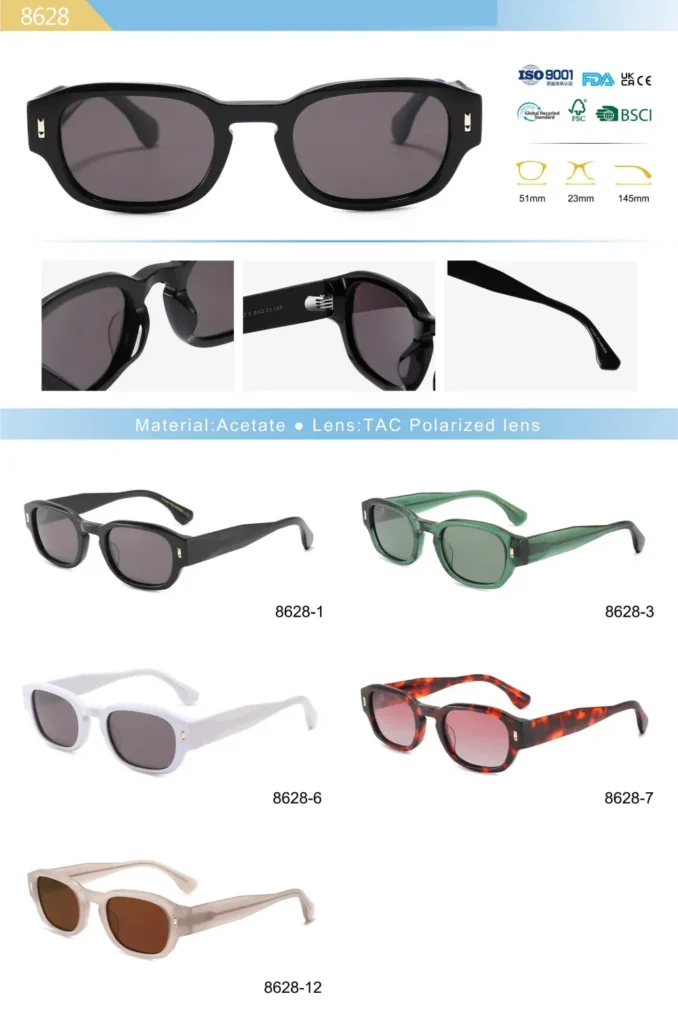
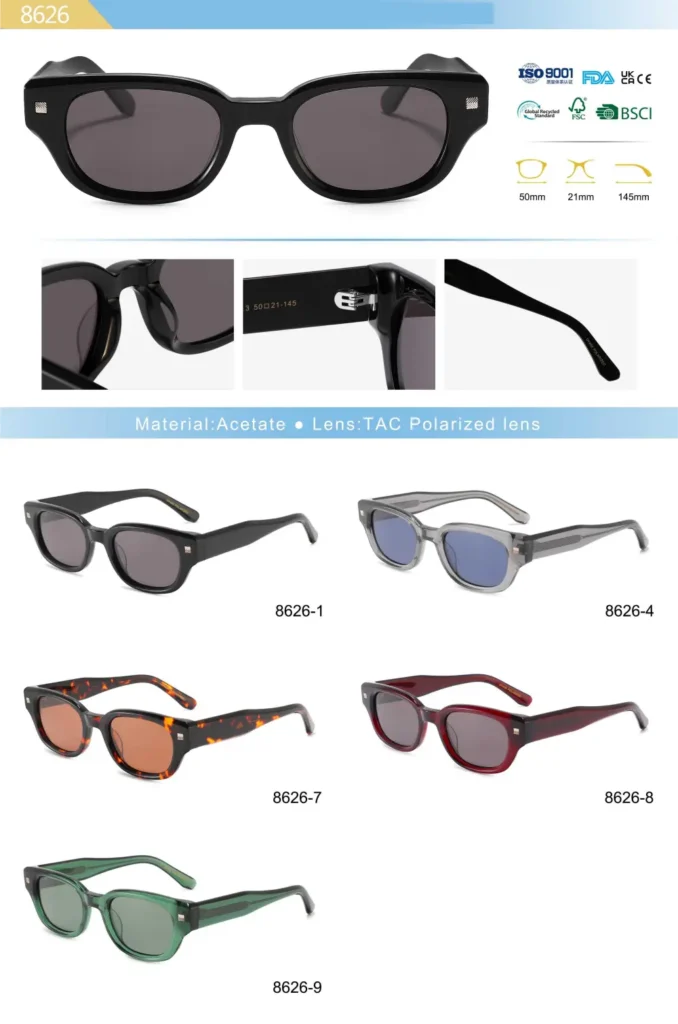
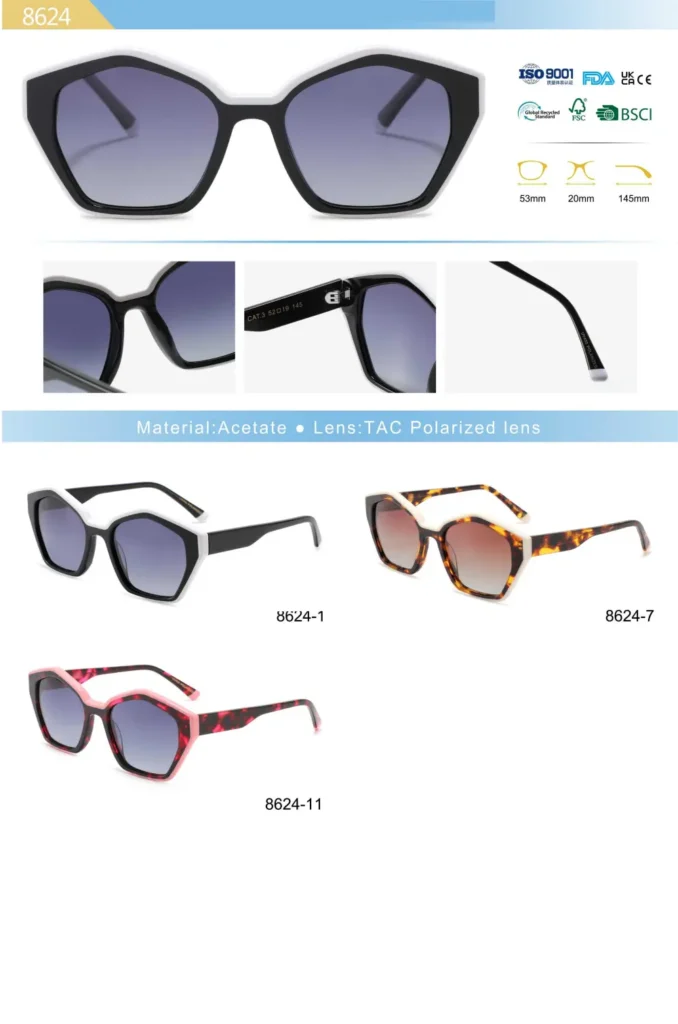
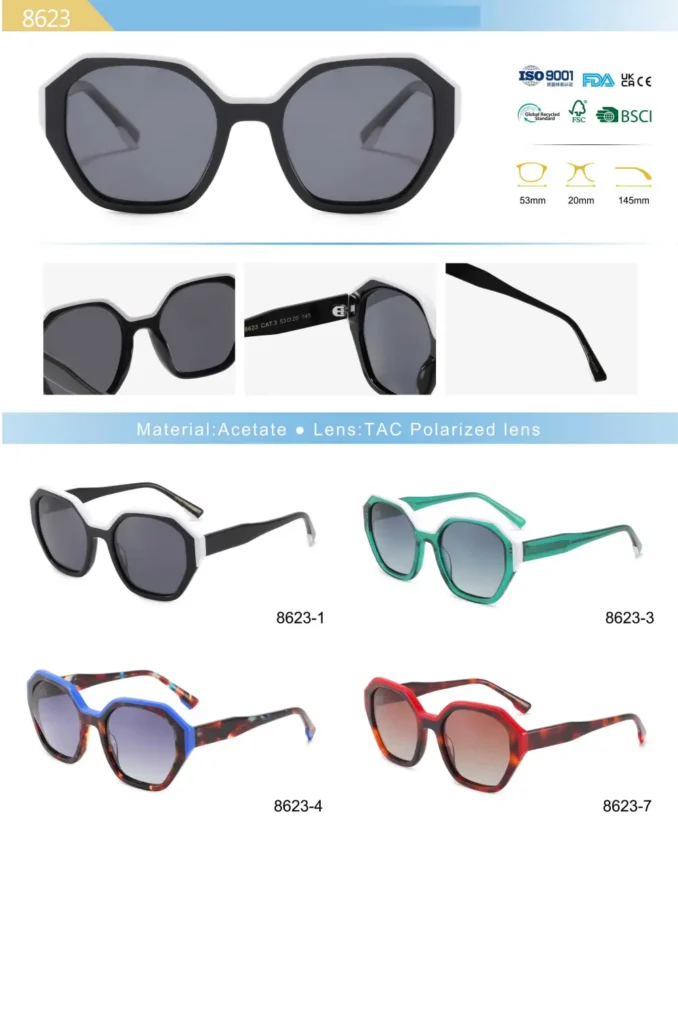
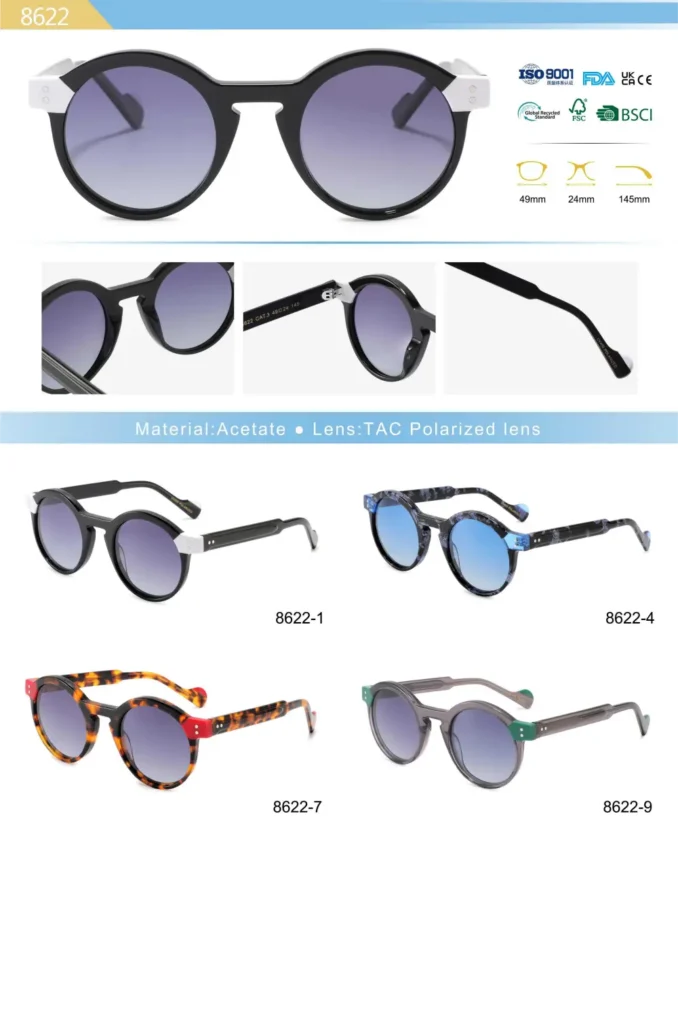
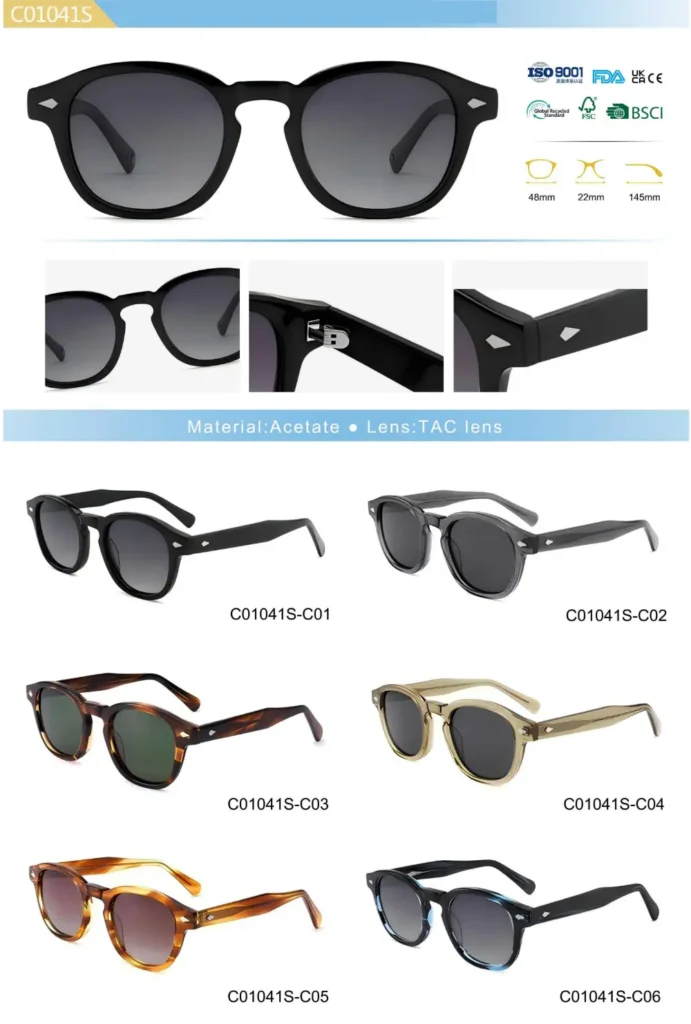
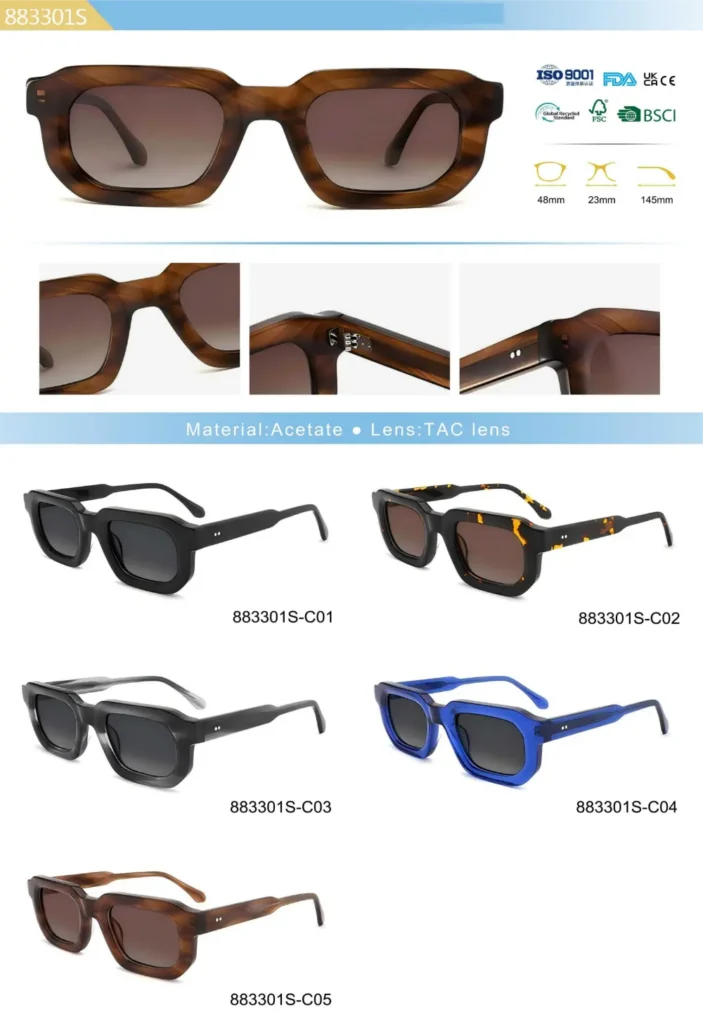
Acetate: The Design and Fashion Standard
What it is: Acetate (cellulose acetate, primarily from Mazzucchelli in Italy or Eastman in the US) is a plant-based polymer that is either cut from sheets (handcrafted acetate) or injection molded. The premium version is handcrafted from laminated acetate sheets that allow for layered colors and patterns impossible in any other material.
The advantages:
- Design flexibility: Layered acetate allows for unlimited color combinations, patterns, and visual depth. This is why acetate is the dominant material for fashion-forward optical frames.
- Finish quality: High-quality acetate has a depth, warmth, and visual richness that no other material matches. This is why luxury brands consistently use acetate.
- Adjustability: Acetate is easily adjusted by opticians using heat — it becomes malleable with gentle heating and holds its new shape when cooled. This is a practical advantage for the optical channel.
- Sustainability options: ISCC-certified bio-based acetate (Eastman Acetate Renew) and biodegradable S70 acetate are available for buyers with sustainability requirements
The limitations:
- Weight: 18-25g for a complete frame — heavier than TR90 or titanium
- Durability: Can crack under impact or develop stress fractures at the hinges over time. More delicate than TR90 or titanium.
- Cost: More expensive than TR90; premium acetate (Mazzucchelli) adds significant cost
- Production time: Hand-finishing is labor-intensive; production runs take longer than TR90
Best for: Fashion optical brands, premium independent opticians, retail chains with design-focused positioning, brands targeting $80-250 retail, EU market buyers with ISCC sustainability requirements.
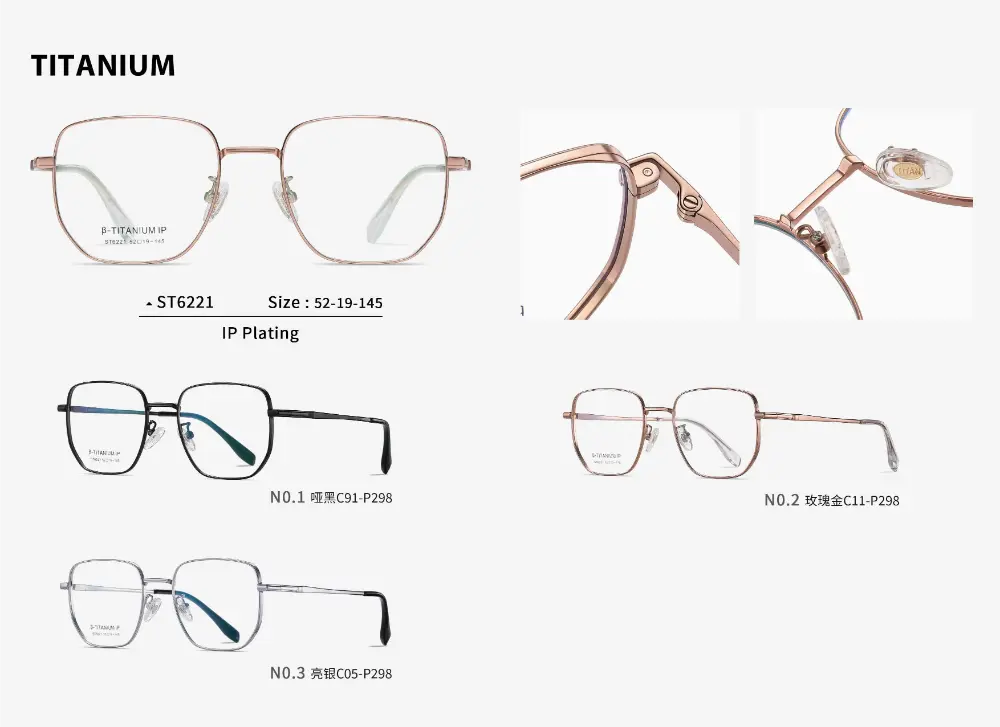
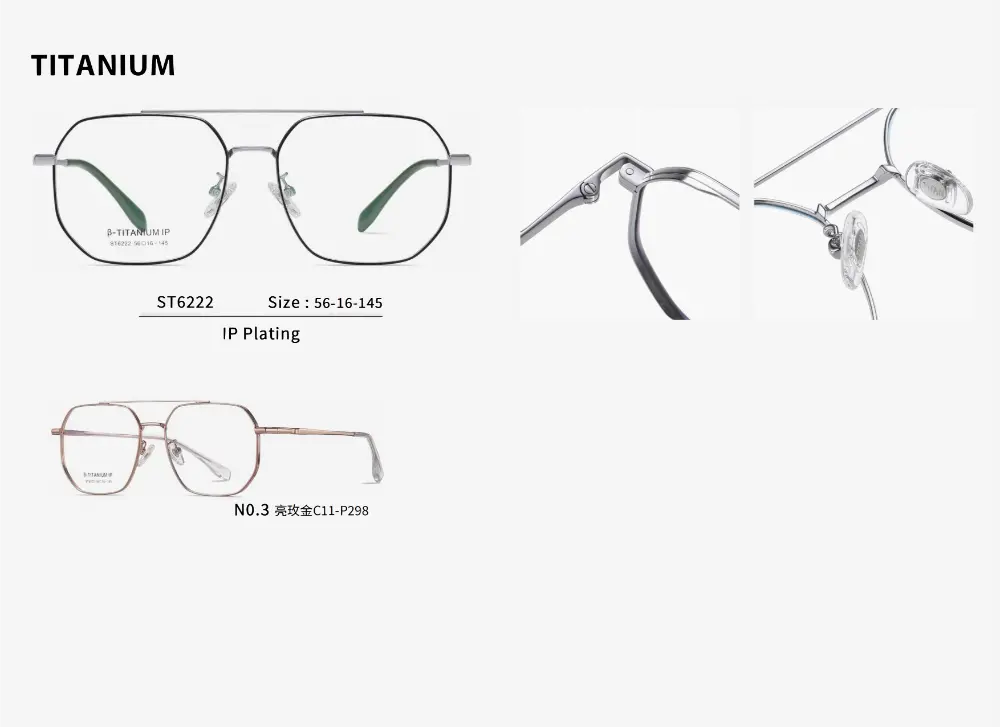
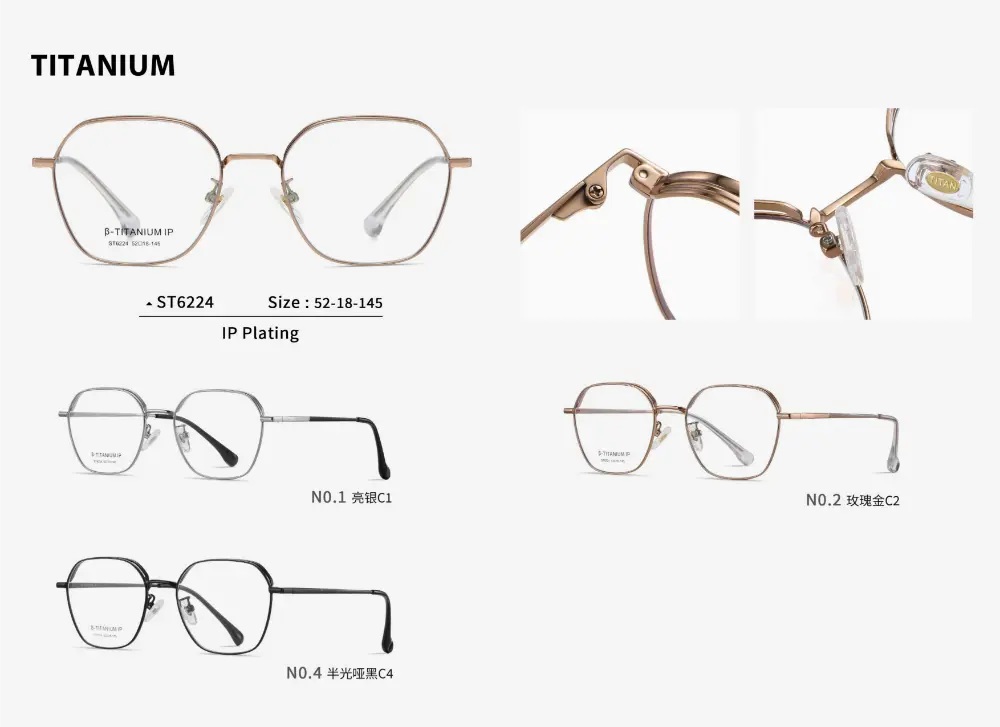
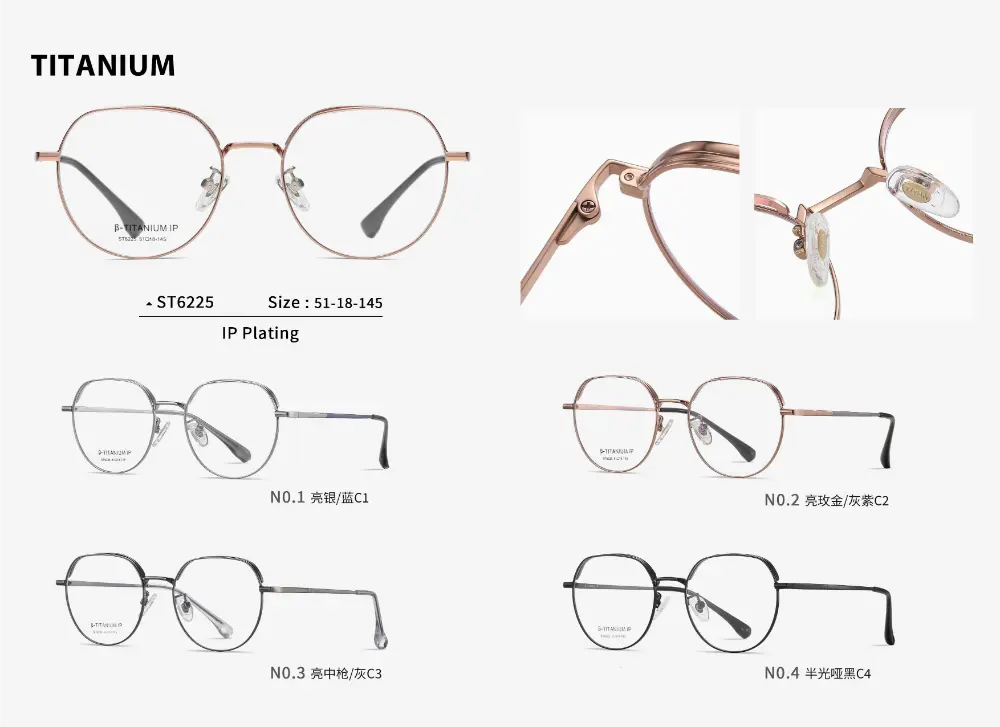
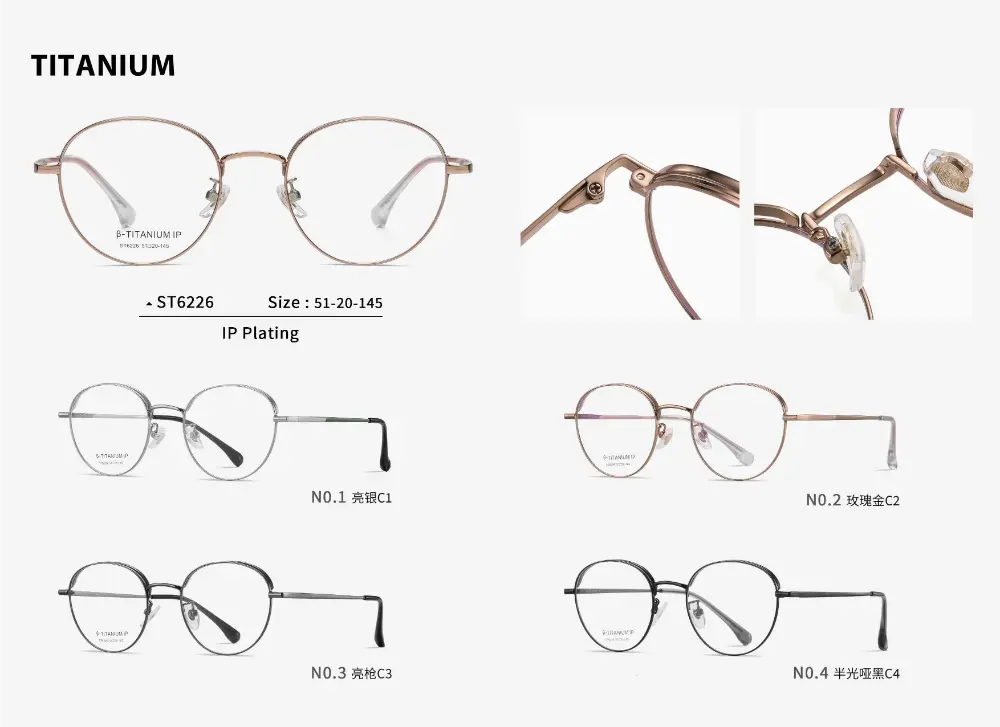
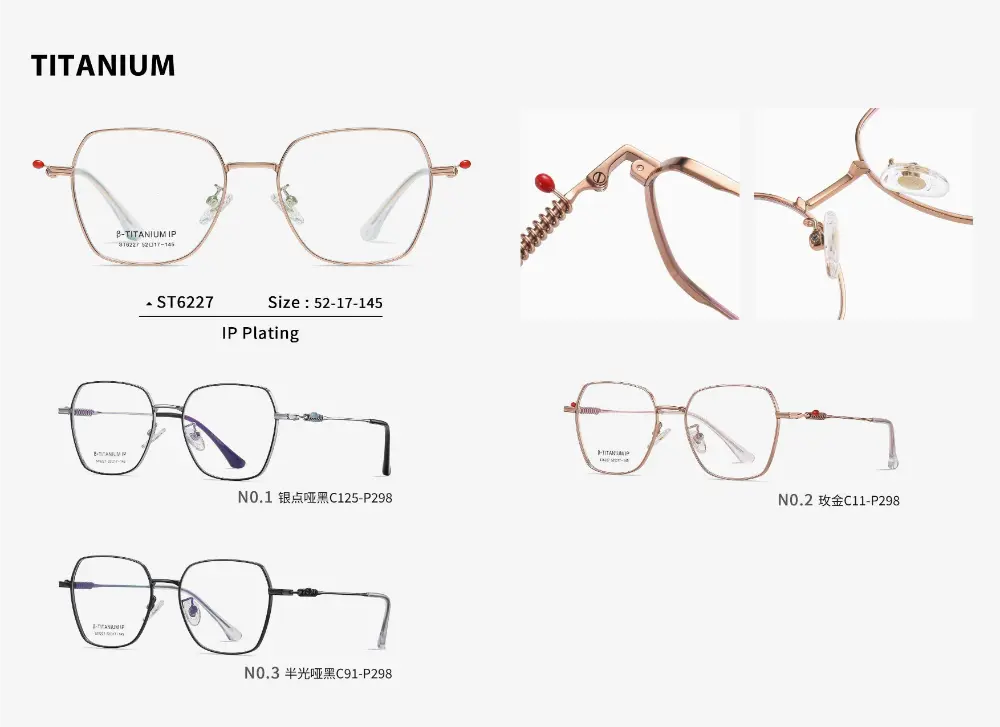
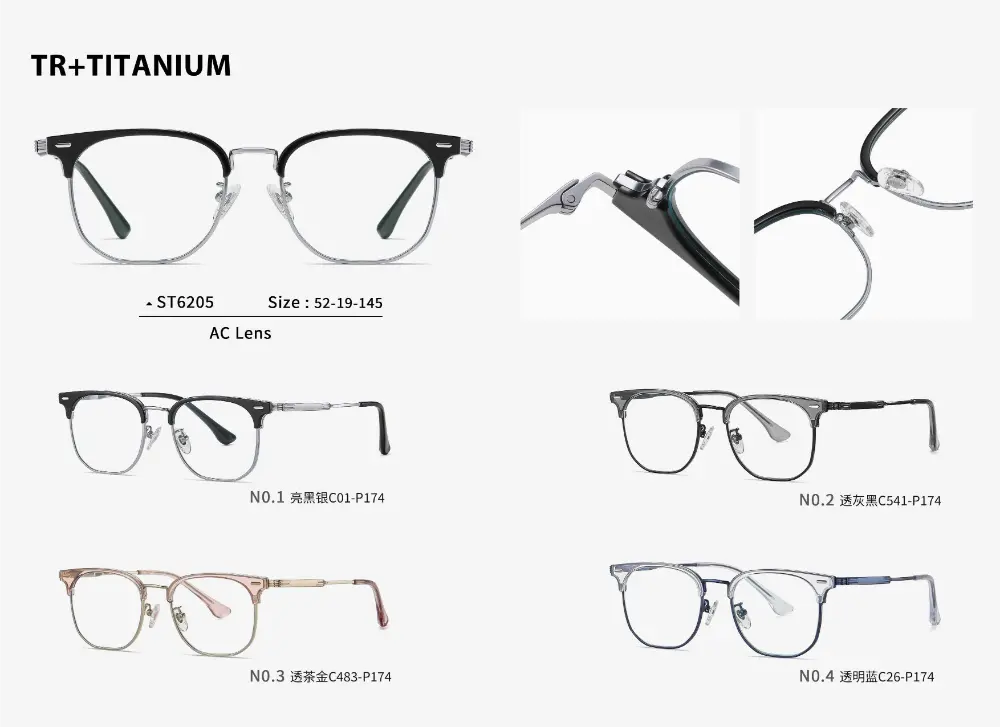
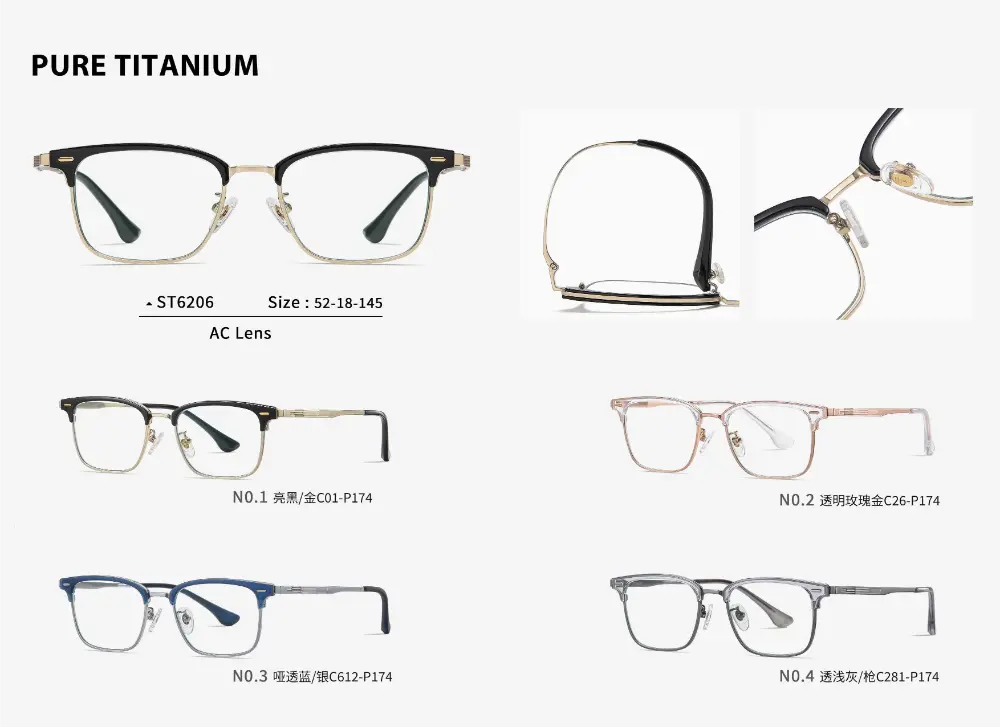
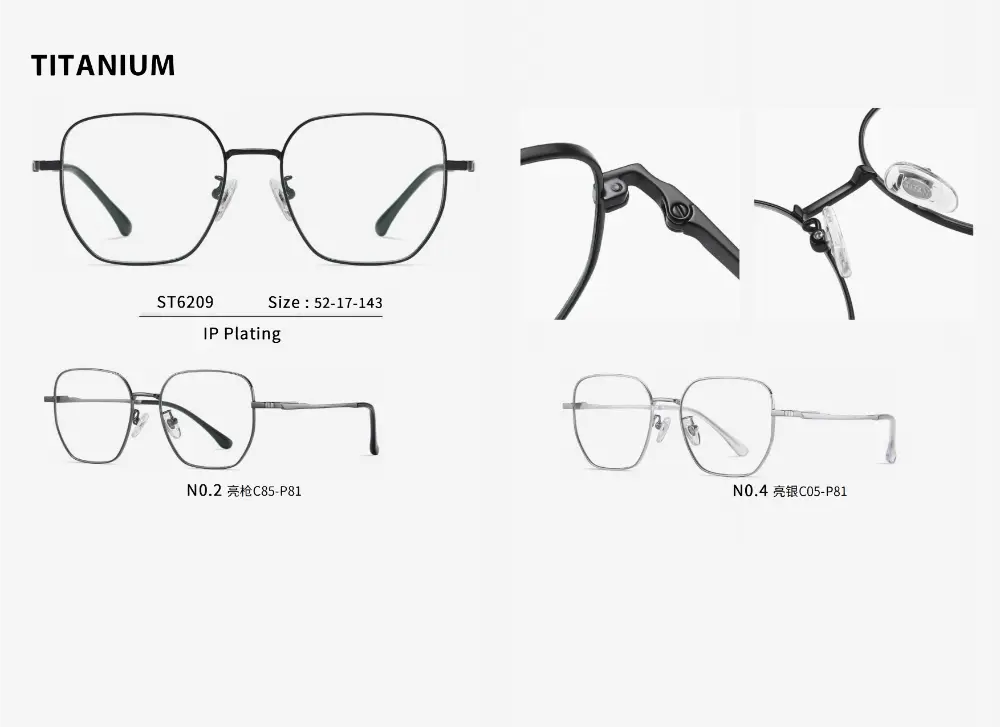
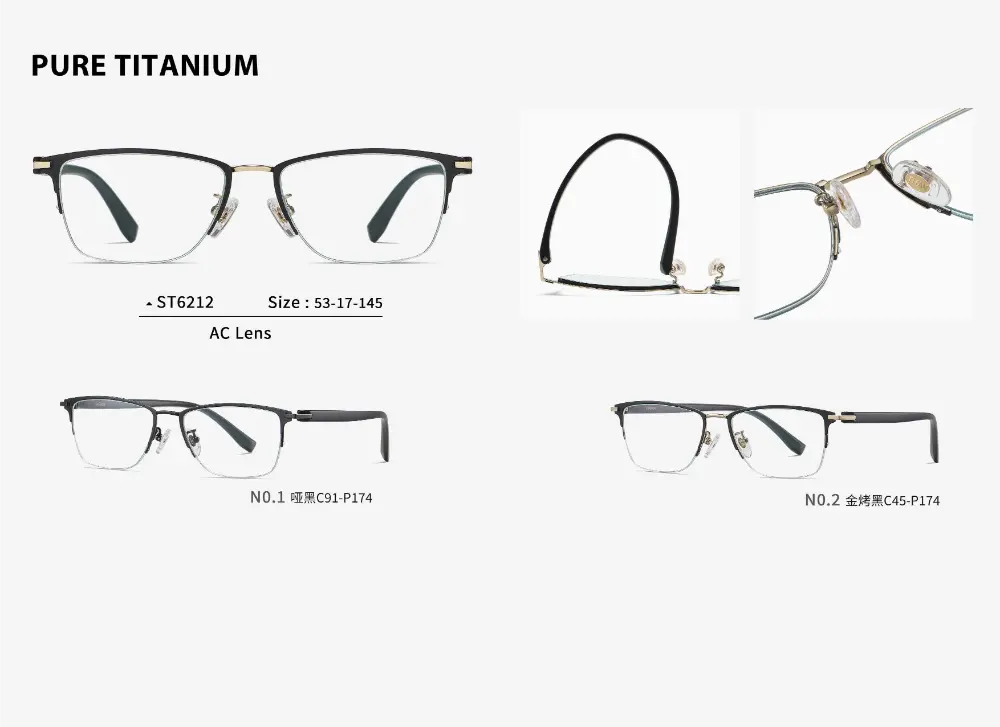
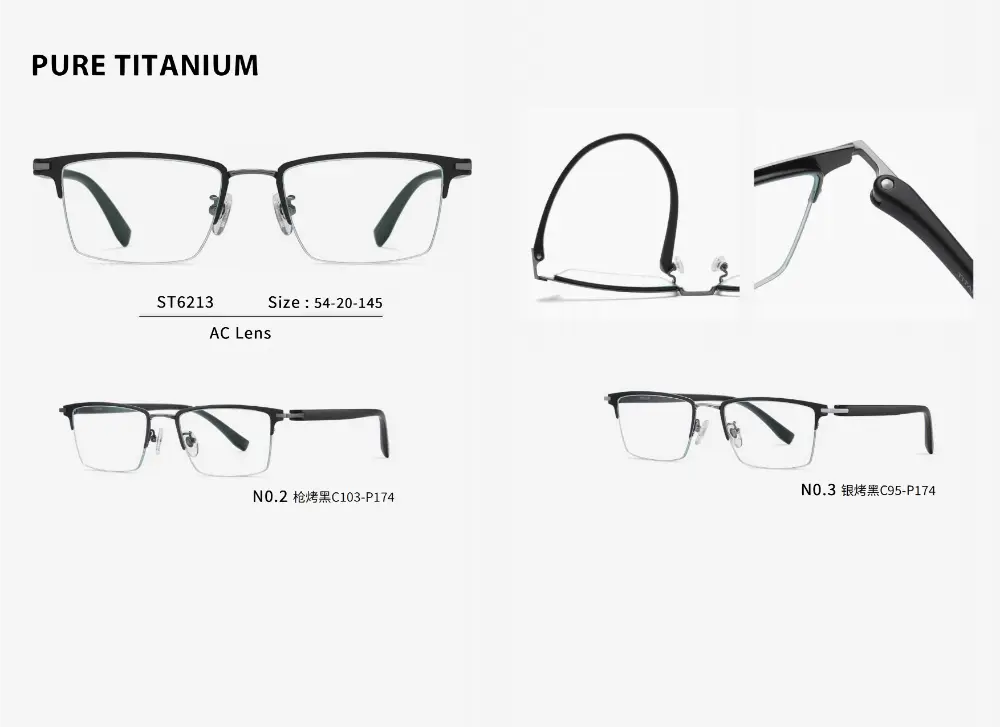
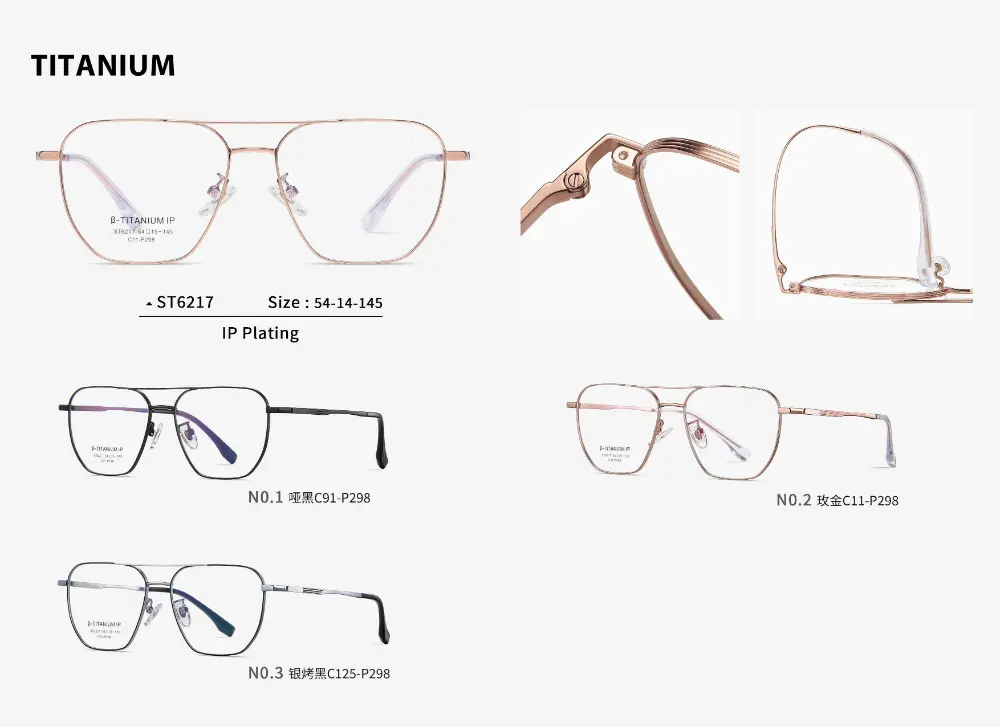
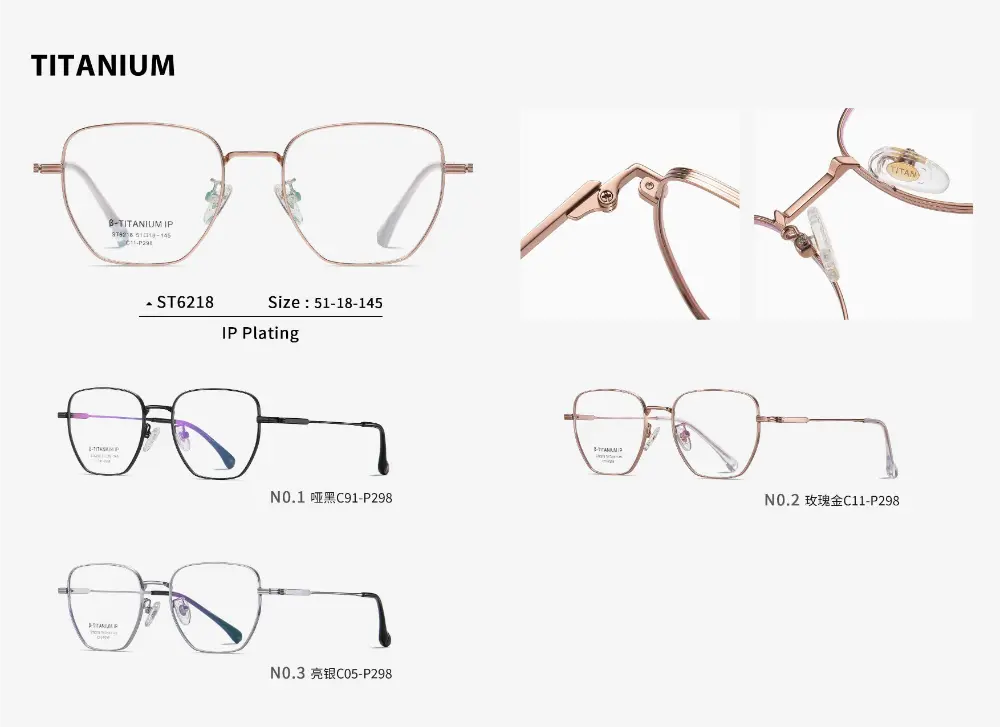
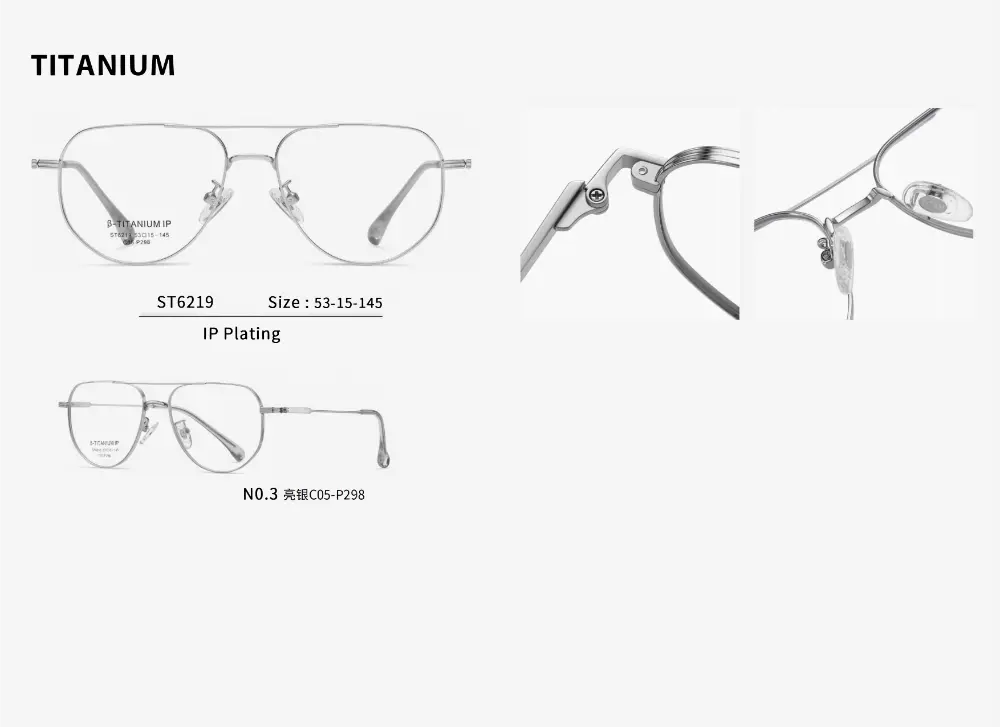
Titanium: The Premium Standard
What it is: Titanium (pure Grade 1-2 or beta-titanium alloy) is a premium metal used in the highest-end segment of the optical market. Both pure titanium and beta-titanium are hypoallergenic, corrosion-resistant, and significantly lighter than standard metals.
The advantages:
- Weight: 10-12g for a pure titanium frame — the lightest of all quality frame materials
- Durability: Exceptional long-term durability; properly maintained titanium frames last for years
- Hypoallergenic: No nickel, no skin reactivity — critical for customers with metal sensitivities
- Perceived quality: Titanium is the universal signal of premium optical quality; it justifies the highest retail price points
- Fine finishing: Takes high polish, brushed, and PVD coating finishes better than any other frame material
The limitations:
- Cost: The most expensive of the three materials at the wholesale level
- Design flexibility: Best suited to clean, precise designs; complex acetate-like shapes are difficult to achieve
- Repairability: Titanium temples can be adjusted but require specialized equipment and expertise; standard optical workshops often struggle with titanium adjustments
- Color options: Primarily metallic finishes; solid colors and acetate-like patterns are not available in titanium
Best for: Premium optical brands, independent opticians and specialty chains, DTC brands targeting $150-450+ retail, hypoallergenic product lines, EU and Japanese optical markets with quality-conscious consumers.
The Comparison at a Glance
| Factor | TR90 | Acetate | Titanium |
|---|---|---|---|
| Weight | 12-16g | 18-25g | 10-12g |
| Wholesale cost | Lowest | Mid | Highest |
| Durability | High (flex) | Medium (brittle) | Very high |
| Design range | Good | Excellent | Good (precise) |
| Color/finish options | Solid/matte | Unlimited | Metallic/polished |
| Hypoallergenic | Yes | Yes | Yes |
| Eco options | Limited | Yes (ISCC) | No |
| Repairability | Difficult | Good (heat) | Specialist |
| Retail ceiling | $80-120 | $150-300 | $250-600+ |
The Decision Framework
Choose TR90 if: You’re selling to the mass market, value channel, or e-commerce at competitive prices. Weight, durability, and impact resistance are more important than color depth or premium positioning.
Choose acetate if: Design expression and fashion positioning are central to your brand. You’re building for the independent optical or specialty retail channel. You need ISCC certification for EU sustainability requirements.
Choose titanium if: Your brand is positioned in the premium optical segment. Your customers are quality-focused and price-tolerant. Hypoallergenic properties are relevant to your customer base. You want the highest possible retail price ceiling.
Consider a multi-material line if: Your product range serves different customer segments with different needs. Many successful optical brands use titanium at the top of their range, acetate in the middle, and TR90 at the entry point — each material serving a distinct customer and price tier.
Our Production Capability
We produce frames across all three materials — TR90, acetate (standard and ISCC-certified eco), and titanium (pure and beta). We can help you evaluate which material fits your target market and, for brands with multi-material lines, structure an order that covers multiple material categories efficiently.
- WhatsApp: +86 152 5809 0639 (Mimi)
- Email: mimi@wenzhouframe.com
Wenzhouframe — Established 2015. Wenzhou, China. TR90, acetate, titanium, and specialty materials. ISCC-certified eco-acetate available. Optical frames, sunglasses, reading glasses, and blue light glasses. OEM/ODM with NDA. Flexible MOQ.
FAQ
Can I order frames in multiple materials in one order?
Yes. We regularly produce multi-material orders for brands with product ranges that span different material categories. The order structure depends on the specific styles and quantities — contact us to discuss your requirements.
Which material is easiest to start a private label line with?
For most new private label buyers, TR90 is the most accessible starting point: lower MOQ, faster production, and a clear value proposition for initial retail positioning. You can add acetate and titanium styles as your brand grows and validates market response.
Do you offer samples in all three materials?
Yes. We can provide sample frames in TR90, acetate, and titanium for evaluation. Samples are credited against bulk orders.

6.17_11.webp)