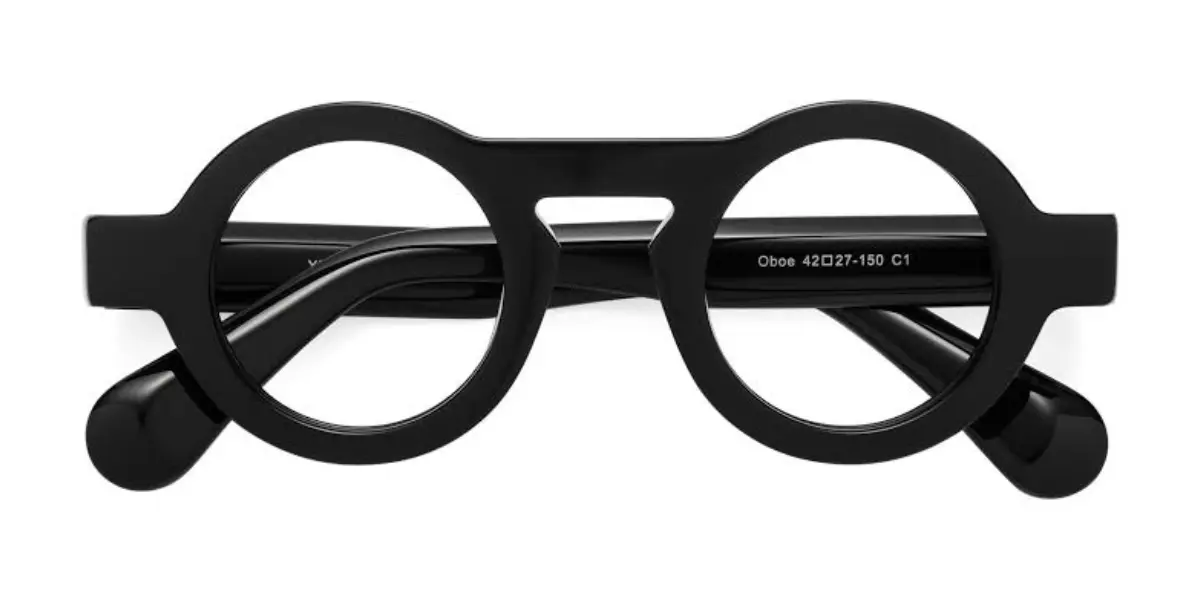

Six-sided. Eight-sided. Sharply angled. Asymmetrical. Geometric frames are the fastest-growing eyewear shape category in 2026, and they are not just for early adopters anymore. Warby Parker now devotes an entire section to geometric shapes. Luxury houses put hexagons on every runway. And the reason is simple: geometric frames make every outfit look intentional.
But geometric shapes are harder to manufacture than rounds or rectangles. Tighter tolerances. More visible edges. Less room for error in polishing. If you are sourcing geometric frames, understanding the manufacturing challenges is the difference between a collection that looks architectural and one that looks awkward.
The Four Geometric Shapes That Sell
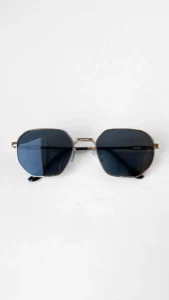
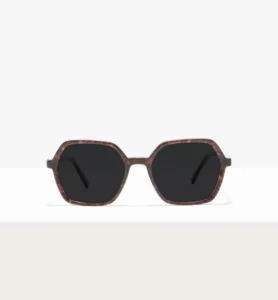
1. Hexagonal
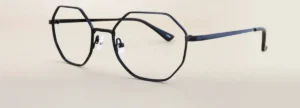
Six-sided frames — usually in thin metal or wire. The shape that made geometric mainstream. Sits between round and angular, which means it flatters most face shapes. The “I care about design but I still need to go to work” frame.
Ray-Ban Hexagonal ($150–$200) made this shape accessible. Gentle Monster pushed hexagonal into sculpture territory with oversized versions in translucent acetate. MYKITA (€350–€600) does hexagonal in surgical stainless steel with their patented interlocking hinge — no screws, no solder, just precision engineering.
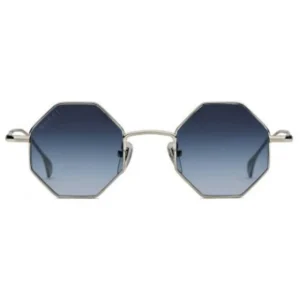
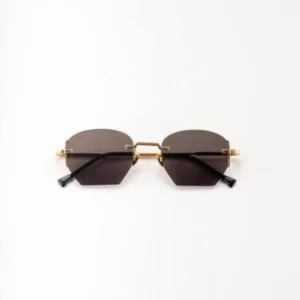
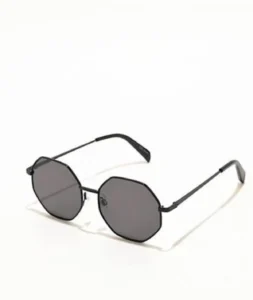
2. Octagonal
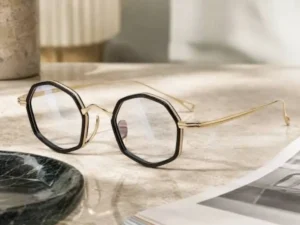
Eight sides. More complex than hexagonal, closer to round but with deliberate edges. Popular in both thin metal and thick acetate. The shape reads as both vintage (think 1970s Elton John) and futuristic depending on the material and scale.
Prada and Gucci use octagonal frames as statement pieces in their sun collections. In optical frames, the octagon is gaining traction in East Asian markets where it pairs well with smaller face structures.
3. Angular / Architectural
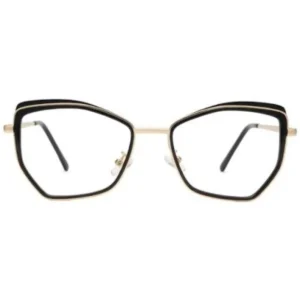
Sharp corners, flat tops, stepped edges. Not a regular polygon — more like a building section. These frames exist because CAD software and 5-axis CNC made them possible. You simply cannot cut these shapes on a 3-axis machine.
Dita ($500–$1,800) is the reference brand for angular titanium frames. ic! berlin (€200–€500) does angular in sheet stainless steel — no screws, no solder, sheet metal folded into architectural shapes. LINDBERG (€300–€800+) makes the lightest angular frames in the world using titanium wire.
4. Asymmetrical
Not symmetrical. One side different from the other. Sometimes one lens is round and the other is square. Sometimes the frame is deliberately tilted. This is the avant-garde end of geometric — the shapes that make people ask “where did you get those?”
Gentle Monster is the king of asymmetrical. Their design philosophy of “weird beauty” means frames that create tension between wearable and sculptural. These frames sell at premium because they are impossible to find elsewhere.


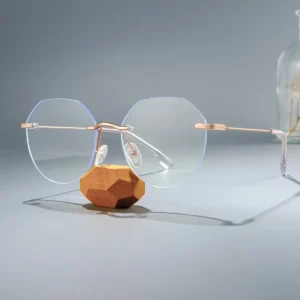
Why Geometric Frames Are Harder to Manufacture
CNC Precision Requirements
A round frame hides CNC variation. A hexagonal frame highlights it. If one side of a hexagon is 0.3mm shorter than the other five, the frame looks wrong. Our geometric acetate frames are cut on 4-axis and 5-axis CNC machines with ±0.1mm tolerance. Budget factories using 3-axis CNC with ±0.5mm tolerance will produce hexagons that are visibly uneven.
We include dimensional reports for first-run production of any new geometric model. If your factory cannot provide this, they are not equipped for geometric frames.
Edge Finishing Is Everything
Geometric frames have more edges per unit length than round frames. Every edge must be polished to the same standard. A missed edge on a round frame is a small blemish. A missed edge on a hexagonal frame is a visual defect that draws the eye to the wrong place.
Our edge finishing process for geometric frames:
- P400 sanding to remove CNC marks
- P800 intermediate smoothing
- P1200 fine preparation
- P2000 pre-polish
- 3-stage tumbling (72–96 hours for acetate)
- Double hand-polishing with felt and muslin wheels
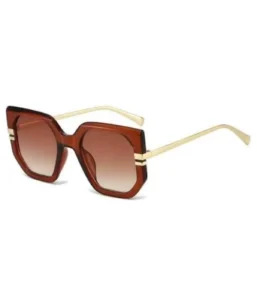
Mold Complexity for TR90/PC Geometric
Injection-molding geometric shapes requires more complex tooling. A hexagonal frame has 6+ critical surfaces that must be perfectly formed. The mold must have precision parting lines that fall on natural edges or are invisible. We use S136 mirror-finish steel for geometric TR90 molds. Budget factories use P20 — and the visible parting lines on geometric frames are a deal-breaker.
Material Choices for Geometric Frames
| Material | Best For | Considerations |
|---|---|---|
| Thin Metal / Wire | Hexagonal, angular wire frames | Lightweight; plating quality critical; needs precision wire bending |
| Thick Acetate | Octagonal, oversized geometric | Bold sculptural look; heavy in large sizes; needs extended polishing |
| TR90 | Oversized geometric, sporty geometric | Lightweight even in large shapes; S136 mold essential for crystal versions |
| Titanium | Angular / architectural wire frames | Premium positioning; laser welding required; highest cost |
| Stainless Steel (Sheet) | Angular, architectural | ic! berlin style; requires sheet-forming expertise; screwless designs possible |
Market Fit: Which Geometric Shapes Sell Where
| Market | Top Shape | Material Preference | Price Range |
|---|---|---|---|
| North America | Hexagonal metal | Thin metal wire | $80–$250 |
| Europe (Nordic) | Angular wire / architectural | Titanium / stainless steel | €100–€500 |
| Europe (Mediterranean) | Octagonal acetate | Thick acetate | €60–€300 |
| East Asia | Hexagonal + oversized geometric | Acetate / TR90 | $40–$250 |
| Middle East | Oversized octagonal | Premium acetate + metal combo | $80–$400 |
Sourcing Checklist for Geometric Frames
- What CNC axis count and tolerance does the factory use? (4- or 5-axis, ±0.1mm minimum for geometric)
- Can they provide dimensional reports for first-run geometric models?
- What is the total polishing and edge-finishing time included?
- For TR90 geometric: what mold steel grade? (S136 or H13 minimum; P20 is not acceptable)
- For metal geometric: what wire-bending precision? Ask for sample measurements of a hexagonal frame
- What is the AQL standard for geometric frames? (Edges and corners require tighter inspection)
Wenzhouframe Geometric Collection
We produce geometric frames across all materials:
- Acetate geometric: 4/5-axis CNC, ±0.1mm tolerance. Full multi-stage edge finishing. Available in Mazzucchelli or JH800 grade.
- TR90 geometric: S136 mirror-finish molds. No visible parting lines. EMS Grilamid LX for crystal versions. Dual-color injection available.
- Metal geometric: Hexagonal and angular wire frames in stainless steel or titanium. Laser-welded joints. Precision wire bending verified with optical comparators.
Geometric frames are a commitment to precision — and that commitment has to start at the factory floor, not at the quality inspection stage. Tell us what shapes and price points you are targeting. We will send reference samples with measurement data.
Contact: mimi@wenzhouframe.com | WhatsApp +86 152 5809 0639