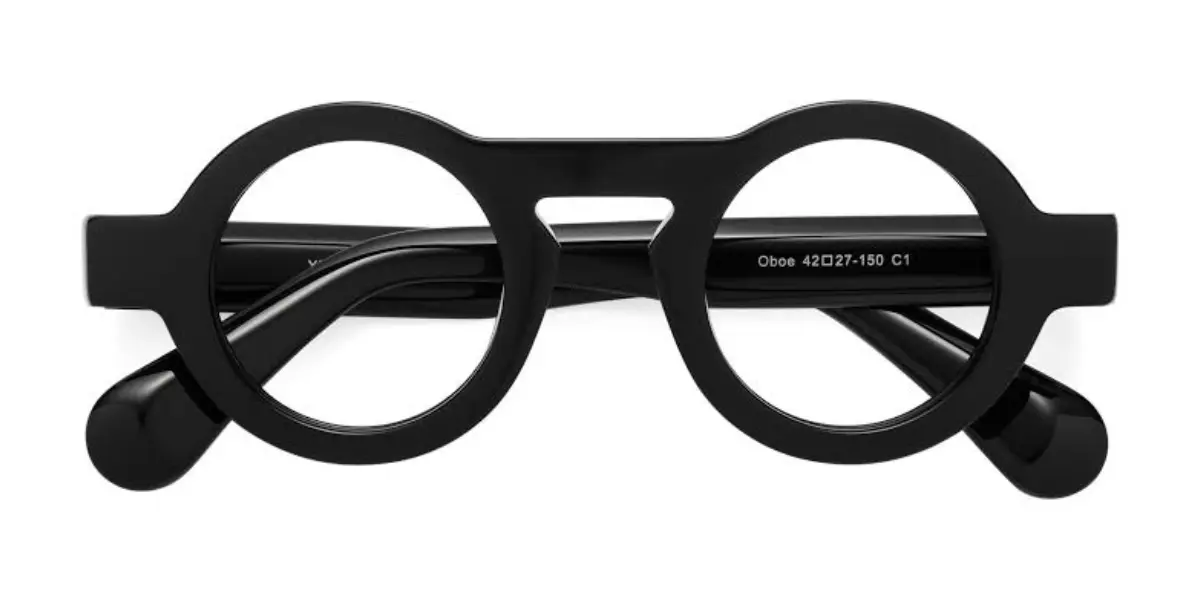


You have seen it happen. Two frames that look almost identical side by side. Same shape. Same color. One is quoted at $1.80, the other at $6.50. The first supplier says “best price, good quality.” The second sends you a spec sheet with material certificates and QC instrument readings.
Which one is the real deal? And why does the gap exist at all?
Here is what most suppliers will not explain: the price difference is not markup — it is the cost of everything you cannot see. The raw material grade. The mold steel. The polishing hours. The inspection rate. The tolerance band on every dimension.
This guide breaks down exactly what changes when you move from premium to budget eyewear production, and how to make sure your budget collection still passes every test your market demands.
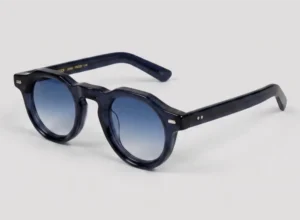
Acetate Has Two Production Lines — And the Difference Starts at the Sheet
Most buyers assume “acetate is acetate.” It is not. The same factory running the same machines will produce vastly different results depending on which acetate sheet goes into the CNC.
The Acetate Sheet Hierarchy
Cellulose acetate sheets come in distinct quality tiers, and the gap between top and bottom is wider than most buyers realize:
- Tier 1 — Mazzucchelli 1849 (Italy): The gold standard. Colors penetrate the full thickness of the sheet and do not fade over time. The surface polishes to a deep, liquid-like mirror finish because the polymer matrix is uniform and dense. Luxottica and Safilo specify this material for their premium lines. It costs 3-4× what Chinese domestic sheets cost, and it is worth every cent if your retail price supports it.
- Tier 2 — Japanese Acetate (e.g., Takiron, Shinko): Exceptional durability and shape retention. 80% of consumers report Japanese acetate frames holding their shape after 5 years of daily wear. Color vibrancy is moderate — fewer hues available than Italian, but the structural performance is outstanding. Preferred by brands targeting long-term wearers.
- Tier 3 — Premium Chinese Acetate: Quality has improved dramatically in the past decade. Top Chinese manufacturers (e.g., JH800-grade equivalents) now approach mid-range Italian quality. Colors are acceptable, surface finish is decent after polishing, and the price is 40-60% below Mazzucchelli. This is the sweet spot for budget collections that still need to look professional.
- Tier 4 — Economy Chinese Acetate: The budget baseline. Sheets may have inconsistent thickness, visible inclusions, and color that fades within 12-18 months of UV exposure. Polishing results are uneven — you will see dull spots on curves and inner rims. Works for ultra-low-cost promotions, but do not put your brand name on it.
What Changes Between Premium and Budget Acetate Production
Even when using the same grade of acetate sheet, the production process determines the final quality. Here is what gets compressed in a budget line:
| Process Step | Premium Line | Budget Line | What You Lose |
|---|---|---|---|
| Sheet pre-conditioning | 48-72 hours in climate-controlled room (22°C, 50% RH) | 12-24 hours, ambient conditions | Dimensional stability after cutting; frames may warp in humid climates |
| CNC cutting | 4-5 axis CNC, ±0.1mm tolerance, tool change every 200-400 pieces | 3 axis CNC, ±0.3-0.5mm tolerance, tool change every 500-800 pieces | Edge precision; you will feel the difference on the temple tips and bridge |
| Barrel tumbling | 3 stages over 72-96 hours (coarse → medium → fine with hardwood media) | 1-2 stages over 16-24 hours (single media, faster cycle) | The deep liquid gloss that makes acetate feel premium; budget output has a matte or uneven sheen |
| Hand polishing | 2 rounds: felt wheel + muslim cloth wheel, intermittent to prevent heat damage | 1 round or skipped entirely; workers rush through complex areas | Inner rim smoothness, hinge seat flush, bridge comfort — the details your customer feels but cannot articulate |
| Baking / curing | Post-assembly bake at controlled temperature to relieve internal stress | Skipped or shortened | Frame stability over time; temples may loosen or warp within months |
| Acetate drying / aging | Cut sheets aged 2-4 weeks before production to allow residual solvent evaporation | Used immediately after cutting from stock | Long-term brittleness; frames may crack at stress points (bridge, hinge area) after 6-12 months |
| Final inspection | 100% under calibrated light box + gloss meter reading | Spot check, visual only | Defects in hidden areas — inner rims, under temple, hinge pocket — reach the customer |
The key insight: a budget acetate line is not made from different machines — it is made from shortcuts in time and process. The same factory can run both lines. The question is which one they run for your order.
TR90 and PC: The Smart Budget Alternatives to Acetate
For budget collections, TR90 and PC (polycarbonate) often outperform low-grade acetate at the same or lower cost. But — and this is the part most suppliers skip — TR90 and PC also have material grades.
TR90 Material Grades
| Grade | Source | Key Properties | Typical Use | Price vs. Standard TR90 |
|---|---|---|---|---|
| Grilamid TR-90 LX (Swiss EMS) | EMS-GRIVORY, Switzerland | Crystal clarity, no yellowing, chemical resistance (perfume, sunscreen), no plasticizers, superior shape retention | Luxury TR collections, transparent/crystal frames | 2-3× standard |
| Standard TR90 (certified) | Licensed producers, consistent quality | Good flexibility, impact resistance, acceptable clarity, may yellow over 2-3 years of sun exposure | Mid-range sports, kids, reading glasses | Baseline |
| Generic TR90 | Unbranded domestic producers | Variable purity, may contain plasticizers, inconsistent melt flow, bubbles in injection | Ultra-budget, promotional items | 30-50% below baseline |
What the generic grade saves in material cost, it loses in three places your customer will notice:
- Clarity: Generic TR90 has a faint yellowish tint that becomes obvious in transparent or light-colored frames
- Chemical resistance: Contact with sunscreen, perfume, or skin oils can cause surface cracking or hazing within weeks
- Shape memory: Temples adjusted by an optician may slowly revert to their original shape, requiring repeated adjustments
For budget collections targeting $15-40 retail, standard certified TR90 is the optimal choice — professional appearance, genuine impact resistance, and no chemical sensitivity issues at a manageable cost.
PC (Polycarbonate) — When Budget Meets Impact Safety
PC is the most affordable injection-molded frame material, and it has one advantage that matters for certain markets: inherent impact resistance. No secondary treatment needed — PC frames pass drop-ball testing straight out of the mold.
But PC quality also varies:
- Optical-grade PC: Used for both lenses and frames. High clarity, consistent melt, minimal flash. Suitable for safety eyewear and children’s collections where impact resistance is the primary requirement.
- General-purpose PC: Lower clarity, more prone to yellowing, may have flow marks on the frame surface. Adequate for basic sunglasses and promotional items but not for anything that needs to look premium.
For budget collections where safety matters more than luxury feel — children’s glasses, sports eyewear, safety compliance items — PC with optical-grade pellets is the correct choice, not a compromise.
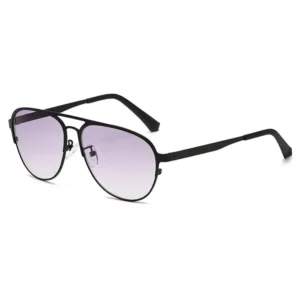
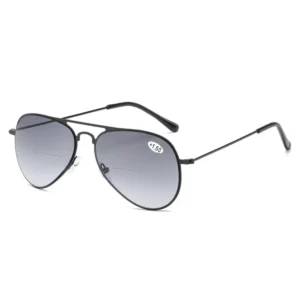
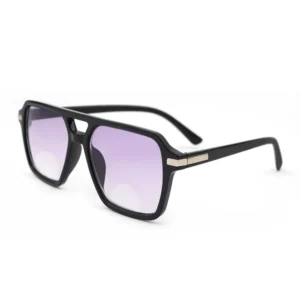
The Mold Decides Everything: Why Injection Frames Vary So Much
For TR90 and PC frames, the mold is the single biggest quality variable. Two factories can use the exact same TR90 pellets and produce frames that look and feel nothing alike. The mold is why.
Mold Steel Grades and What They Mean for Your Frames
| Mold Steel | Lifespan | Surface Finish | Dimensional Precision | Typical Use |
|---|---|---|---|---|
| S136 (stainless) | 1,000,000+ shots | Mirror Ra ≤ 0.025µm (SPI A1) | ±0.02mm | Optical/transparent frames, crystal TR90, premium collections |
| H13 (hot-work) | 600,000-1,000,000 shots | Ra 0.1µm (SPI A3) with hand polishing | ±0.03-0.05mm | High-volume production, fine-detail frames |
| 718H (P20+Ni) | 300,000-500,000 shots | Ra 0.2µm | ±0.05mm | Mid-range, good surface without heat treatment |
| P20 (standard) | 200,000-400,000 shots | Ra 0.4-0.8µm (SPI B2) | ±0.08-0.1mm | Budget production, acceptable but visible parting lines |
What this means in practice:
- Parting lines: P20 molds leave visible seam lines on the frame. S136 molds produce parts so clean the seam is invisible without magnification.
- Edge treatment: Higher-grade molds allow for sharper radii on temple tips and smoother transitions at the hinge pocket. Budget molds produce frames with visible flash and rounded edges where the design calls for a crisp line.
- Consistency across the run: P20 molds start producing dimensionally different frames after 200,000 shots as the cavity wears. Your first shipment and your fifth shipment will not match. S136 holds dimensional stability past 1,000,000 shots.
The Mold Factory Matters More Than the Mold Steel
Even with the same steel grade, the mold factory’s capability determines the final quality. Here is what separates a $3,000 mold from a $15,000 mold making the same frame:
- CNC precision: Top mold shops use 5-axis CNC with sub-micron positioning. Budget shops use 3-axis with visible tooling marks on the cavity surface — and those marks transfer directly to every frame that comes out of the mold.
- EDM finish: The fine detail areas (hinge pockets, bridge curves, nose pad seats) are finished by electrical discharge machining. Precision EDM produces smooth surfaces; budget EDM leaves a micro-textured surface that makes frames feel rough in the exact spots your customer touches most.
- Polishing the mold cavity: A mirror-polished cavity (only possible with S136) produces frames with a glossy surface right out of the mold — minimal post-processing needed. An unpolished cavity produces frames that look matte and cheap regardless of how much you polish them afterward.
- Cooling channel design: Well-designed cooling channels produce consistent shrinkage across the part. Poor cooling produces warped frames — temples that sit unevenly, fronts that are not flat. This is not a polishing problem; it is a mold engineering problem that no amount of post-processing can fix.
Polishing: The Process That Separates Professional From Amateur
Our factory runs a three-pass polishing protocol for budget collections that most factories skip entirely:
- First pass — post-demolding: Every TR90 and PC frame goes through barrel tumbling immediately after it comes out of the mold. This removes the parting line flash and smooths the surface before any assembly work begins.
- Second pass — post-assembly: After hinges are installed and temples are mounted, the frame goes back for hand polishing. Why? Because the hinge installation process creates micro-scratches, and the temple-to-front junction needs to be perfectly flush. This step catches what the first pass misses.
- Third pass — QC rejection rework: Any frame that fails the gloss meter or visual inspection under the calibrated light box goes back to the polishing station. Nothing escapes. This is the step that budget factories skip entirely — they ship the defects.
For budget acetate production, the same principle applies but the stages are different:
- Budget acetate: 16-24 hours barrel tumbling (vs. 72-96 for premium) + 1 round hand polish (vs. 2-3)
- The result is a semi-gloss finish — professional enough for retail but without the deep liquid luster of premium collections
Metal Frames: The Material Hierarchy No One Explains
For metal frames, the material alone explains most of the price difference between two identical-looking pairs. Here is the hierarchy from most to least expensive:
| Material | Relative Cost | Key Properties | Typical Retail Position |
|---|---|---|---|
| Titanium alloy (Ti-3Al-2.5V / Grade 5) | ★★★★★ | Ultra-light, hypoallergenic, superior corrosion resistance, requires specialized welding | $200-600+ premium collections |
| Memory metal (Ni-Ti alloy) | ★★★★ | Returns to original shape after bending; excellent for active-wear temples | $150-400 performance lines |
| 40% Nickel Silver | ★★★ | High strength, excellent plating adhesion, good corrosion resistance | $80-200 mid-range |
| 25% Nickel Silver | ★★☆ | Decent strength, acceptable plating; most common for EU export | $50-150 standard lines |
| 18% Nickel Silver (Monel) | ★★ | The workhorse of metal eyewear — good balance of cost, workability, and plating quality | $30-100 budget-to-mid lines |
| 22% Nickel Silver | ★★ | Between 18% and 25% — a middle option some factories offer | $40-120 |
| Iron / Carbon Steel | ★ | Heavy, rust-prone, poor plating adhesion — only for ultra-budget | $10-30 promo items |
| Aluminum alloy | ★☆ | Lightweight but soft; limited design options; difficult to solder | Specialized use |
| Zinc alloy | ★ | Cheapest castable metal; low strength, poor corrosion resistance, not suitable for daily-wear frames | $5-15 disposable/promo |
The 18% Nickel Silver Reality Check
18% nickel silver (often labeled “Monel”) is the most widely used material in metal eyewear — and for good reason. It offers a practical balance of cost, ease of manufacturing, and adequate performance for most market segments.
But here is what suppliers do not tell you: 18% nickel silver also has quality tiers.
- Grade A — Certified lead-free, consistent alloy composition: Meets EN 1811 nickel release limits (≤0.5 µg/cm²/week). Every batch comes with a mill certificate. Plating adheres properly. This is what professional factories use for EU/US export.
- Grade B — Lead-free claim but inconsistent composition: May pass nickel release sometimes and fail other times. No mill certificate. Plating may peel after 3-6 months. Common among budget factories.
- Grade C — No certification, mixed scrap content: May contain lead, cadmium, or other restricted substances. RoHS and REACH violation risk. Plating fails early. Skin allergies are a real possibility. This is what ends up in $1.50 factory-gate frames.
We select 18% nickel silver Grade A as our baseline for budget metal collections, and we move up the hierarchy based on your target retail price point and market requirements. For premium titanium lines, see our dedicated guide.



How We Build Budget Collections Without Compromising Safety
Our approach to budget collections is simple: we reduce cost in areas your customer cannot see, never in areas they can feel or that affect safety.
What We Reduce for Budget Collections
- Raw material tier: We shift from Mazzucchelli to premium Chinese acetate, or from Grilamid TR-90 LX to certified standard TR90. These are genuine cost savings with acceptable visual trade-offs.
- Accessory brands: Hinges move from OBE/KANGHUA to high-value T3 alternatives (Dayongfa, Kaida, Lida) that pass the same function tests but carry less brand premium.
- Color complexity: Budget collections use single-color or two-tone sheets instead of multi-layer laminates. Reduces material waste and simplifies CNC programming.
- Decoration: Metal temple accents, embedded stones, and engraved logos are simplified or removed. This saves assembly time and reduces defect rates.
- Polishing cycles: Reduced from 72-96 hours to 16-24 hours for acetate, single-pass instead of triple-pass for TR90. The finish is professional but not mirror-deep.
- Packaging: Standard polybag + microfiber instead of custom rigid box + premium case.
What We Never Compromise On
- Nickel release compliance: Every metal frame, regardless of price point, is tested to EN 1811 (≤0.5 µg/cm²/week) before shipment.
- UV400 for sunglasses: Non-negotiable. Every sunglass lens, including budget, passes UV400 transmittance testing.
- Impact resistance: Drop-ball test for all markets requiring it (US FDA, EU CE).
- RoHS / REACH: Full compliance regardless of collection tier. We do not use zinc alloy for daily-wear frames, period.
- AQL standard: Our budget collections run at Critical 0 / Major 2.5 / Minor 4.0 (vs. Critical 0 / Major 1.0 / Minor 2.5 for premium). We accept slightly more minor visual imperfections — but zero tolerance on anything structural or safety-related.
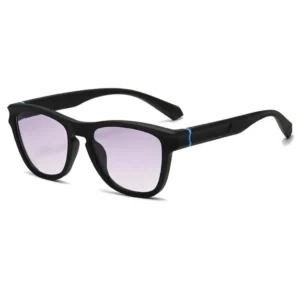
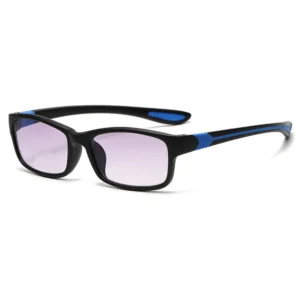
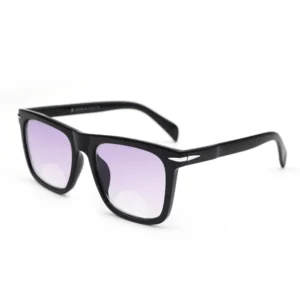
The Complete Cost Structure: Why Same-Looking Frames Have Different Prices
Here is the honest breakdown of what goes into an eyewear frame, and where the money goes at each tier:
| Cost Component | Commodity ($1.5-3.00) | Budget Pro ($3.00-6.00) | Premium ($6.00-15.00) |
|---|---|---|---|
| Raw material | Economy acetate / generic TR / zinc alloy | Premium Chinese acetate / certified TR90 / 18NS Grade A | Mazzucchelli / Grilamid LX / Grade 5 titanium |
| Mold | P20, 200K shot life | 718H, 300-500K shot life | S136, 1M+ shot life |
| Polishing time | 4-8 hours | 16-24 hours | 72-96+ hours |
| Polishing passes | 1 (machine only) | 2-3 (machine + hand) | 3+ (tumbling + double hand buff) |
| Hinge brand | White-label generic | T3 (Dayongfa, Kaida, Lida) | T1-T2 (OBE, KANGHUA) |
| Inspection rate | Spot check (5-10%) | Sampling per AQL Level II | 100% inspection |
| Compliance testing | Skipped or forged | Per-batch nickel release + UV400 | Full panel: nickel, salt spray, UV400, drop ball, aging |
| Acetate aging | None | 7-14 days | 21-30 days |
| Factory gate price | $1.50-3.00 | $3.00-6.00 | $6.00-15.00 |
The total difference between a $2.00 frame and a $8.00 frame is not supplier markup. It is the cost of every skipped hour of polishing, every untested batch, every uncertified material.
How to Avoid Getting Burned on Budget Orders
Questions to Ask Any Supplier
- “What AQL level do you use, and can you put it in writing?” — If they cannot state their AQL, they do not have one. Walk away.
- “What is the nickel release test result for this metal frame?” — Ask for the test report number, not just “it passes.” If they cannot produce the report, the test was not done.
- “Which acetate sheet brand are you quoting?” — If they say “Chinese acetate” without specifying the manufacturer, they are quoting Tier 4. Ask them to name the brand.
- “How many polishing hours does this quote include?” — If the answer is vague, the polishing is minimal. For budget acetate, 16-24 hours is the minimum acceptable range.
- “What mold steel is used for this frame?” — P20 is fine for budget runs under 200K units. If they cannot tell you, they are likely using the cheapest option.
Red Flags That Signal a Quality Problem
- Quote is more than 40% below other suppliers for the same spec — something has been removed from the process
- No compliance documentation offered (CE, FDA, RoHS) — either they do not have it or they do not think you will ask
- “Yes, we can do that” with no supporting evidence — a professional supplier explains how they achieve the spec, not just that they can
- Refusal to send a sample before bulk order — if they will not stand behind a sample, they will not stand behind a shipment
- No QC instrument list available — if they do not own a gloss meter, they cannot verify polish quality
Wenzhouframe Budget Collections: Our Approach
We believe budget does not mean disposable. Our budget collections are designed for buyers who need reliable, compliant eyewear at accessible price points — and who want to understand exactly what they are getting.
Here is what sets our budget production apart:
- Automated equipment throughout: CNC cutting, precision wire shooting, and barrel tumbling are all automated. This reduces human error and keeps consistency across production runs — without adding premium-level cost.
- Three-pass polishing protocol: Post-demolding → post-assembly → QC rejection rework. No frame ships without passing visual and tactile inspection. If it fails, it goes back to the polishing station. Nothing slips through.
- Material matching to your budget: We stock Mazzucchelli 1849, premium Chinese acetate, certified TR90 (Swiss EMS Grilamid available on request), optical-grade PC, and all grades of nickel silver and titanium. We quote based on your target retail price point — and we tell you exactly which material grade and process level the quote includes.
- Full compliance, every tier: RoHS, REACH, CE, FDA registration — regardless of whether your order is budget or premium. We do not run a separate “export compliance” line. Every frame ships compliant.
- Transparent spec sheet: Every quote includes material grade, mold steel, polishing hours, hinge brand, AQL level, and applicable certifications. No hidden shortcuts.
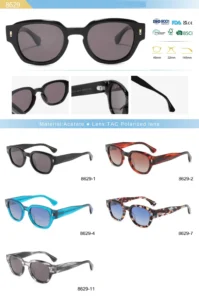
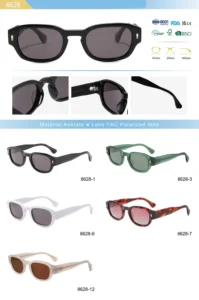
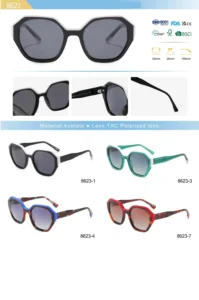
Which Budget Collection Is Right for Your Market?
| Your Market | Recommended Material | Recommended Process | Est. Factory Gate |
|---|---|---|---|
| Budget retail chain (EU) | Premium Chinese acetate + 25NS | 16-24h polish, AQL Major 2.5 | $3.50-5.50 |
| Budget retail chain (US) | Certified TR90 + 18NS Grade A | 3-pass polish, AQL Major 2.5 | $3.00-5.00 |
| Amazon / eCommerce | Optical PC + 18NS Grade A | 2-pass polish, AQL Major 4.0 | $1.80-3.50 |
| Children’s eyewear | Optical PC + certified TR90 | 3-pass polish, AQL Major 1.0 (safety-critical) | $3.50-6.00 |
| Promotional / trade show giveaway | Standard PC + zinc alloy (non-daily-wear) | 1-pass polish, basic AQL | $1.20-2.50 |
| Accessible premium (DTC brand) | Premium Chinese acetate + 25NS + T3 hinges | 24-36h polish, AQL Major 2.5 | $4.50-7.00 |
The Bottom Line
Same-looking frames have different prices because the difference is in everything you cannot see: the sheet grade, the mold steel, the polishing hours, the inspection rate, the compliance testing, the material certification.
Most of the price gap is not supplier profit — it is the cost of doing things properly versus cutting corners that your customer will discover after 3 months of wear.
We build budget collections that manufacture in Wenzhou, China’s mid-high-end eyewear hub — not in the ultra-budget zones. This means our budget pricing is competitive, but it will never be the absolute lowest on Alibaba. Because the absolute lowest comes with costs your brand cannot afford.
Want to understand the real cost breakdown for your specific collection? Send us your target retail price and market requirements, and we will prepare a transparent spec sheet showing exactly which material grade, process level, and compliance package fits your budget — no hidden shortcuts, no surprises after delivery.
Contact us: mimi@wenzhouframe.com | WhatsApp: +86 152 5809 0639
Related Guides
- Premium Eyewear Collections: What Defines Luxury Frames
- TR90 vs Acetate vs Metal: Which Material Is Right for Your Line
- Pure Titanium vs Beta Titanium: A Buyer’s Guide
- Eyeglass Hinges: The Component That Determines Frame Longevity
- How to Source Eyewear from China: Complete Guide
- TR90 Dual-Color Injection: Our Exclusive Process