
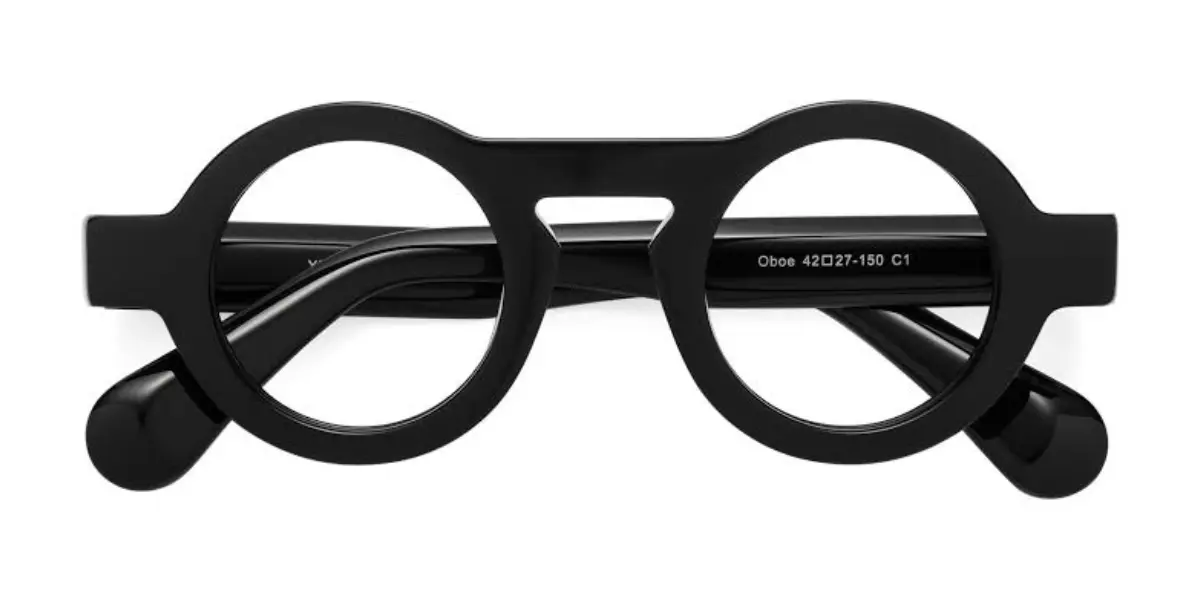
Thick-rim glasses have come back three times now — the original 1950s browline, the 1970s oversized round, and the 2010s hipster wayfarer revival. Each cycle sells in volume because the look is instantly recognizable and projects confidence. What changes each time is the material technology and the demographic buying it.
Right now, in 2026, thick-rim frames sit at the intersection of two macro trends: the vintage nostalgia wave driven by Gen Z’s obsession with Y2K and 90s aesthetics, and the quiet luxury movement where bold shapes in muted colors signal taste rather than flash. If you are sourcing for wholesale or brand programs, this category deserves dedicated shelf space.

The Four Archetypes of Thick-Rim Frames
1. The Wayfarer / Square Block
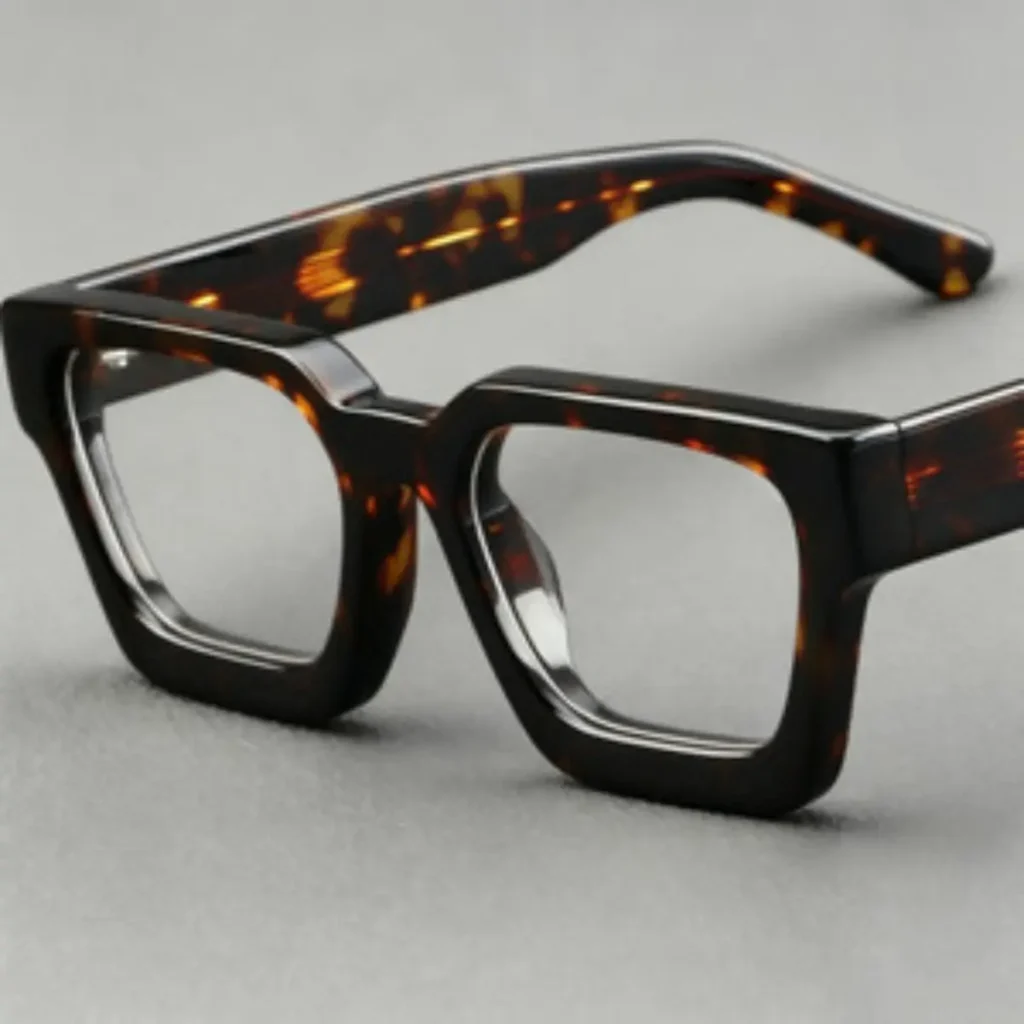
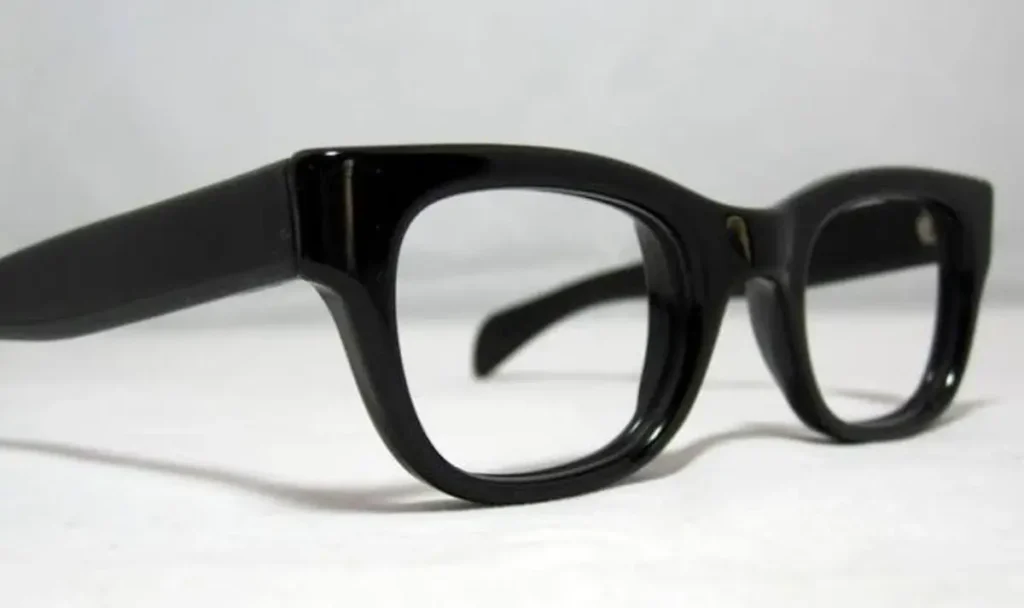
Angular, thick acetate, slightly rounded corners. The frame that defined cool since 1952. Still the single best-selling thick-rim shape globally. Works on oval, round, and heart-shaped faces. The safe bet that never stops selling.
Ray-Ban owns this category with the Original Wayfarer ($180–$250). But look at what Warby Parker did with the “Percey” and “Chamberlain” ($95) — same blocky confidence at half the price using standard Chinese acetate instead of Italian.
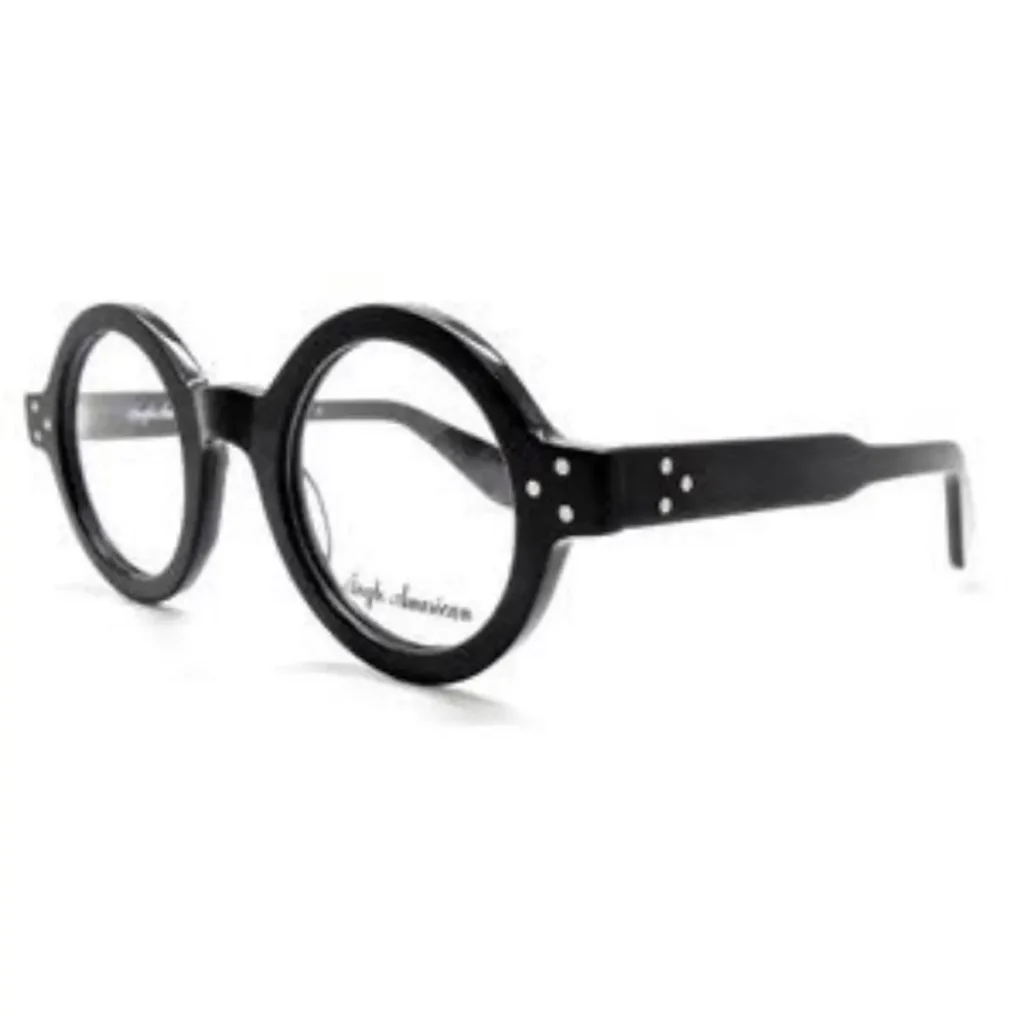
2. The Round Nerd / Boston
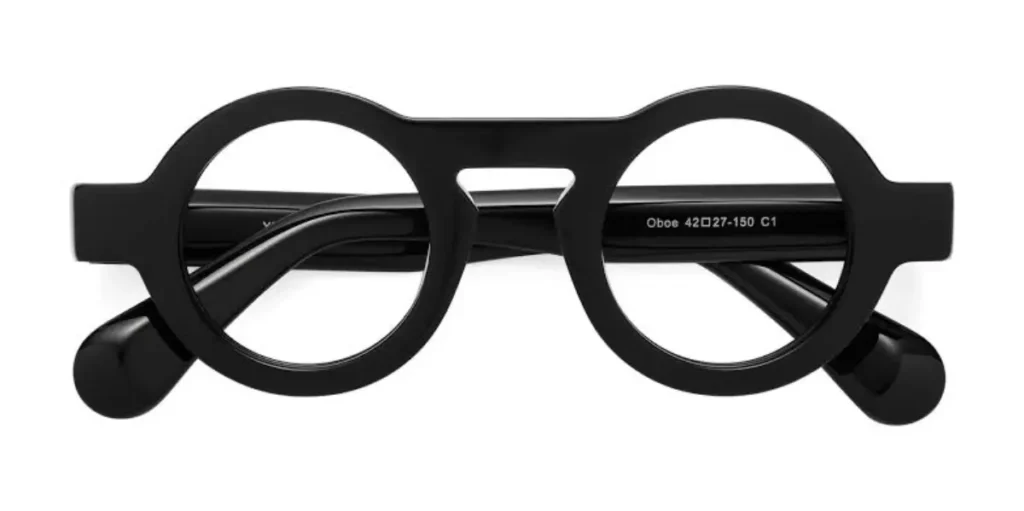
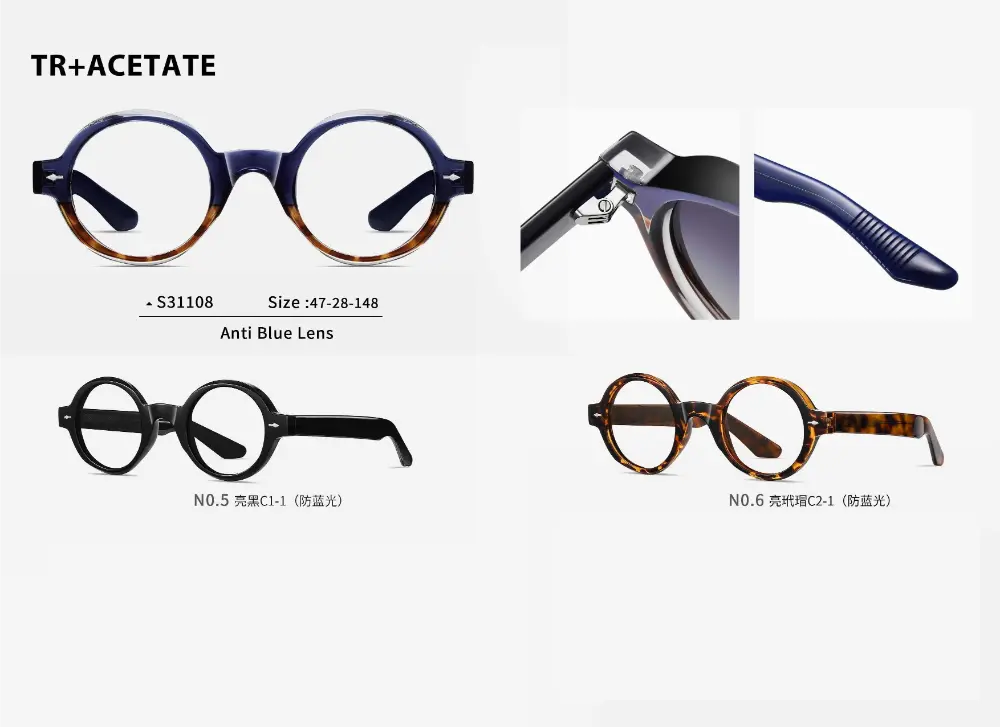
Perfectly round, thick acetate, keyhole bridge optional. The frame every “creative professional” reaches for. Originally 1920s–30s, revived in the 70s, now core Gen Z territory. Pairs with everything from suits to streetwear.
Persol ($250–$400) makes some of the finest round thick-rim frames using Mazzucchelli acetate with hand-polished finishes. Oliver Peoples ($350–$550) rounds are the choice for buyers who want vintage shape with modern precision.
3. The Browline / Clubmaster
Thick acetate brow with thin metal lower rim. Retro authority in a frame. Originally 1950s “Clubmaster” style, now worn by everyone from lawyers to tech founders who want to look competent without looking stiff.
Ray-Ban Clubmaster ($160–$200) remains the reference. But Tom Ford ($350–$600) elevated the browline with thicker brows, metal accents, and the signature T-bar hinge — showing this shape can carry luxury pricing when the details are right.
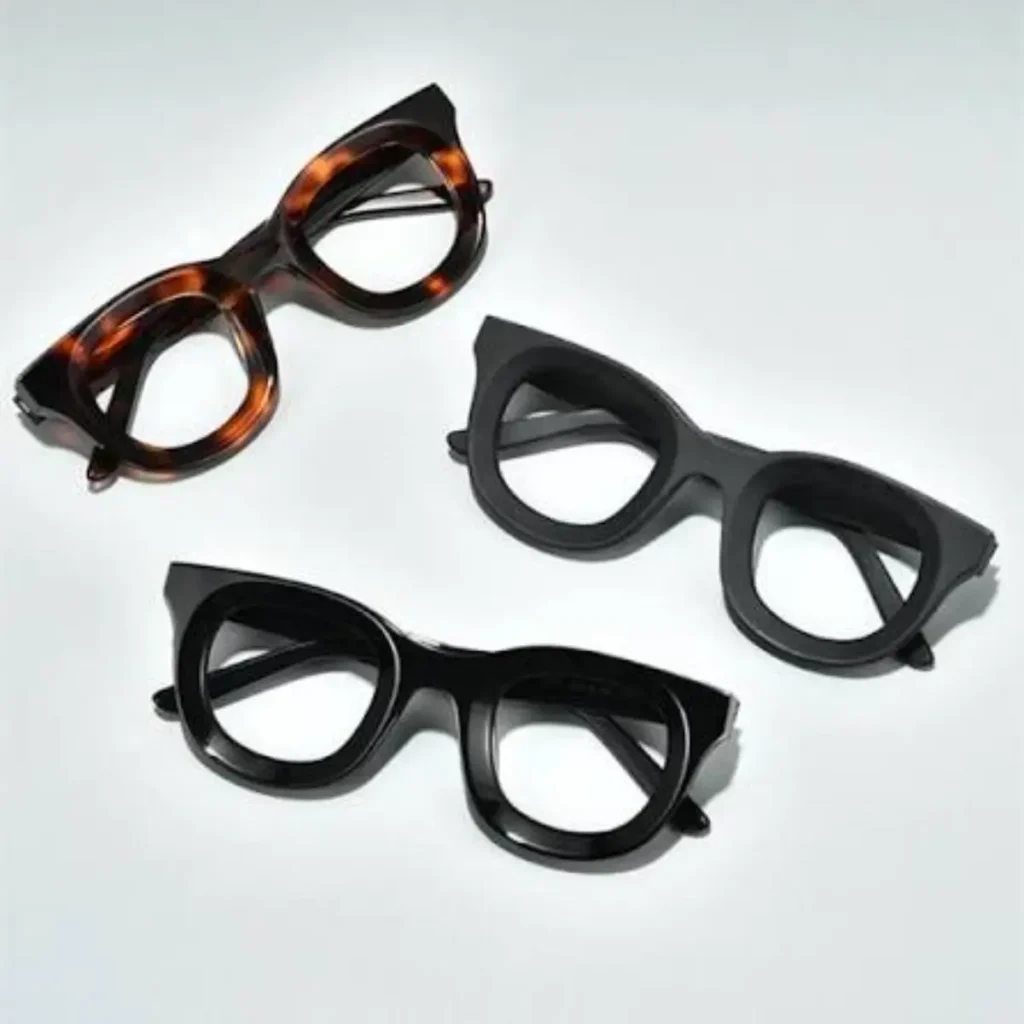
4. The Oversized Cat-Eye
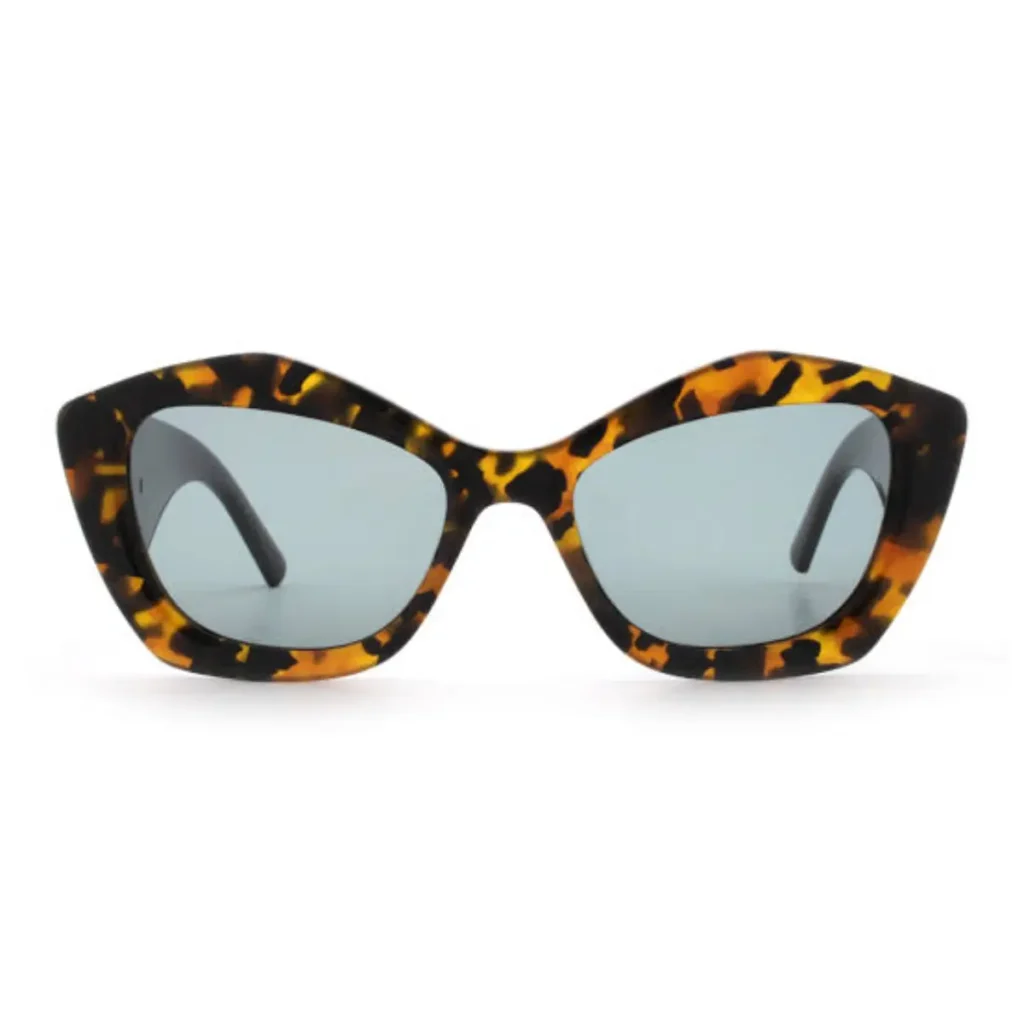
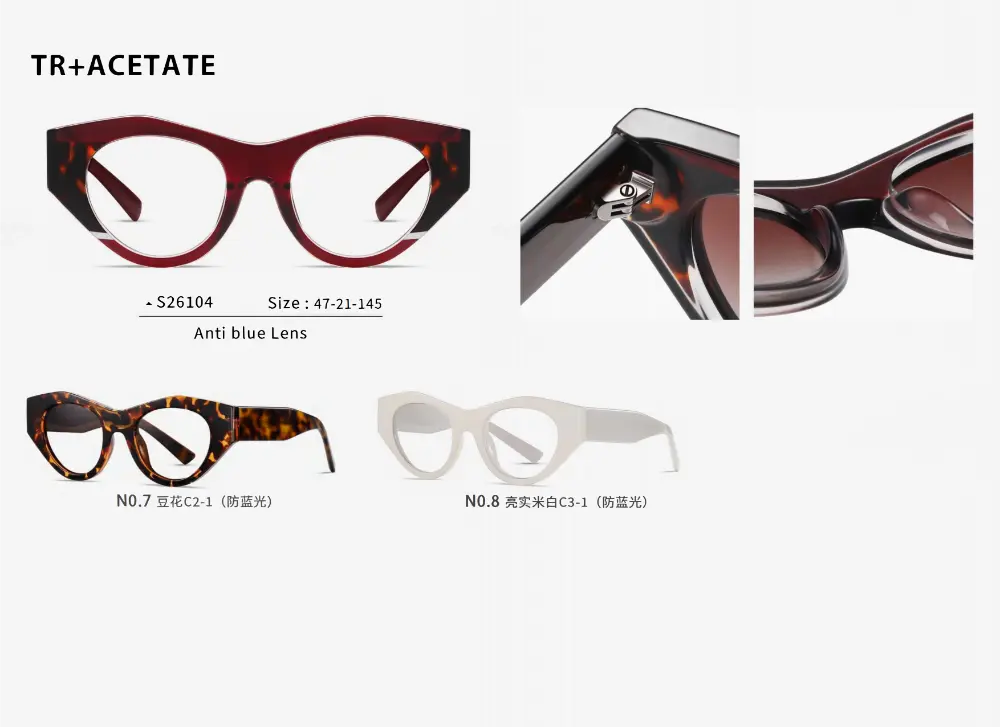
Thick, upswept, dramatic. The frame that says “I chose to be noticed.” The cat-eye in thick acetate is the fastest-growing women’s style in 2026. From subtle vintage lift to full editorial drama.
Gucci ($400–$700) and Prada ($350–$550) use oversized cat-eyes as showpieces in their campaigns. Garrett Leight ($300–$500) makes a more wearable version with proprietary acetate colorways.
What Makes a Thick-Rim Frame Look Premium vs. Cheap
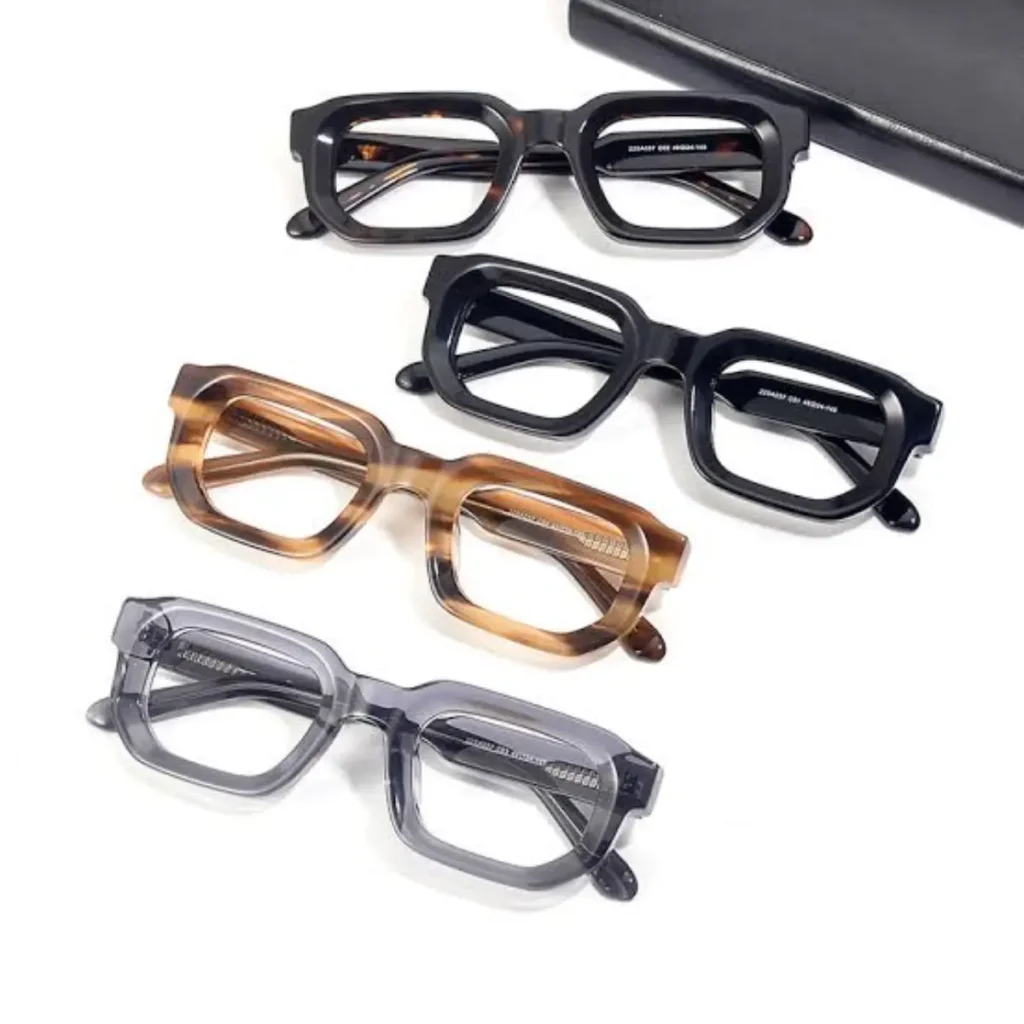
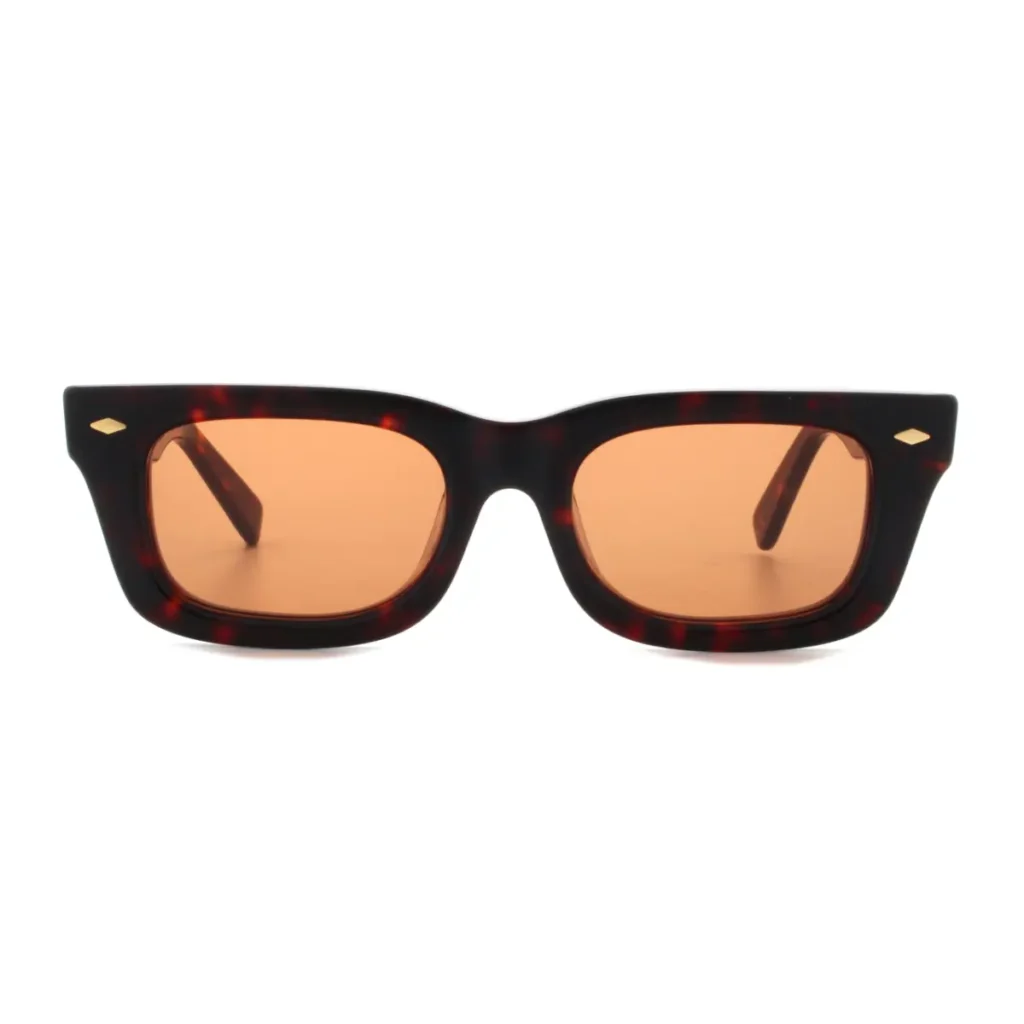
With thick acetate, there is nowhere to hide. The material and finishing quality is visible from across a room. Here is what separates the versions that sell at $150+ retail from the ones that end up in clearance bins:
Acetate Thickness and Consistency
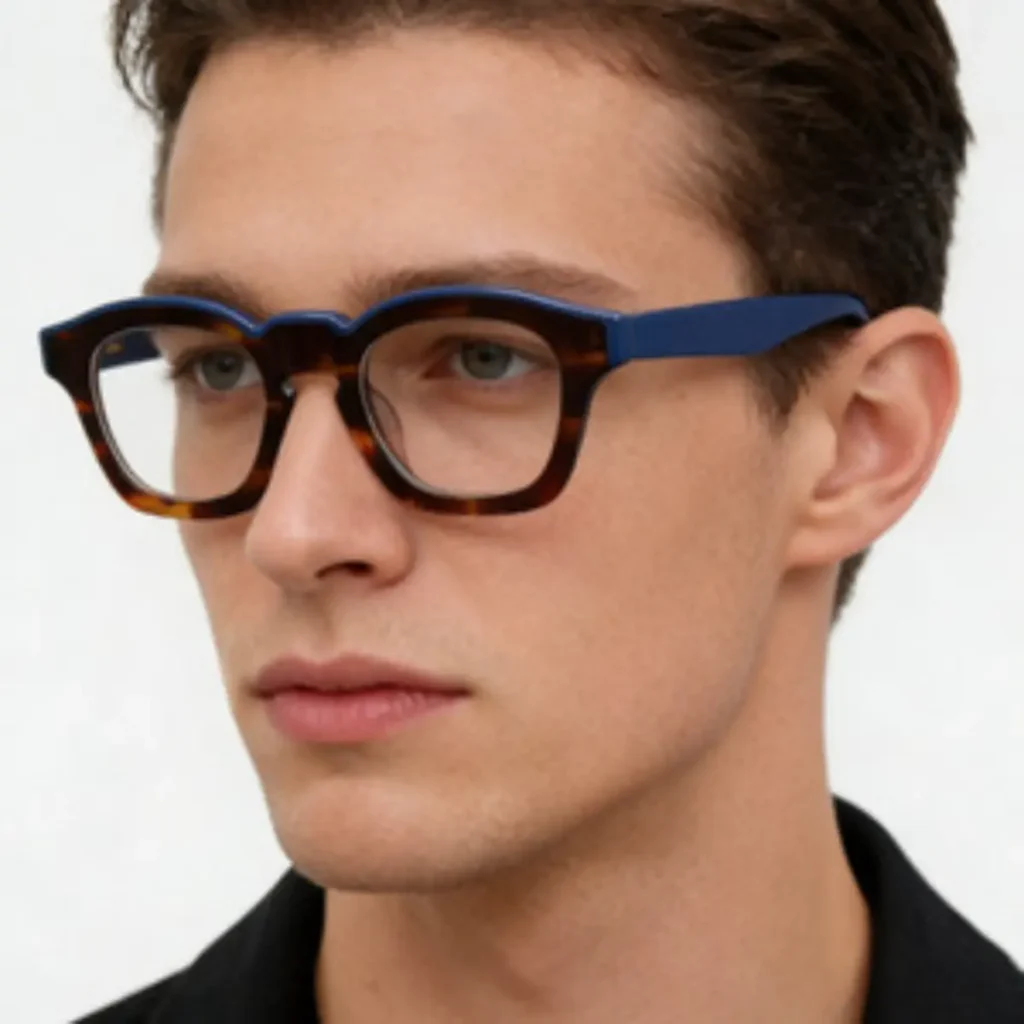
Budget factories sometimes produce frames where one temple is 4.2mm thick and the other is 3.8mm. On a black frame, you might not notice. On a thick-rim clear or tortoiseshell frame, the inconsistency is obvious. Our specification is ±0.1mm across all surfaces, verified with digital calipers at three points per frame.
Polishing Depth
Thick acetate requires longer tumbling because there is more surface area and the edges are more prominent. Budget factories cut tumbling from 72+ hours to 16–24 hours. The result: a satin finish instead of liquid gloss. On a thick-rim frame, the edges catch light from every angle — every imperfection is magnified.
Our process: 3-stage tumbling (72–96 hours total) + double hand-polishing (felt wheel then muslin wheel) + post-assembly touch-up. Read the full breakdown in our Premium Collections Craftsmanship Guide.
Acetate Curing and Resting
This is the detail most factories skip and most buyers never ask about. Fresh-cut acetate contains solvent that needs to off-gas. If you cut it on Monday and start polishing on Tuesday, the frame will warp or develop stress cracks within 6–12 months. Premium production requires 2–4 weeks of resting after cutting before any finishing begins.
We rest our acetate blanks for a minimum of 14 days in a climate-controlled room. This is not optional — it is the difference between a frame that lasts years and one that cracks at the hinge under normal wear.
Hinge Seating in Thick Acetate
Thick acetate frames put more stress on the hinge area because the material is heavier and the lever arm is longer. A poorly seated hinge in a thick frame will work loose faster than in a thin frame. We use KANGHUA or OBE hinges (depending on target price point) and verify torque on 100% of frames. More on hinge selection in our Eyeglass Hinges Guide.
Color Trends in Thick-Rim for 2026
| Trend | Colors | Vibe | Target Customer |
|---|---|---|---|
| Classic Authority | Black, dark tortoise, Havana | Timeless professional | 25–55, workplace / classic |
| Retro Pop | Crystal clear, amber, forest green | Vintage personality | 18–35, creative / Gen Z |
| Muted Luxe | Espresso, cognac, smoke, blush | Quiet luxury | 30–50, aspirational |
| Statement Color | Burgundy, electric blue, terracotta | Fashion-forward | 20–40, trendsetter |
Thick-Rim Metal? Yes — and It Is Growing
Not all thick-rim means acetate. A growing segment uses thick-gauge metal — usually 18 nickel silver or stainless steel — to create the visual weight of a vintage frame with less actual weight. Tom Ford’s thick metal browlines and Dita‘s architectural metal frames ($500–$1,800) lead this category.
For metal thick-rim, the critical factor is plating quality. Thick metal frames show every chip and scratch more than thin wire frames. Salt spray testing and adhesion cross-hatch testing are mandatory for any export order. Our Budget Collections guide explains the difference between 18 nickel Grade A (certified lead-free, EN 1811 compliant) and Grade C (no certification, potential RoHS violations).
Matching Thick-Rim Styles to Your Market
| Market | Best-Selling Shape | Material | Price Range |
|---|---|---|---|
| North America | Wayfarer / Square | Acetate | $40–$200 |
| Europe | Round Nerd / Boston | Acetate + Bio option | €50–€350 |
| East Asia | Oversized Round + Cat-Eye | Acetate / TR90 | $30–$250 |
| Middle East | Oversized Cat-Eye + Square | Premium acetate | $60–$400 |
| Latin America | Colorful Wayfarer + Cat-Eye | Acetate | $25–$150 |
Sourcing Checklist for Thick-Rim Frames
- Acetate brand and grade? (Mazzucchelli / JH800 / unbranded — price follows quality)
- Acetate resting period before finishing? (14–28 days minimum for premium)
- Total polishing hours included? (72–96h for premium, 16–24h for budget)
- Hinge brand and torque specification? (OBE / KANGHUA / generic)
- Metal option: 18 nickel Grade A with mill certificate? (If they cannot provide, walk away from export)
- What AQL standard is applied? (Critical 0 / Major 1.0 / Minor 2.5 for premium)
Wenzhouframe Thick-Rim Capabilities
We produce thick-rim frames in acetate, TR90, and metal:
- Acetate thick-rim: Mazzucchelli 1849 or JH800 grade. Full 3-stage polishing. 14-day minimum resting period. Your choice of OBE or KANGHUA hinges.
- TR90 thick-rim: EMS Grilamid TR-90 LX. S136 mirror-finish molds. No visible parting lines. Same bold look at 30–40% less weight.
- Metal thick-rim: 18 nickel Grade A (EN 1811 certified) or stainless steel. Salt spray tested. Plating guaranteed.
Tell us your target customer and retail price point. We will recommend the right material and finish combination — and back it up with test data, not sales talk.
Contact: mimi@wenzhouframe.com | WhatsApp +86 152 5809 0639