

Thick acetate eyewear is having a design moment that has lasted five years. What started as a retro revival has become a permanent structural category—the “loud luxury” counterpoint to quiet luxury’s thin titanium. Walk into any optical store from Mumbai to Manhattan and the best-displayed collections feature this prominent styling. The question for B2B buyers looking to invest in thick acetate eyewear is not whether it sells, but how to source frames that look expensive rather than clumsy.
Here is the uncomfortable truth: thick acetate eyewear is the exact category where the quality gap between premium and budget is most visible. A thin wire frame in budget titanium and premium titanium can look similar from across a room. A heavy-rimmed frame in budget material versus premium, properly cured cellulose looks like a different product entirely—the depth, the edge polish, and the hinge integration are all on full display.
https://wenzhouframe.com/oversized-glasses-manufacturer
The Five Thick Acetate Archetypes
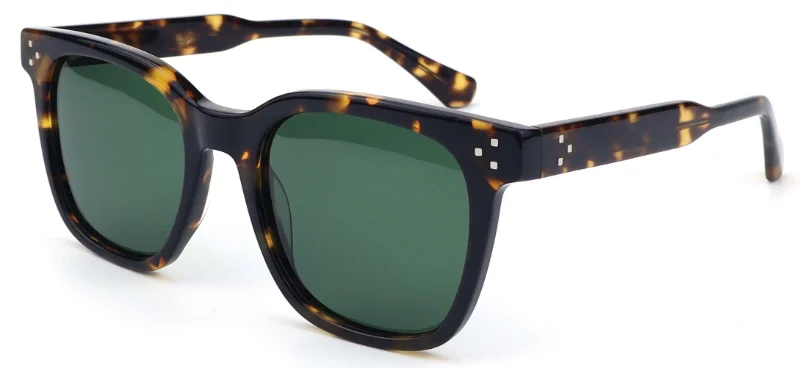
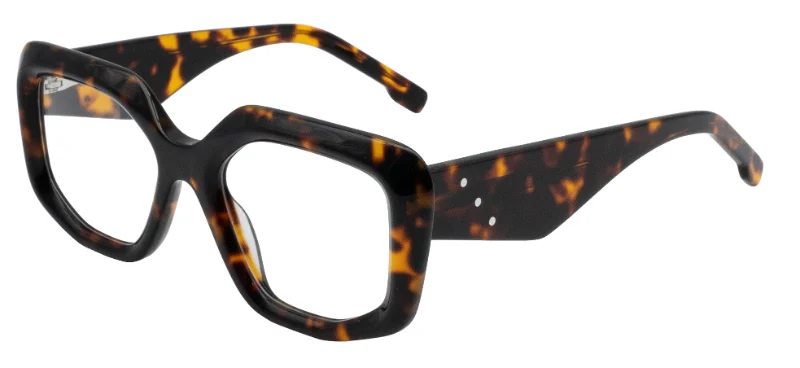
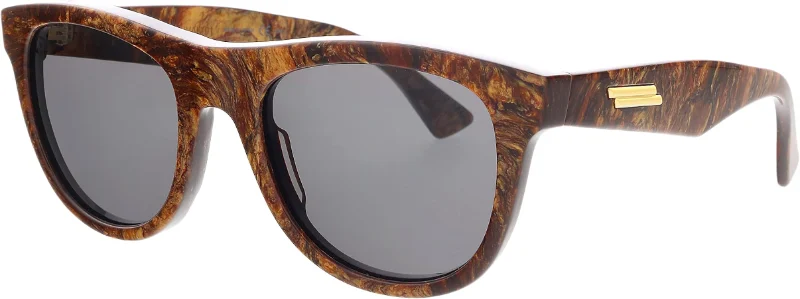
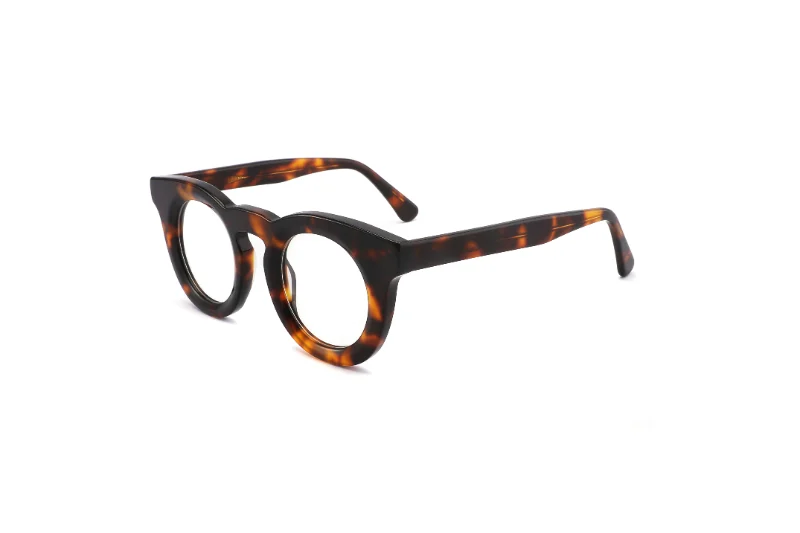
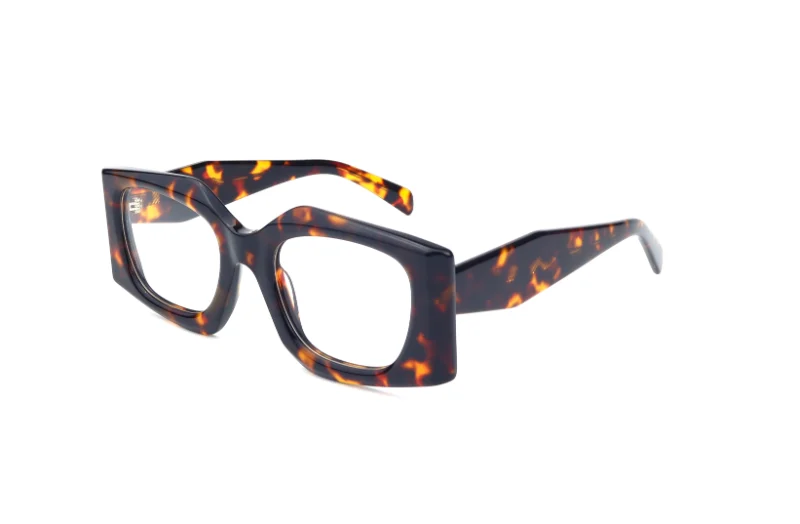
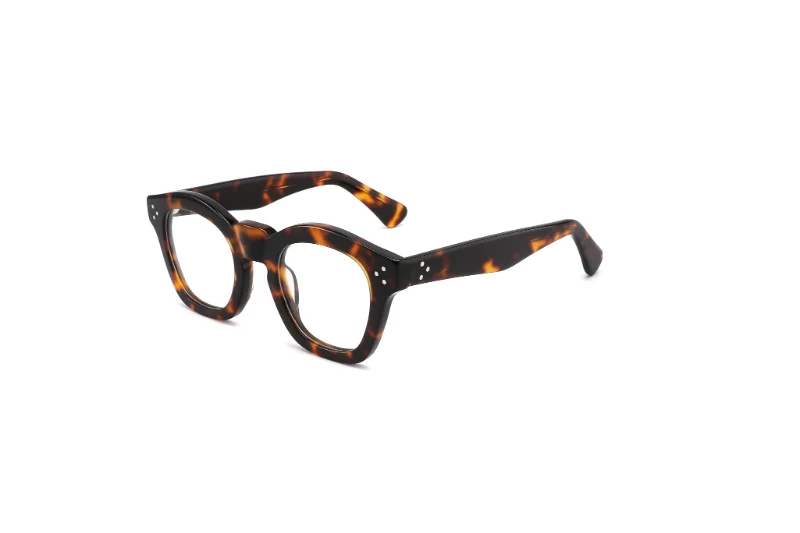
1. Classic Tortoiseshell Square
The intellectual power frame. 5–6mm thick, warm amber-brown tortoiseshell, rectangular silhouette. Brands like Oliver Peoples and Persol own this space.
- The key quality marker: The tortoiseshell pattern must run through the full material thickness. Surface-printed tortoiseshell on thick acetate eyewear looks fake because the cross-section reveals a solid color core.
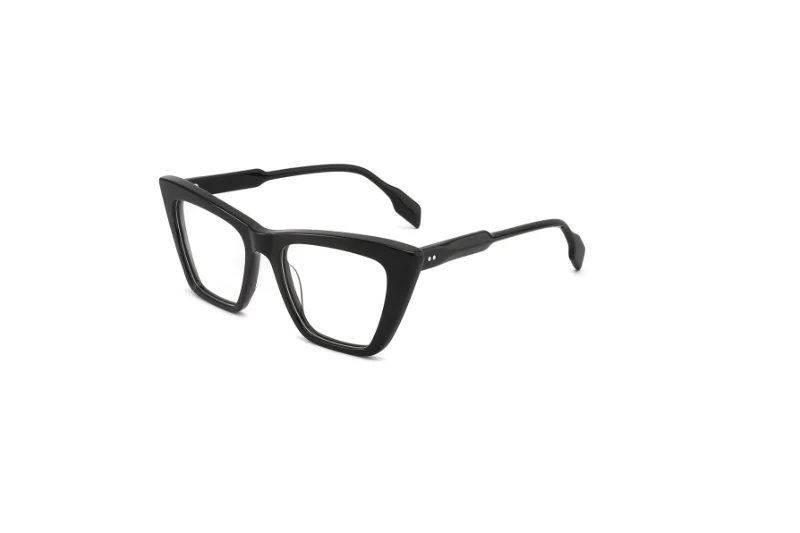
2. Bold Black Rectangle
Architectural, graphic, and uncompromising. The current design trend favors a proportionally calibrated look—frame width at or just below the cheekbone, rather than exaggeratedly oversized. Tom Ford defines this with their signature T-bar hardware.
- The key quality marker: Matte or gloss finish must be a deliberate, flawless design choice, and the edge polish must reveal deep material richness.
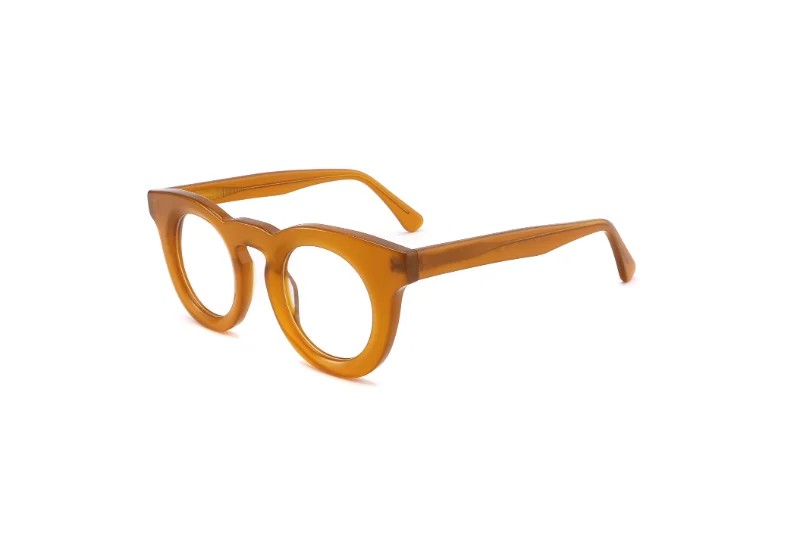
3. Warm Amber / Cognac Solid
The evolution of tortoiseshell—solid warm tones without the pattern, such as amber, cognac, and honey. This archetype works across more skin tones because there is no busy pattern to clash with features. Garrett Leight executes this style exceptionally well.
- The key quality marker: Through-colored solid acetate (never surface-tinted). The color richness should be identical at every cross-section and angle.
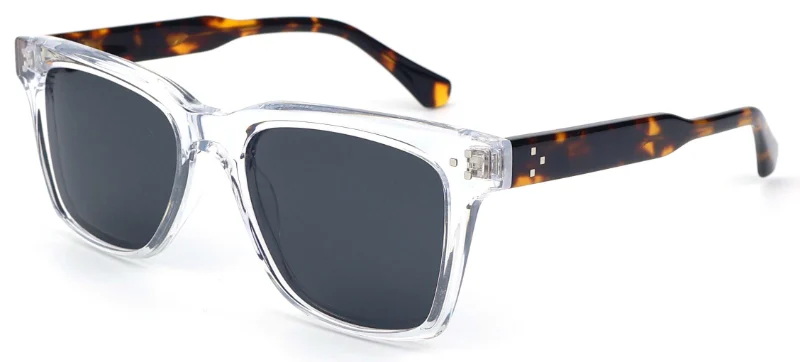
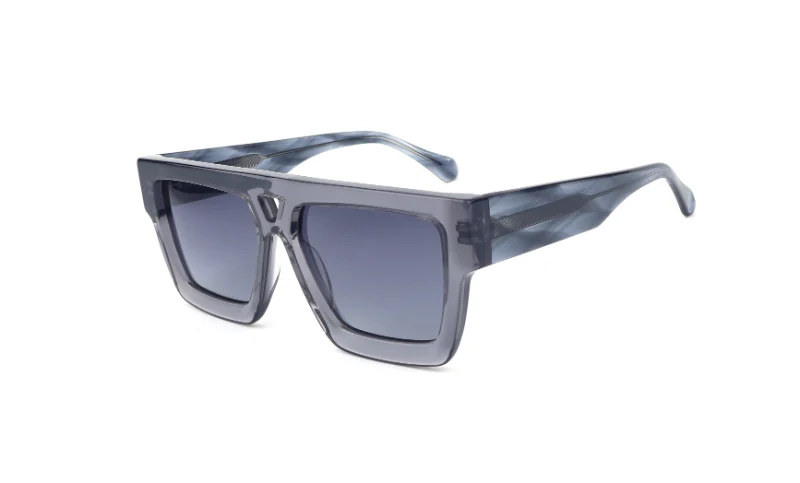
4. Transparent Thick Acetate
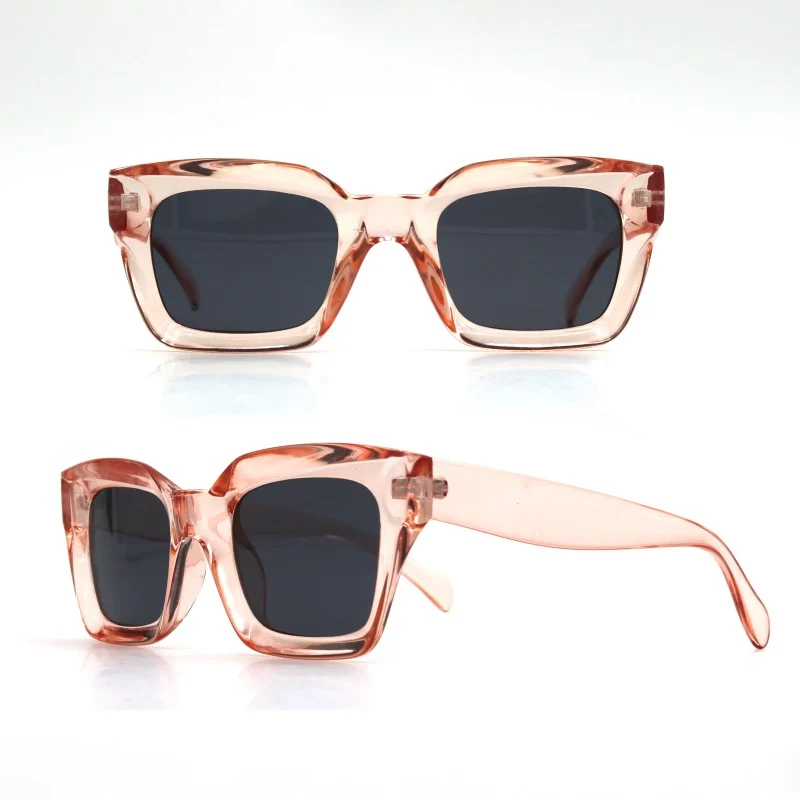
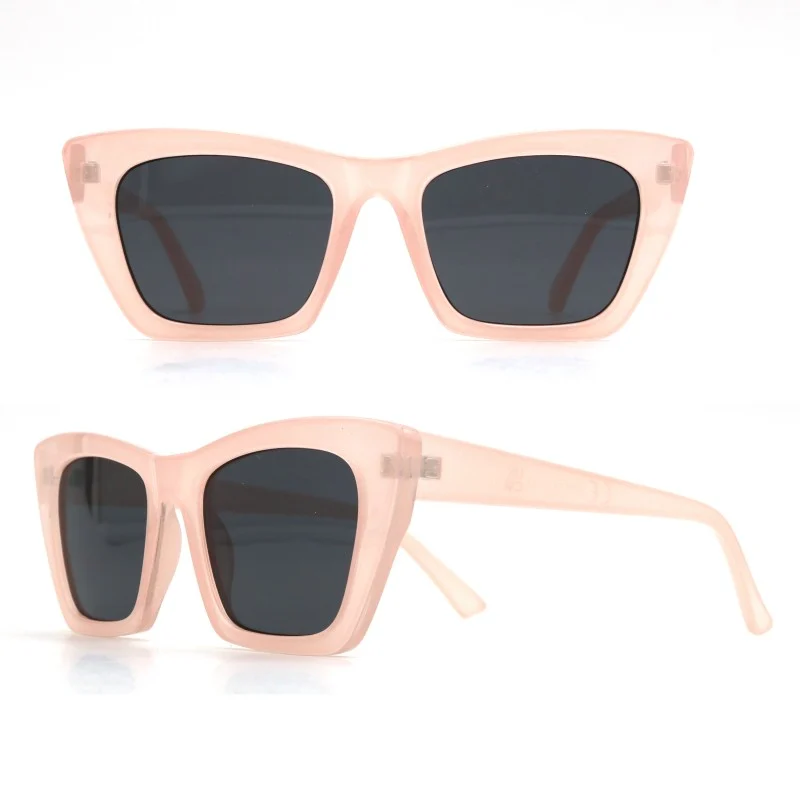
Chunky presence with visual lightness. Clear, blush, and champagne tones give the silhouette the impact of a heavy frame without the heavy visual weight. Current market direction favors warm-tinted transparency over pure crystal.
- The key quality marker: Optical-grade clarity with absolutely zero visible bubbles, flow marks, or premature yellowing.
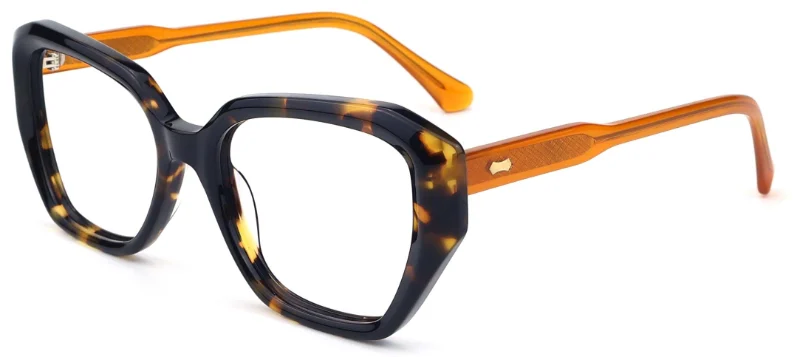
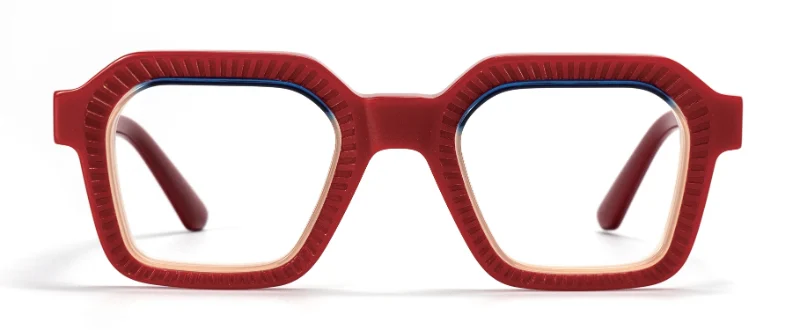
5. Dual-Tone Thick Acetate
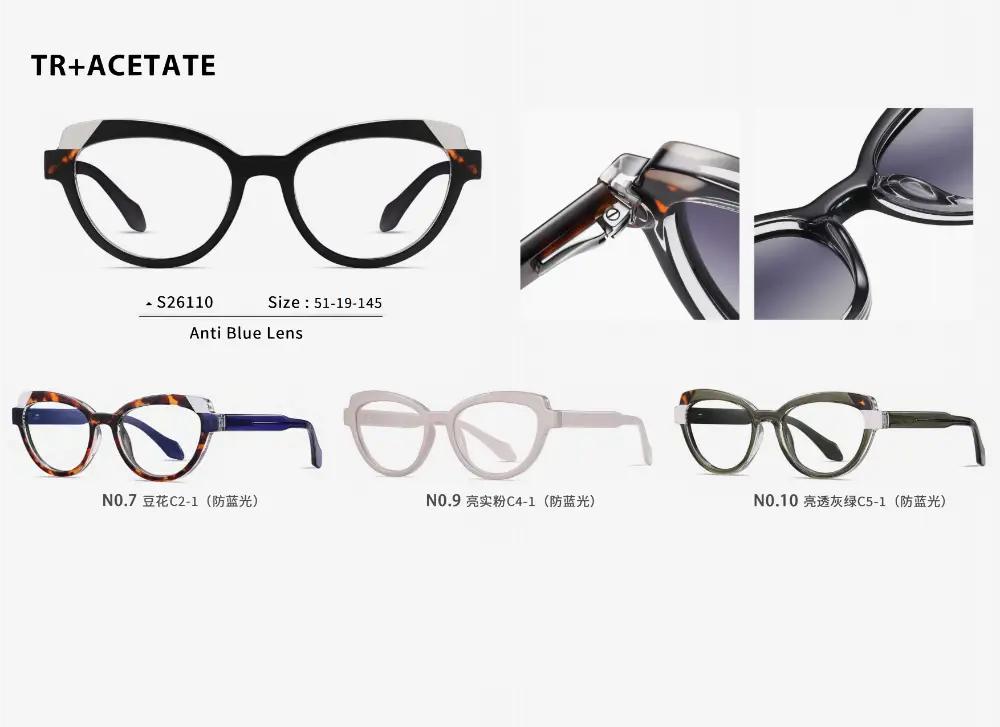
Contrasting colors in the same frame—such as a dark front with light temples, or laminated two-color material. This is the most design-forward option on the market.
- The key quality marker: The lamination seam should be virtually invisible. Visible separation or adhesive residue between color layers at the edge is the number-one quality defect in dual-tone manufacturing.
Why Material Quality Is Unforgiving in Thick Acetate Eyewear
Premium thick acetate eyewear amplifies every quality decision—good and bad—because there is simply more material on display. The three areas where quality shows include:
1. Material Depth and Luminosity
Premium, aged cellulose acetate has a luminous quality when light enters from the side. The color is not just on the surface; it exists throughout the 5–7mm thickness, creating a warm, “glowing” effect as light travels through it. Budget acetate (such as low-grade injection-molded plastic or economy sheets) absorbs light rather than transmitting it, creating a flat, cheap, and opaque look. This is the single most important quality difference, and it cannot be faked with surface polishes.
2. Edge Polish
On a thin wire frame, there is almost no edge to polish. On a 6mm thick frame, the edge is a 6mm canvas. A properly polished edge has a liquid-mirror gloss that looks like polished stone. A budget edge looks and feels like raw plastic. The difference comes down to tumbling and hand-polishing time:
| Quality Tier | Barrel Polishing Process | Hand-Polishing Stage |
| Premium | 3-stage barrel polish (72–96 hours) | Double hand-polish (felt wheel + muslin cloth wheel) |
| Mid-range | 2-stage barrel polish (36–48 hours) | Single hand-polish |
| Budget | 1-stage barrel polish (16–24 hours) | Machine-buffed only |
3. Hinge Integration
On these bold styles, the hardware is highly visible. A precision multi-barrel metal hinge with a smooth mechanism looks engineered and premium. A thin, loose, or poorly pinned hinge looks cheap—and it is the primary touchpoint your customer interacts with every time they try on the frame.
Acetate Curing: The Hidden Quality Factor
After CNC cutting, cellulose acetate contains residual solvents from the raw material manufacturing process. These solvents need time to outgas. The industry standard curing timelines dictate long-term durability:
- Premium Production (14–28 Days): Post-cutting, the components rest in a climate-controlled environment. The material stabilizes, dimensions settle, and internal stresses relax. Frames cured this way will not warp or crack at stress points after months of real-world wear.
- Standard Production (7–14 Days): Adequate for fast-fashion markets, but carries a higher risk of stress-cracking in extreme temperatures or under adjustment heat.
- Budget Production (1–3 Days): The curing stage is rushed or skipped entirely to speed up lead times. This is why budget thick acetate eyewear frequently cracks at the bridge or hinge rivets within 6–12 months—the trapped solvents escape over time, causing structural shrinkage and internal stress.
Always ask your manufacturing facility about their specific curing times. If they cannot provide a verified timeline, assume it is minimal.
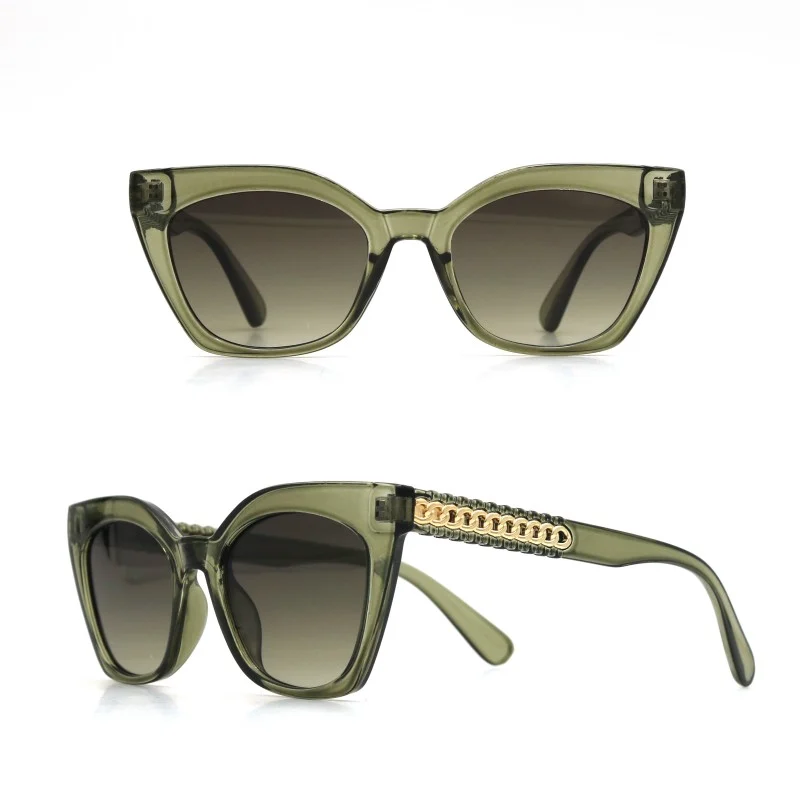
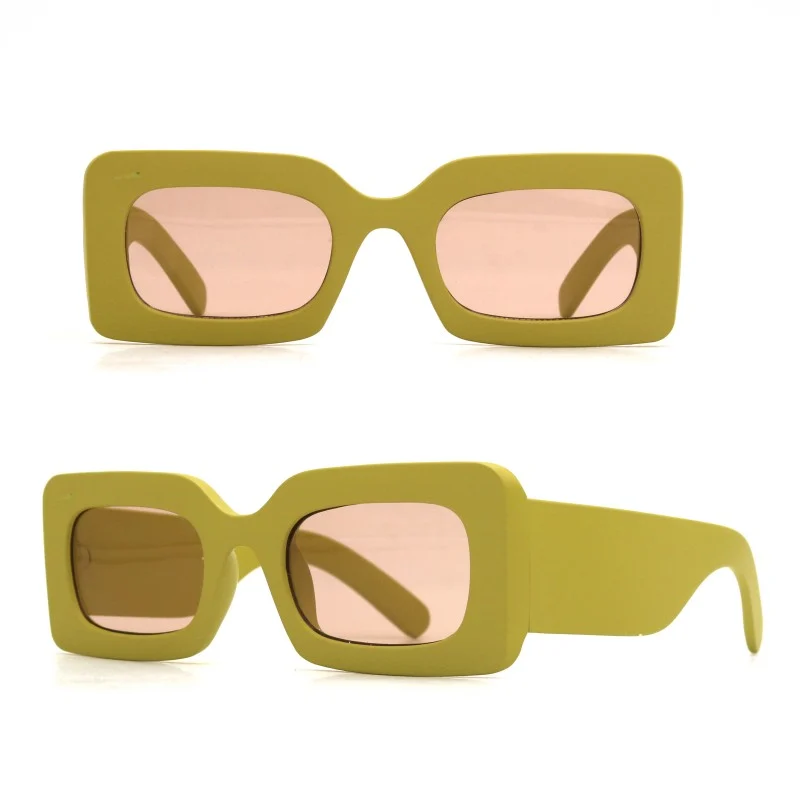
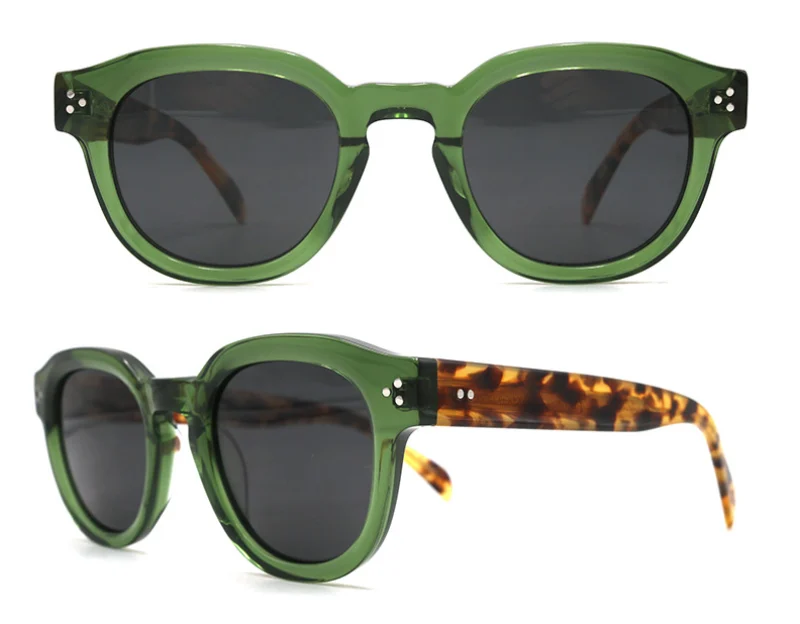
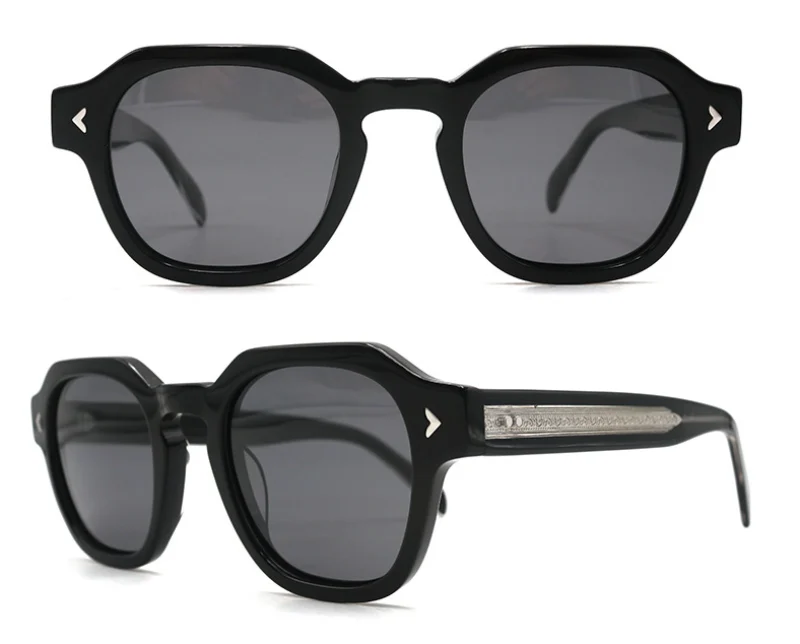
Wenzhouframe Thick Acetate Production Capabilities
- Acetate Sourcing: Top-tier imported European and Japanese cured cellulose acetate for premium collections to guarantee genuine material depth. High-grade, through-colored JH800 sheets for mid-range lines. We never use surface-tinted materials.
- Polishing Standards: Full 3-stage barrel processing (72–96 hours) paired with double hand-polishing for premium lines. 2-stage tumbling with single hand-polishing for mid-range. We never skip the manual hand-polishing phase on thick-rimmed frames.
- Curing Discipline: A strict 14–28 day post-cutting rest in climate-controlled storage. This is non-negotiable for our thick collections because higher material volume slows down solvent outgassing, making proper stabilization vital.
- CNC Precision: State-of-the-art 4-axis and 5-axis CNC machining calibrated to $\pm0.1\text{mm}$. This ensures perfectly even wall thickness with no structural weak spots at the bridge or lower rims.
- Hinge Integration: Equipped with premium German OBE hinges, high-grade KANGHUA hardware, or custom-specification multi-barrel hinges. Dark-finished, sleek hardware is utilized for black frames to maintain aesthetic continuity.
- Dual-Tone Lamination: Custom lamination bonding techniques using compatible premium sheets. Seamless fusion is strictly verified under specialized lightbox inspections.
Manufacturing top-tier thick acetate eyewear is our core competency. Send us your reference design styles today—we will show you how the same silhouette translates across different quality tiers with transparent, honest price comparisons.

6.17_11.webp)