
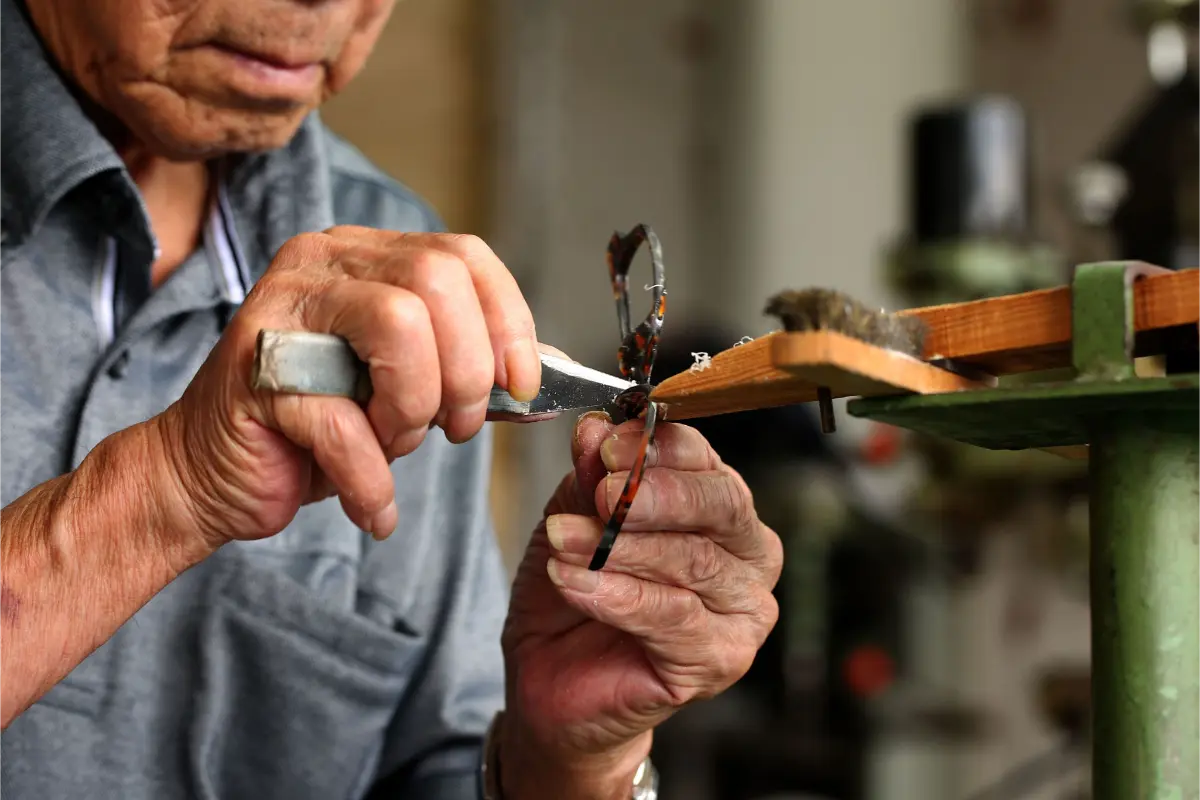
In the eyewear market, acetate frames have long been favored by premium brands and consumers alike for their warm, jade-like texture, deep color saturation, and exceptional durability. However, despite sharing the same raw material, why do some acetate glasses maintain their perfect shape and lustrous finish after years of wear, while others warp, lose lenses, or develop white patches within just a few months?
The fundamental answer lies in the manufacturer’s strict adherence to production processes and quality standards. Today, let’s step into a high-end acetate eyewear manufacturing facility to uncover the four core processes that define the pinnacle of eyewear quality.
1. Internal Stress Elimination: The 100-Hour Golden “Constant Temperature Annealing”
After undergoing heavy mechanical processing such as cutting, hot pressing, CNC digital milling, and frame bending, a massive amount of internal molecular stress accumulates within the acetate material. If left unreleased, this internal stress becomes the root cause of later deformation, shrinkage, warping, and cracking.
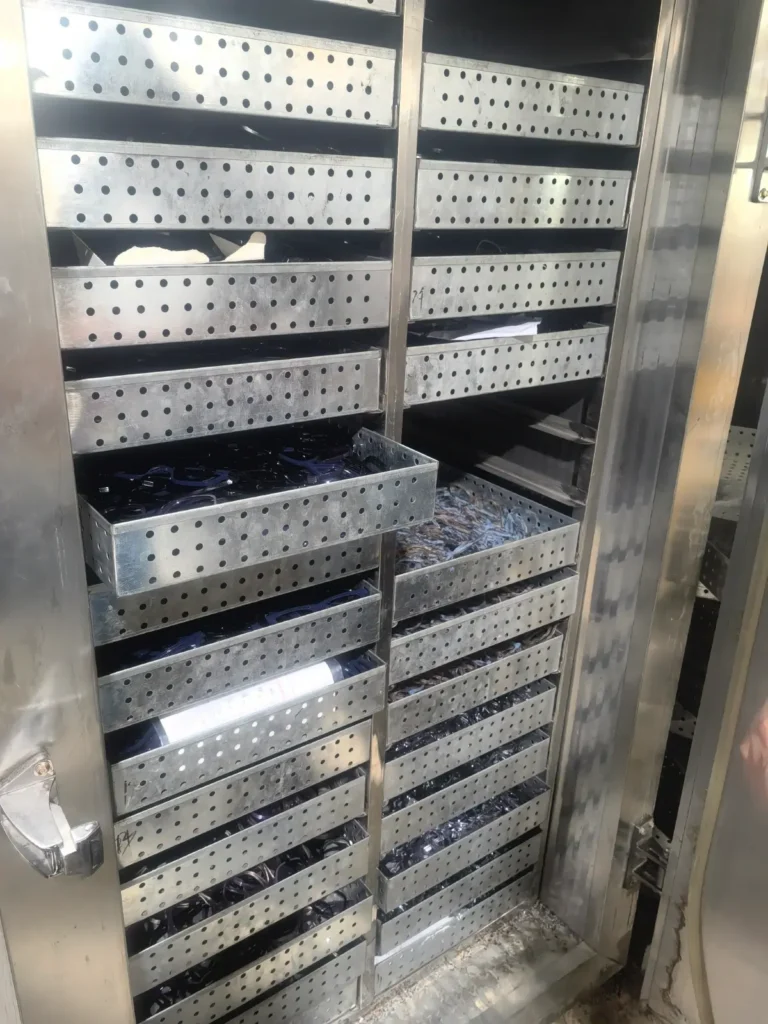
Premium eyewear factories utilize specialized air-source heat pump dryers to conduct an extraordinarily long “deep annealing” treatment on semi-finished frames.
- The 60℃ Golden Balance: The oven temperature must be precisely controlled around 60℃. Any temperature lower than 50℃ fails to release molecular stress effectively; conversely, since the softening point of acetate sits between 70℃ – 80℃, exceeding 65℃causes the material to deform and scrap.
- Nearly 100 Hours of Extreme Patience: Low-end products are often baked for only a few hours or a dozen hours before being rushed to the next stage. In contrast, premium export and luxury OEM standards mandate continuous constant-temperature baking for 72 to 100 hours.
- 10% Ultra-Low Humidity Dehumidification: The oven operates in a “drying + dehumidification” mode to drive the ambient humidity down below 20%RH (even reaching 10.6%RH). This thoroughly evacuates moisture absorbed by the acetate, preventing internal bubbling or whitening during subsequent thermal polishing, and laying a flawless physical foundation for a high-gloss mirror finish.

2. Rigorous Multi-Stage Wood Tumbling: The Soul of Material Texture
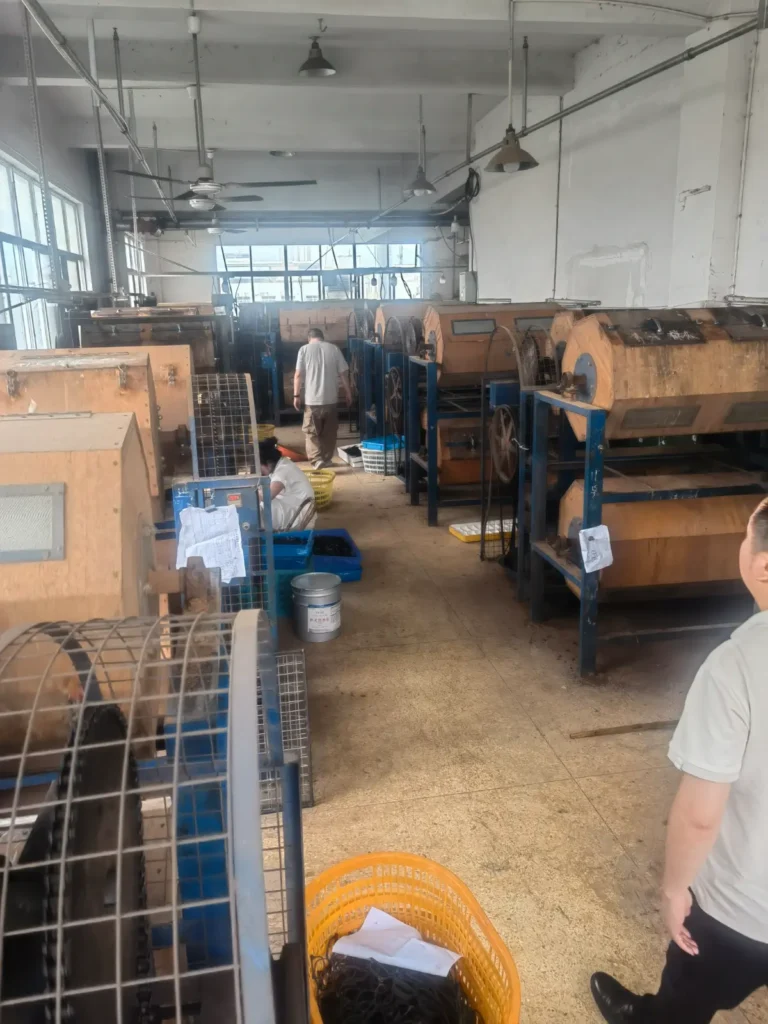
The reason acetate glasses possess a sculptural silhouette and rounded tactile feel that injection-molded plastic glasses can never replicate lies entirely within the tumbling (oil/wax tumbling) workshop, specifically inside the wooden tumbling media (wood chips). High-quality tumbling is not only incredibly time-consuming but also adheres to strict standards regarding media and processing stages:
Scientific Geometry of Wood Media
Inside the tumbling barrels, high-density hardwood chips (such as white birch, beech, or bamboo) of various shapes and sizes are blended according to the specific geometry of the frames. Large wood chips are used to rapidly flatten the broad surfaces of the temples and fronts, while sharp-angled, small wood chips (such as rhombohedrons and triangles) crawl into mechanical blind spots like endpieces and nose pad roots, ensuring a comprehensive, dead-angle-free polish.
A Strict “Four-Stage Process”
Premium acetate must undergo 3 to 4 distinct tumbling stages, with frames being thoroughly washed between each step:
- Coarse Tumbling (Tool Mark Removal): Large wood chips + coarse abrasive oil, tumbled continuously for 24 hours to slice away mechanical tool marks and burrs left by CNC carving.
- Medium Tumbling (Surface Leveling): Medium wood chips + medium abrasive paste, tumbled for 18 – 24 hours to eliminate coarse scratches, leaving the surface perfectly flat and smooth.
- Fine Tumbling (Glossing): Smaller wood chips + polishing wax oil, tumbled for 12 – 18 hours to bring out the inherent transparency and color depth of the cellulose acetate.
- Finish/Oil Tumbling (Mirror Gloss): Utilizing micro-sized wood chips + premium imported glossing oil for a final slow tumble. This serves as the watershed dividing premium craftsmanship from low-end alternatives, giving the frames a deep, mirror-like luster.
Furthermore, factories enforce a strict screening mechanism to regularly filter out old wood chips that have become blunt and rounded, ensuring the abrasive media inside the barrels remains sharp, and that barrels are strictly dedicated to their specific stages without cross-contamination.


3. Precise Chiller Flash Freezing: The “Ice & Fire” Art of Instant Setting
During the processes of frame bending (curving flat acetate to fit the face) or high-frequency thermal hinge embedding, the acetate must be locally heated to 70℃ – 80℃ until it softens. At this precise moment, the cooperation of a high-precision industrial water chiller becomes absolutely critical.
- Instant Shape-Locking to Prevent Spring-Back: Once thermal pressing or bending is complete, the acetate naturally tends to spring back. High-end factories reject the use of ambient tap water, which fluctuates wildly in summer. Instead, they use a water chiller to hold the circulating water temperature strictly constant between 8℃- 15℃ (with a variance under ±1℃. Through flash cooling (sinking) within seconds, the acetate molecular chains are instantly frozen and locked, permanently securing the front curvature and hinge angles.
- Preventing Local Melting Around Hinges: The rapid heat dissipation provided by the chiller draws residual heat away from the metal components. This prevents the metal from overheating and melting the surrounding acetate—which causes bubbling, whitening, or plastic overflow—ensuring a clean, seamless, and flush joint where metal meets material.
4. Full-Chain Quality Redlines: AQL 2.5 and Physical Limit Testing
Beyond exquisite manufacturing steps, a truly high-end acetate factory commands a comprehensive quality management system:
- Material Aging: Procured premium acetate sheets must be stored in a temperature- and humidity-controlled warehouse to naturally age for several months, allowing the material to release initial stress right from the source.
- Premium Supply Chain Integration: Core components are strictly sourced from tier-one industry brands (such as Visottica, OBE, Globe, etc.) for high-end hinges and screws.
- The Artisan’s Touch: After tumbling, experienced craftsmen perform meticulous manual scraping and a final round of hand-buffing on cloth wheels, bestowing the frames with a lively, structural definition that machinery alone cannot achieve.
- AQL 2.5 Inspection Standards: The facility strictly enforces AQL 2.5 Acceptable Quality Limit standards during pre-shipment inspections, maintaining a zero-tolerance policy for defects such as micro-bubbles or uneven polishing. Concurrently, finished products must pass high-low temperature cycle testing, tens of thousands of hinge cycle life tests, and sweat/UV resistance testing. Every pair is manually calibrated to ensure symmetrical temples and perfect four-point alignment before final delivery to the client.
5. Full-Chain Quality Redlines: In-Process Gatekeeping and Rework Standards
Beyond exquisite manufacturing steps, a truly high-end acetate factory commands a strict quality management system, implementing multi-stage gatekeeping throughout the entire production floor to catch issues early and mandate reworks.
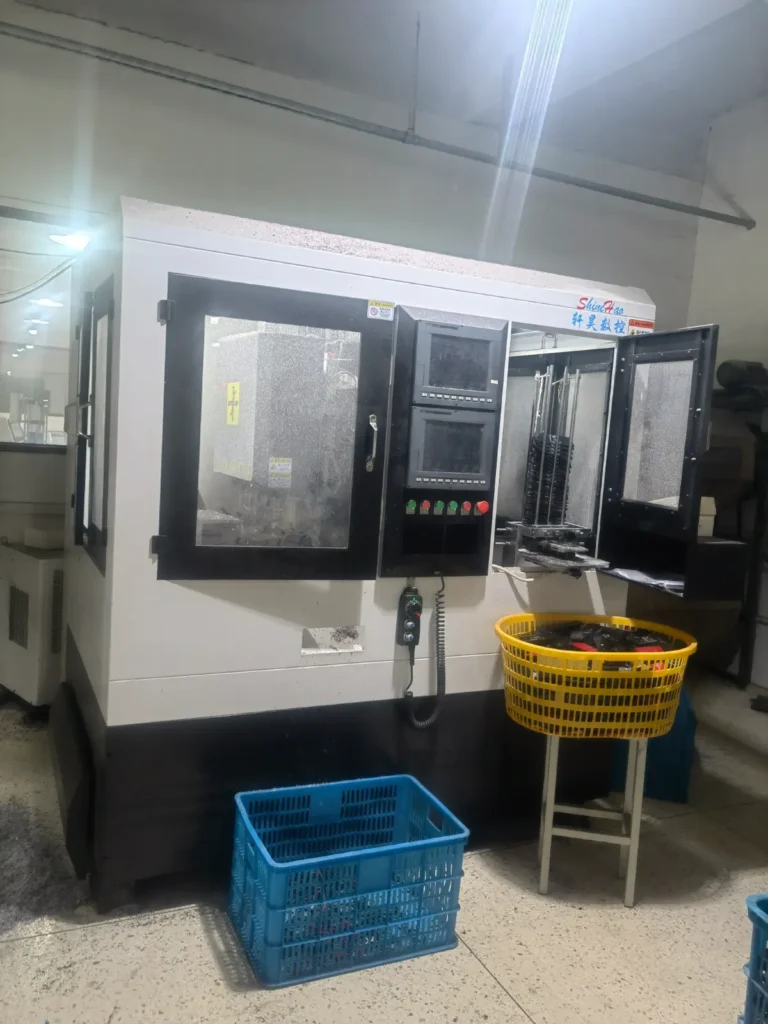
- CNC Milling Check: Right after milling, inspectors verify frame dimensions within a strict $\pm0.05\text{mm}$ tolerance. Minor burrs are sent back for manual scraping, while uneven lens grooves are permanently scrapped.
- Hinge Embedding Check: Following high-frequency thermal pressing, hinge alignment and tilt angles are instantly verified on leveling blocks. Crooked hinges are sent back for re-heating and manual alignment before being flash-frozen again.
- Tumbling & Polishing Check: After each tumbling stage, frames are washed, dried, and inspected under high-intensity lamps. If inspectors spot hidden “pinholes” (sand holes) or faint tool marks, the batch is sent back to the previous stage for rework.
- Final Assembly & Pre-Shipment QC: Before packing, every pair undergoes a 100% manual inspection under strict AQL 2.5 standards. This includes the “Four-Point Alignment” test on a glass platform; a variance over $0.5\text{mm}$ means it is sent back to the heating-alignment crew for recalibration.
Conclusion
The birth of a high-quality acetate frame is essentially a process of using “more physical time,” “more expensive industrial temperature-control equipment,” and “finer artisan craftsmanship” to conquer the natural physical tendencies of the material. Every setting precise down to 1℃ and every barrel rotating for hundreds of hours represents a deep respect for premium quality. Choosing a production line with such rigorous standards is the ultimate moat for an eyewear brand looking to build a long-term reputation.

6.17_11.webp)