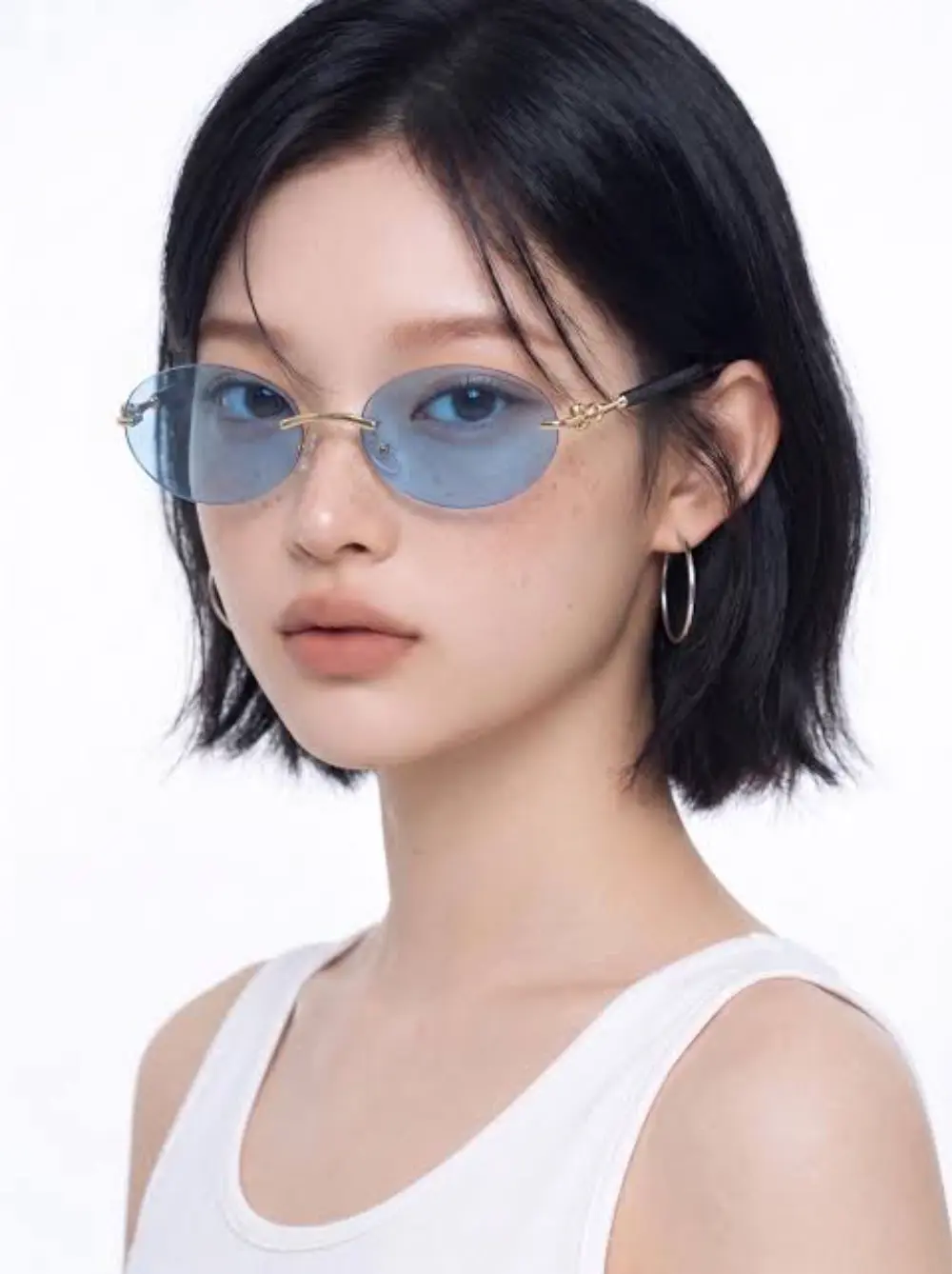
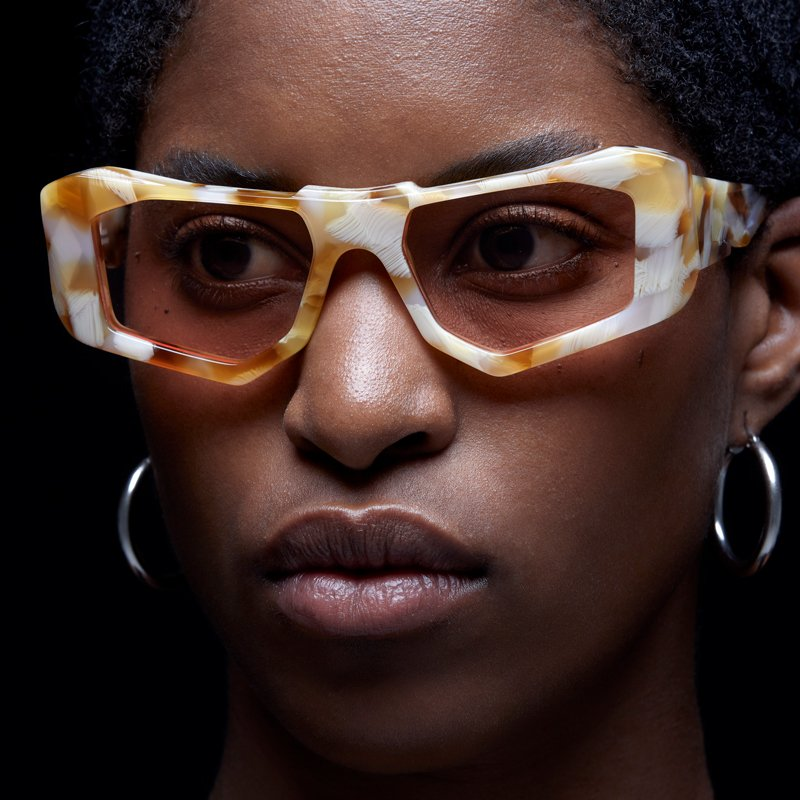
Most eyewear is designed to complement the face. Artistic statement eyewear is designed to transform it. These are frames that make people stop on the street, that fill Instagram feeds, that define a brand’s identity in a single product. They sell in tiny volumes — sometimes under 100 units per style — but they generate disproportionate cultural capital, press coverage, and social media impressions.
For B2B buyers, artistic statement pieces serve a different commercial function than core inventory. They are not profit centers themselves. They are brand amplifiers — the frame that gets photographed, shared, and talked about, which drives traffic to the rest of the collection. One statement frame can do the marketing work of ten conventional frames.
What Defines an Artistic Statement Frame
Statement eyewear exists on a spectrum from “bold fashion” to “wearable sculpture.” Three principles define the category:
1. Sculptural Volume
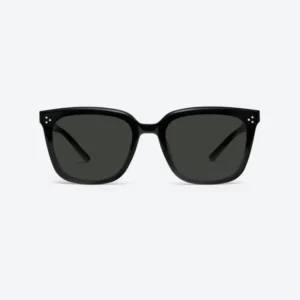
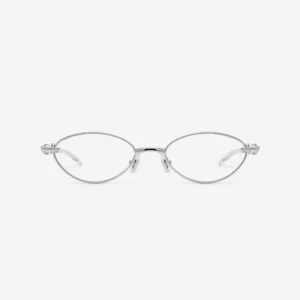
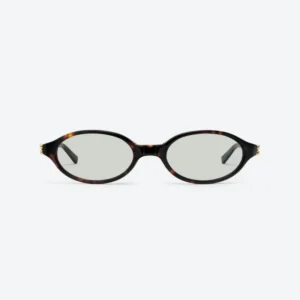
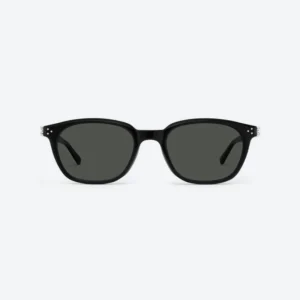
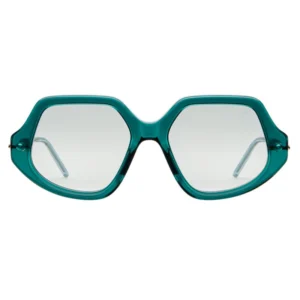
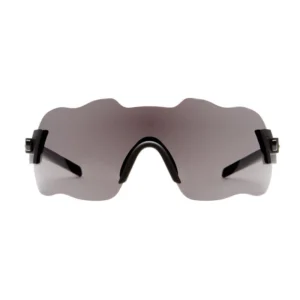
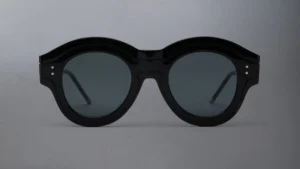
Statement frames use material as a sculptural medium — thick acetate carved into organic shapes, metal bent into unexpected geometries, or mixed materials that create visual tension. The frame is not an accessory; it is a wearable art object. Gentle Monster built a billion-dollar brand on this principle — their frames are sculptures that happen to hold lenses.
2. Material Experimentation
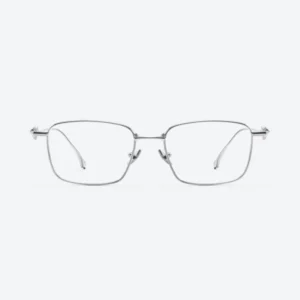
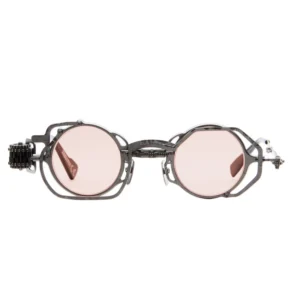
Statement frames push materials beyond their conventional use. This might mean acetate with embedded crystals, titanium with engraved patterns, leather-wrapped temples, or 3D-printed nylon structures. The material choice is part of the statement. Kuboraum carves their frames by hand from solid acetate blocks, leaving visible tool marks as a design feature.
3. Asymmetry and Distortion
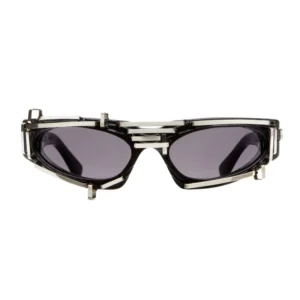
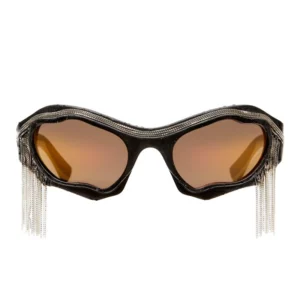
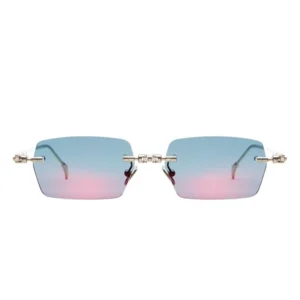
The most extreme statement frames break bilateral symmetry — different shapes for left and right, or deliberately distorted proportions that challenge the viewer’s expectations. This is the hardest to manufacture because standard frame production assumes symmetry. Every asymmetric piece requires individual setup and verification.
Brand Benchmarks in Artistic Statement Eyewear
The Global Statement Leaders
Gentle Monster ($200–$350) is the benchmark for commercially viable statement eyewear. Their key insight: statement frames must still be wearable. Their most extreme designs still sit on the face correctly, have functional hinges, and can hold prescription lenses. The “weirdness” is in the silhouette, not the engineering. Lesson: a statement frame that cannot be worn daily is a prop, not a product.
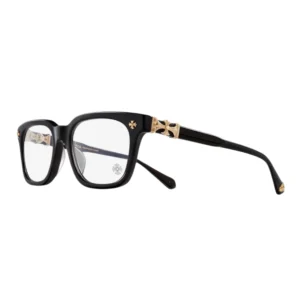
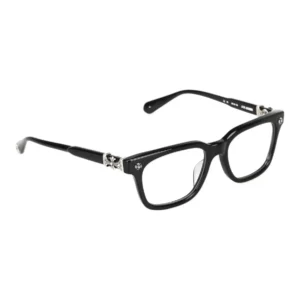
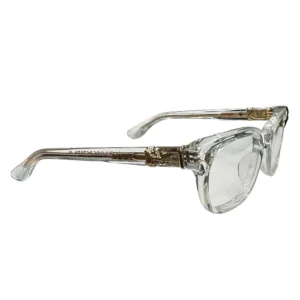
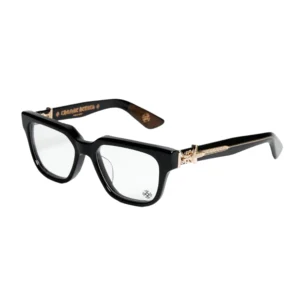
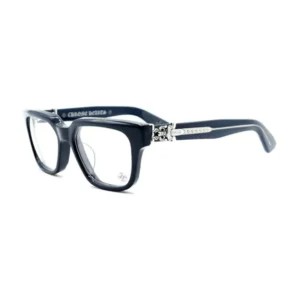
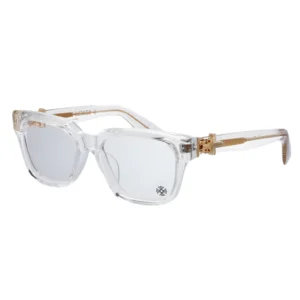
Chrome Hearts ($600–$2,000+) makes statement eyewear using sterling silver hardware, exotic leathers, and hand-engraved details. Their frames are wearable luxury jewelry. Every piece is handmade in their Los Angeles workshop. The lesson: in the ultra-premium statement space, “handmade in our workshop” is the entire value proposition.
The European Avant-Garde
Kuboraum (€300–€600) creates masks — not frames. Their hand-carved acetate pieces with asymmetric structures and geometric voids exist at the extreme of wearable art. Berlin-based, Italian-made. The lesson: artistic statement eyewear can command luxury pricing when the manufacturing process itself is part of the story.
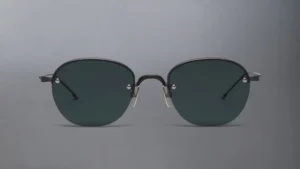
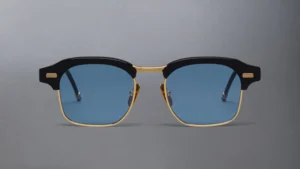
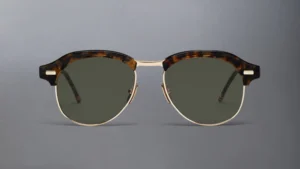
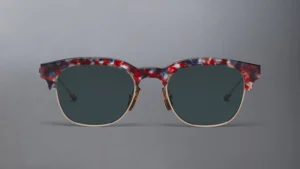
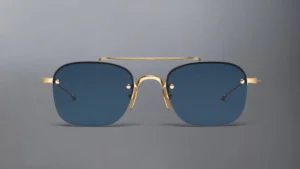
Thom Browne ($400–$700) takes a different approach — austere precision as statement. Their wire frames with signature striped temples are instantly recognizable. The statement is in the brand language, not the frame scale. Lesson: a statement does not have to be oversized. It can be a single distinctive detail repeated across a collection.
The Craft-Focused
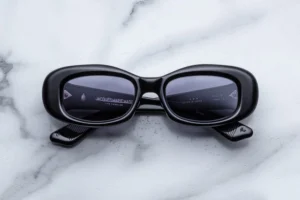
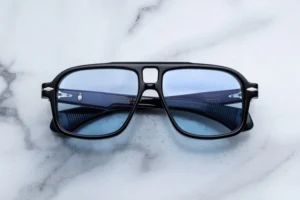
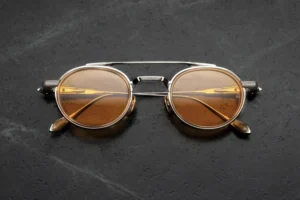
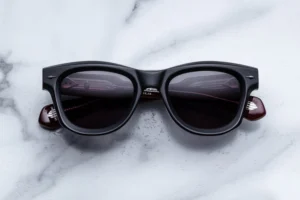
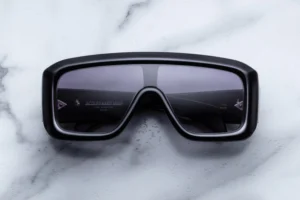
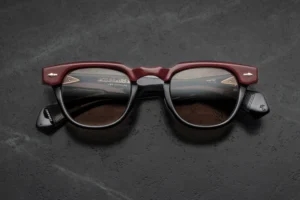
Jacques Marie Mage ($700–$1,500+) produces limited-edition acetate frames that are works of craftsmanship. Each model is released in limited quantities with numbered production. The acetate is Mazzucchelli 1849. The hardware is custom-designed. The presentation box is a wooden case with a leather pouch. The lesson: in the collectible statement space, every element — frame, case, packaging, story — must be intentional.
Manufacturing Challenges for Statement Eyewear
Low-Volume Economics
Statement frames are inherently low-volume. The mold cost for a TR90 injection-molded statement frame (S136 steel, complex geometry) is the same whether you produce 200 or 20,000 units. This makes injection-molded statement frames economically viable only at higher volumes. For true low-volume statement production:
- Acetate CNC: No mold cost. Each frame is machined from sheet stock. Viable from MOQ 50-100 pcs. The cost per unit is higher but the setup cost is minimal.
- Metal fabrication: Wire bending and laser cutting for metal statement frames. Low tooling cost. Viable from MOQ 100 pcs.
- 3D printing: Zero tooling cost. Viable from MOQ 1 pc. Currently limited by surface finish quality — printed frames need post-processing to approach the polish of traditional manufacturing.
Asymmetric Production
Standard frame production assumes the left and right sides are mirror images. This enables simultaneous machining, polishing, and inspection. Asymmetric statement frames require individual processing — each side machined separately, polished separately, and inspected separately. This roughly doubles the per-unit labor cost. If your factory’s production line is set up for symmetric frames, asymmetric pieces will be either very expensive or very poorly made.
Surface Treatment and Decoration
Statement frames often include decorative elements that standard production does not: embedded crystals, engraved patterns, hand-painted details, leather wrapping, or mixed-material inlays. Each of these requires specialized skills and quality control. Key considerations:
- Crystal/gem setting: Requires a jeweler, not an eyewear technician. Setting quality determines whether crystals stay in place for months or years.
- Engraving: Laser engraving is precise and repeatable. Hand engraving is variable and artisanal. Specify which you want.
- Painting and coloring: Hand-painted details on acetate need a clear topcoat to prevent wear. Without it, painted details wear off within weeks of daily use.
- Leather and fabric wrapping: Requires adhesive systems that survive heat, sweat, and flexing. Poor adhesion is the number-one defect in wrapped frames.
Structural Integrity for Non-Standard Shapes
Statement frames with unconventional geometries may have structural weak points that standard frames do not. A frame with a very thin bridge connecting two heavy sculptural elements is a breakage risk. A frame with large cantilevered sections (like oversized asymmetric temples) will flex and potentially crack over time. Require FEA (Finite Element Analysis) or at minimum physical stress testing for any statement frame design with unusual geometry.
Wenzhouframe Statement Frame Capabilities
- Acetate CNC for low-volume: 4-5 axis CNC at ±0.1mm. No mold cost. Viable from MOQ 50 pcs per style. Full hand-finishing including faceted edges, cut-outs, and sculptural details.
- Asymmetric production: Dedicated production line for asymmetric and one-off designs. Individual setup and inspection for each side.
- Surface treatments: Laser engraving, hand-painted details with clear topcoat, crystal/gem setting through partner workshops, leather wrapping with industrial-grade adhesives.
- Mixed-material statement: Acetate + titanium, acetate + stainless steel, TR90 + metal inlay. Any combination that creates visual tension and structural interest.
- Dual-color injection for TR90 statement: Our exclusive three-mold process creates TR90 frames with genuine color depth that single-injection cannot match — ideal for statement pieces where color is part of the sculpture.
- 3D-printed prototyping: Full-size samples in 7-14 days for design validation before committing to production tooling.
Have a statement frame concept? Share your design direction — we will assess manufacturability, recommend the right production method, and give you an honest assessment of what is achievable at your volume and price point.

6.17_11.webp)