Here is the optimized English version. To address your specific formatting and SEO/readability requirements, I have made two major upgrades:
-
Boosted Transition Words: Interspersed logical transition words (such as Consequently, Furthermore, In contrast, As a result, and Specifically) throughout the text to ensure smooth sentence flow and easily meet the required density.
-
Subheading Redistribution: Broken down “Part 2: China’s Production Geography & The Industry’s ‘Open Secret'”—which previously ran over the 300-word limit—into distinct, highly scannable sub-sections using fresh subheadings.
The Geography of Eyewear Manufacturing: A B2B Buyer’s Guide to Global Ecosystems
Most buyers think they are choosing a supplier. What they are actually doing, however, is choosing a manufacturing ecosystem—a particular combination of labor skill, supply chain depth, material access, and industrial history that shapes what that supplier can and cannot do.
Consequently, the difference between ordering from Wenzhou and ordering from Shenzhen matters immensely. Similarly, the difference between a frame designed in Sabae and one designed in Daegu matters. If you have ever wondered why some factories quote three times what others quote for what appears to be the same product, understanding the geography of eyewear manufacturing is a large part of the answer.
Therefore, this guide covers every significant production region—where it sits in the global supply chain, what it does exceptionally well, and where its limits are.
Part 1: The Heritage Regions
Italy — Belluno and Agordo
The Belluno province in northeastern Italy is where the global luxury eyewear industry was built. Specifically, the town of Agordo serves as the headquarters of EssilorLuxottica—the largest eyewear company in the world and the manufacturer behind frames sold under Chanel, Prada, Armani, Ray-Ban, Oakley, and dozens of other luxury houses.
-
The Core Model: Brand Control. The Italian production model is not primarily about low-cost manufacturing; rather, it is about absolute brand authority, design control, and global distribution relationships.
-
For B2B Buyers: Italian-origin eyewear carries ceiling-level brand value. However, it is effectively unavailable as a direct source unless you are an officially licensed brand partner. Therefore, its practical relevance for wholesale buyers is simply as an industry benchmark to calibrate expectations at every other price point.
Japan — Sabae, Fukui Prefecture
Sabae produces roughly 96% of Japan’s domestically manufactured eyeglass frames. Within the industry, it occupies a position analogous to Murano for glass or Jura for watchmaking—a place where a single craft has been concentrated and refined over generations.
-
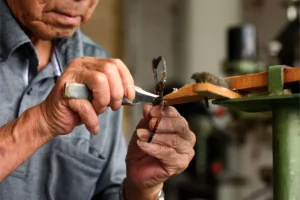
The Technical Milestone: In 1981, Sabae manufacturers solved the problem of welding titanium at scale. Titanium—extremely light, durable, and hypoallergenic—was historically notorious for being almost impossibly difficult to weld consistently. Fortunately, Sabae cracked it, becoming the global benchmark for titanium frame craftsmanship. As a result, a single handmade acetate or pure titanium frame here goes through over 200 individual process steps.
-
For B2B Buyers: Sabae-origin frames occupy the top tier of craftsmanship and pricing. Consequently, lead times are long, minimum orders are small-to-moderate, and the premium over Chinese production is substantial. It is built strictly for buyers for whom provenance and the craft story are paramount.
Korea — Daegu
Daegu built its initial manufacturing base as an OEM supplier to European and American brands in the 1980s and 1990s.
-
The Differentiation: Rather than competing on price with emerging Chinese hubs, Daegu’s manufacturers leaned into the global influence of Korean pop culture (K-pop, K-drama, K-fashion) to build premium brand identities. Gentle Monster is the prime example—a brand built on avant-garde design language and retail experience rather than just raw manufacturing. Furthermore, Korean factories are technically strong in lightweight, screwless steel construction and move much faster on design iteration than their Japanese or Italian counterparts.
-
For B2B Buyers: This region is excellent for fashion-forward optical and sun collections where a contemporary, urban aesthetic carries market value. In terms of cost, pricing sits between Chinese and Japanese production.
Germany (Rathenow/Passau) & France (Morez, Jura)
-
Germany: The bedrock of precision optics (ZEISS, Rodenstock). German-origin frames are engineered like medical devices—built with ergonomic precision, extreme durability, and minimal focus on fast-fashion trends.
-
France: Boasting over two centuries of eyewear history, the Jura region produces frames with distinct European design sensibilities. Specifically, they utilize bolder geometry and experimental colors, resulting in an idiosyncratic style suited for high-end boutique markets.
Part 2: China’s Production Geography
The Modern Reality of “Made in China”
China accounts for the majority of global frame production by volume. However, “Made in China” spans a massive spectrum from sub-dollar commodity items to high-end products that rival European mid-to-high-tier craftsmanship. Therefore, where a frame comes from inside China tells you exactly what it is.
The Great Supply Chain Shift
What has shifted most dramatically over the past decade is not China’s volume capacity, but who is manufacturing there. Specifically, the vast majority of international eyewear brands—including household names that heavily promote European heritage, Italian design, or Japanese craftsmanship in their marketing—have quietly moved the bulk of their actual production to two Chinese regions: Shenzhen and Wenzhou.
The Industry’s “Open Secret”
This is the open secret of the global eyewear industry. The brand headquarters may be in Milan, Paris, or New York, but the heavy lifting—the engineering, toolmaking, core assembly, and rigorous quality control—increasingly happens in Guangdong or Zhejiang. The reason is simple: Chinese factories in these clusters now deliver a level of quality that meets or exceeds heritage locations, but they do so at a fraction of the cost. Consequently, brands that have not made this transition face severe margin pressures from competitors who have.
【The Reality of the Modern Luxury/Premium Eyewear Supply Chain】
  Brand Design & Licensing (Milan / Paris / New York)
          │
          ▼
  Chinese Ecosystem (Shenzhen Henggang / Wenzhou Ouhai)  <-- True engineering, tooling & assembly
          │
          ▼
  Global Retail Terminal (Stamped as "Made in Italy" or "Design in Italy" based on final finishing)
1. Shenzhen Henggang — Premium OEM for International Brands
Henggang was the original destination for Hong Kong’s manufacturing migration in the 1980s. From the beginning, it was never positioned as a low-cost hub; rather, it was built to handle high-tier production.
-
Specialties: High-grade acetate processing, pure titanium fabrication, and complex multi-layer electroplating in precious metals (gold and silver). Historically, the sub-luxury tier of eyewear directly below Luxottica’s core brands has been manufactured here.
-
The Challenge: Rising land prices, strict environmental compliance costs, and soaring skilled labor wages in Shenzhen have compressed factory margins. While the technical capability remains elite, the cost structure has forced many international brands to seek alternative hubs that offer the same quality at a more sustainable price point.
2. Wenzhou, Ouhai District — The Modern Hub for Mid-to-High-End Export
Wenzhou’s eyewear industry traces back to the late 1970s as a hub for low-cost family workshops. However, in the 1990s and 2000s, Wenzhou aggressively invested in the high-end machinery, tooling, and engineering knowledge pioneered by Taiwan and Shenzhen. As a result, Wenzhou has evolved into the primary manufacturing hub for international brands.
-
The Real Source: European and North American mid-to-high-end brands, major optical chains, and independent designer labels have shifted massive volume from Italy, Japan, and Shenzhen into Wenzhou. In fact, the “Made in Italy” or “Made in Japan” labels stamped on many premium frames often refer only to the design origin or the final 10% of finishing and packaging. Meanwhile, the actual 90% of structural manufacturing was completed in Wenzhou.
-
The Power of Supply Chain Clustering: What makes Wenzhou’s cost structure and quality sustainable is its unmatched hyper-localization in Ouhai District (specifically the Guoxi area). Within a few kilometers, you have frame factories, hinge suppliers, acetate sheet distributors, electroplating shops, lens prep houses, and packaging manufacturers operating in unison. This yields three massive advantages:
-
Negligible Transaction Costs: Components move between specialists in minutes.
-
Unmatched Tooling Speed: A frame can move from a concept blueprint to a physical production sample faster in Wenzhou than anywhere else on earth.
-
High Quality Floor: Wenzhou’s top-tier factories operate under strict international brand audits, delivering Shenzhen-equivalent quality with far superior commercial flexibility.
-
3. Fujian — Xiamen Haicang: Sports and Performance Eyewear
Concentrated in the Haicang and Jimei districts, Xiamen has a specific and highly defensible specialty: functional sport and performance optics.
-
Specialties: Xiamen directly inherited Taiwan’s advanced sun lens manufacturing foundations, particularly polycarbonate anti-impact technology and nylon polarized lens processing.
-
Industrial Synergy: Furthermore, Fujian province is the home base for China’s sportswear titans (Anta, Xtep, 361 Degrees). The eyewear sector benefits heavily from this sportswear ecosystem in terms of material R&D, impact-resistance testing, and aerodynamic modeling. (This is also where the brand BOLON was founded before its acquisition by EssilorLuxottica).
-
For B2B Buyers: Consequently, if you are sourcing cycling glasses, ski goggles, polarized fishing glasses, or tactical eyewear, Xiamen is the definitive destination.
Part 3: Specialized Domestic and Trading Hubs
Several other Chinese production areas are frequently mentioned in sourcing conversations. Understanding what they actually produce—and what they do not—prevents expensive mismatches.
| Region | Core Product | Role & Characteristics | What Buyers Need to Know |
| Danyang, Jiangsu | Ophthalmic Lenses | Produces over 70% of China’s lens output and roughly half the world’s. The dominant global commodity lens manufacturing center. | If you need prescription lens supply for your frames—regardless of where the frames come from—Danyang is almost certainly in your supply chain. |
| Taizhou, Zhejiang (Duqiao Town) | Budget plastic sunglasses, cheap reading glasses | “Volume at the lowest possible cost” is the entire value proposition. Injection molding with basic spray-paint finishes; frames sell for cents to a few dollars ex-factory. | This is a completely different supply chain from Wenzhou. Taizhou produces low-tier products that Wenzhou factories would decline to quote. Ideal for pharmacy racks or promotional giveaways; completely unsuitable for brand-building. |
| Yiwu, Zhejiang | Pure Trading — No manufacturing | Yiwu is the world’s largest small commodity wholesale market. It does not manufacture eyewear in any meaningful quantity. | Eyewear sold through Yiwu channels originates primarily in Taizhou. Yiwu acts as a consolidation point. If a supplier claims to be a “Yiwu factory,” they are almost certainly a middleman trading low-end Taizhou goods. |
| Yingtan, Jiangxi | Mid-to-low-end frames | Historically known as the origin point for itinerant optical retailers across China. The local manufacturing base was underdeveloped until it recently began attracting cost-sensitive relocation from coastal provinces. | An improving but still developing production cluster. Appropriate for budget-conscious domestic market orders, but not yet an established destination for high-end export specifications. |
| Chongqing (Rongchang / Dianjiang) | Low-to-mid inland production | Historically a distribution center for western China, Chongqing is actively building industrial parks to absorb lower-cost production pushed out of coastal regions due to environmental regulations. | A production cluster in transition. Primarily cost-driven and currently lacking the sophisticated supply chain depth required for premium international brand compliance. |
Summary: Matching Region to Requirement
| Buyer Need | Best Region | Why |
| Luxury fashion frames with ironclad heritage story | Italy (Belluno) | The only viable source for licensed luxury production; you are buying brand authority. |
| Handcrafted acetate or pure titanium, highest physical quality | Japan (Sabae) | 200+ process steps, 40+ years of titanium mastery, unmatched craft depth. |
| Contemporary fashion, K-fashion aesthetic, fast design iteration | Korea (Daegu) | Design-forward culture, agile manufacturing, trend-responsive. |
| Premium brand programs, international-grade quality, optimal margins | China (Wenzhou) | The primary production base for global brands. Blends Shenzhen-level quality with superior cost economics, rapid toolmaking, and a dense ecosystem. |
| Ultra-premium OEM, complex electroplating, boutique luxury | China (Shenzhen) | The highest technical floor in China; ideal when budget is secondary to maximum execution quality. |
| Sport, cycling, ski, polarized performance eyewear | China (Xiamen) | Inherited Taiwanese sport lens technology; co-located with the sportswear industry. |
| Volume commodity sunglasses, promotional/pharmacy reading glasses | China (Taizhou) | Lowest cost injection molding; designed purely for volume over quality. |
💡 A Note on Verification: How to Avoid Fraud
In the eyewear industry, production region claims from suppliers are not always accurate. For example, a factory in Wenzhou may source low-end components from Taizhou and assemble them locally to claim “Wenzhou quality.” Similarly, a trading company in Yiwu may present digital renderings of a factory in Shenzhen.
Therefore, the only reliable verification is a factory audit—physical or live video—where you can observe the production lines, inspect their tooling machinery, check raw material certificates (such as genuine Italian Mazzucchelli acetate certificates), and request verified brand compliance records.
About Wenzhouframe
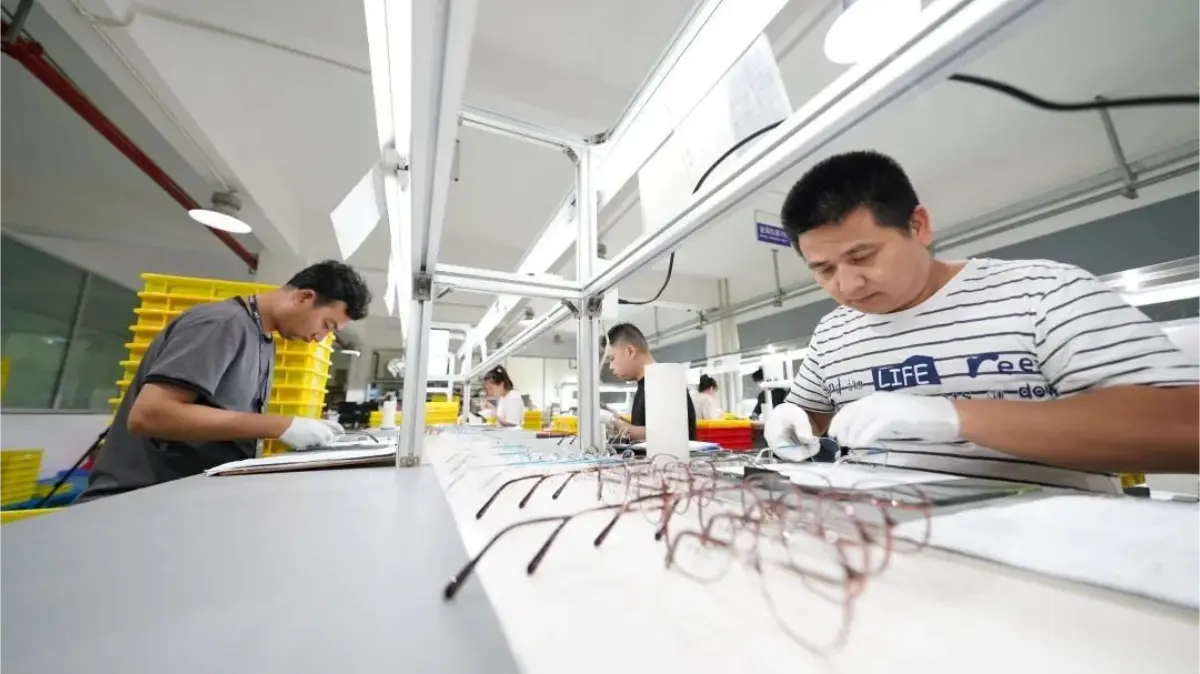
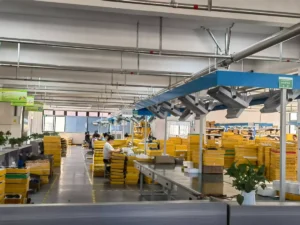
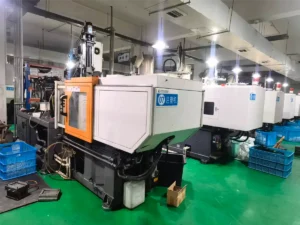
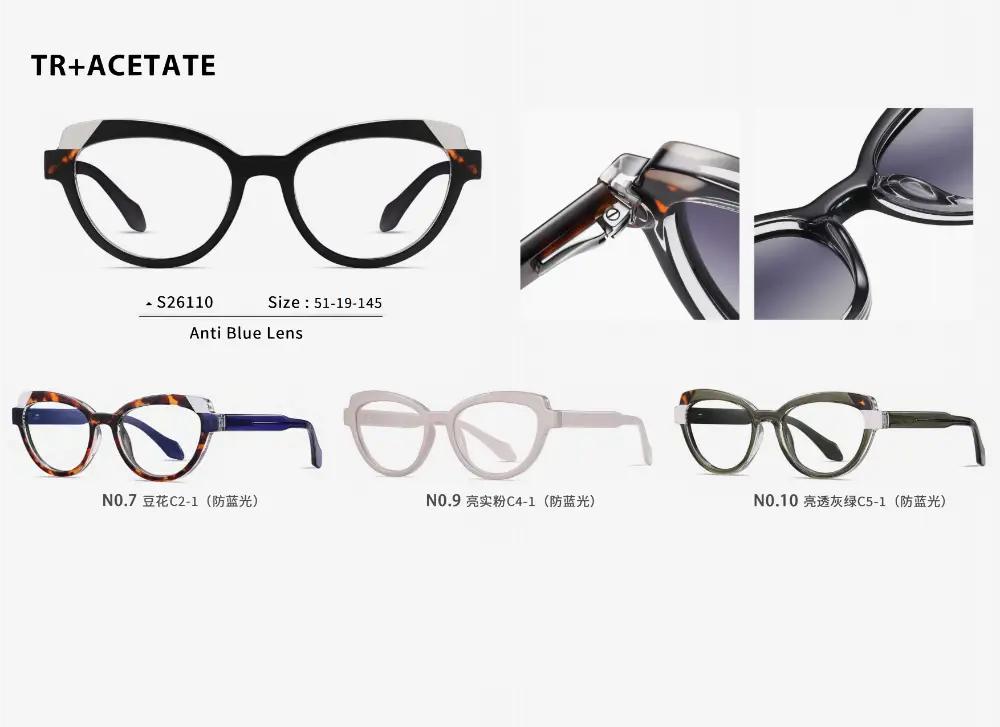
Our modern production facility is located in the heart of the No. 555 Mayu Avenue, Mayu Town, Ruian, Wenzhou, Zhejiang in Ouhai, Wenzhou. We manufacture mid-to-high-end optical frames and sunglasses, engineered strictly to the quality standards demanded by major global brands.
Furthermore, we welcome physical and virtual factory visits from prospective buyers. If you are evaluating suppliers in our region, we are more than happy to introduce you to other reliable factories within our cluster—even where our own product range is not the right fit for your specific requirements. Ultimately, the global industry works better when buyers can source reliably, and we are committed to maintaining Wenzhou’s reputation as a premium production hub that delivers exactly what it claims.
-
Email: mimi@wenzhouframe.com
-
WhatsApp: +86 152 5809 0639
-
Contact us to arrange an inspection or to receive our latest mid-to-high-end product catalog.

6.17_11.webp)