
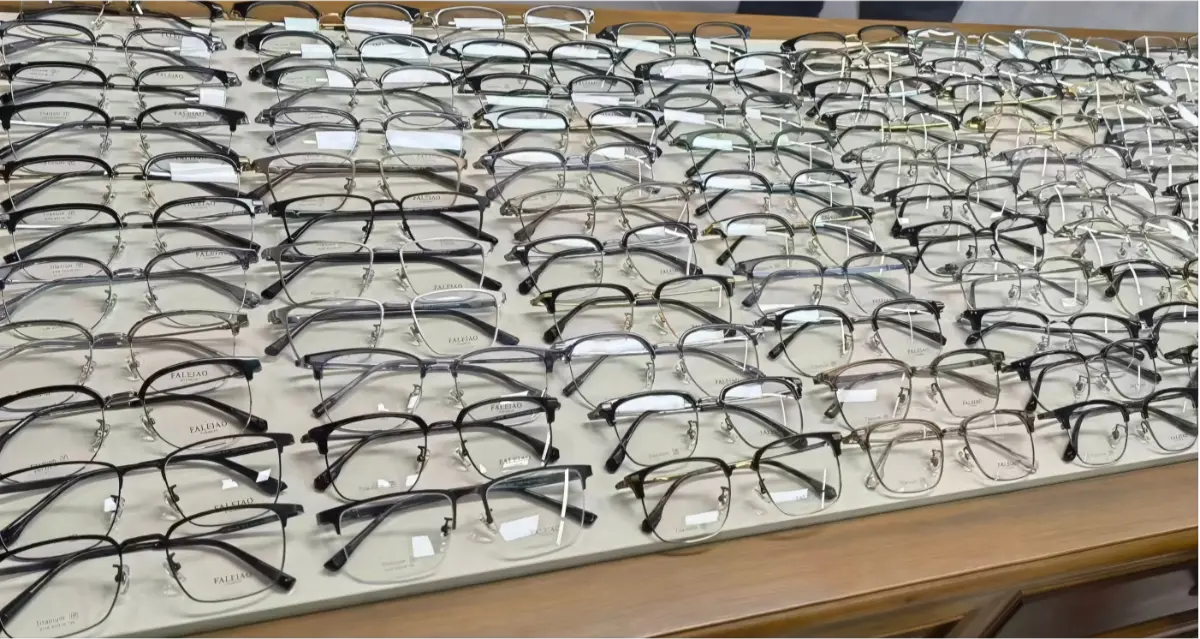
If you’re building an optical eyewear line with a premium positioning — targeting independent opticians, specialty chains, or DTC brands with retail prices above $150 — titanium is almost certainly in your material consideration. The question is which alloy.
Pure titanium and beta-titanium look similar in a catalog or on a website. In practice, they behave differently, serve different market positions, and carry different price tags. Understanding the difference helps you make a choice that serves your brand rather than just checking a box.
What Pure Titanium Actually Is
Pure titanium (commercially pure titanium, Grade 1-4) is elemental titanium with varying levels of purity and strength. In eyewear, it’s valued for three properties: it’s lightweight (10-12g for a complete frame), hypoallergenic (no nickel, no skin reactivity), and highly corrosion-resistant. A pure titanium frame feels noticeably lighter than acetate or standard metal when you hold it, and it holds its finish well over years of daily wear.
The strength grades used in eyewear (typically Grade 1 and Grade 2) prioritize malleability over maximum hardness. This makes them easier to adjust during fitting — a practical advantage for the optical channel where opticians adjust frames to fit individual customers. The tradeoff is that pure titanium is less springy than beta-titanium: it can be bent out of shape and adjusted back, but repeated flexing at the temple hinge will eventually cause metal fatigue.
Pure titanium frames are recognizable by their characteristic matte or satin finish. Polished pure titanium tends to look less refined than polished beta-titanium or stainless steel, so most manufacturers use brushed or satin finishing as the default for pure titanium optical frames.

What Beta-Titanium Actually Is
Beta-titanium is a titanium alloy — primarily titanium with the addition of vanadium, chromium, and other elements that change its mechanical properties. The “beta” refers to the crystal structure of the alloy at room temperature, which gives it a specific set of characteristics.
The most important property of beta-titanium for eyewear is its springiness. Beta-titanium temples flex and return to shape in a way that pure titanium cannot match. This matters for frames that will be fitted, adjusted, and re-adjusted over a multi-year wearing life — which is the use case for prescription optical frames. A beta-titanium frame that gets dropped on a counter, stepped on accidentally, or adjusted multiple times by different opticians will hold up better than a pure titanium frame in the same situation.
Beta-titanium is also more ductile, which allows for thinner temple construction without sacrificing durability. The result is that beta-titanium frames can achieve a lighter overall weight than pure titanium frames despite the alloy having comparable density — because the temples can be made thinner and still maintain spring integrity.
Beta-titanium takes a high polish well, which gives it a more refined aesthetic than pure titanium. If your brand positioning calls for a bright, reflective metal finish — similar to stainless steel or gold plating — beta-titanium is the better vehicle.
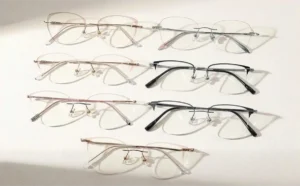
The Decision Framework
The choice between pure and beta-titanium comes down to three questions:
Question 1: Who is your end customer? If your primary channel is independent optical shops where customers wear their frames for two to three years and have them adjusted multiple times, beta-titanium’s durability advantage compounds significantly. If your frames are more fashion-oriented and likely to be replaced more frequently, pure titanium’s cost advantage becomes relatively more attractive.
Question 2: What is your target retail price? Beta-titanium frames command higher retail prices in the premium optical channel — typically $200-450 at retail versus $150-350 for pure titanium in comparable designs. If your brand is positioned to capture that premium, beta-titanium helps justify it. If you’re building for a more accessible premium entry point, pure titanium may be the better fit.
Question 3: What is your design direction? Beta-titanium’s ductility allows for more complex temple designs, particularly for styles with pronounced curves or wraparound geometry. Pure titanium is better suited to clean, minimal profiles with precise edges. The design language of your collection should inform the material choice, not the other way around.
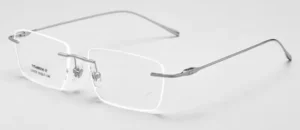
What to Ask Your Supplier
When evaluating titanium frames from any supplier, ask these questions directly:
- What grade of titanium do you use? (Grade 1-2 for pure titanium; specific alloy designation for beta-titanium)
- Can you provide hypoallergenic certification? (particularly relevant for EU market — EN ISO 12870 standard)
- What is the temple spring fatigue life on your beta-titanium frames? (factories with genuine beta-titanium capability can typically provide this data)
- What finishing options are available for each alloy? (brushed, polished, anodized, PVD coating)
If a supplier cannot answer these questions specifically, they’re likely buying from a middle-tier source and don’t have the technical depth to support a quality-conscious optical brand.
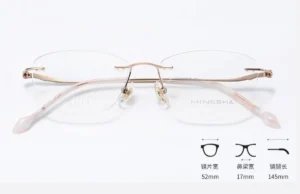
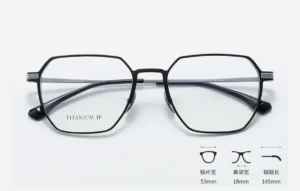
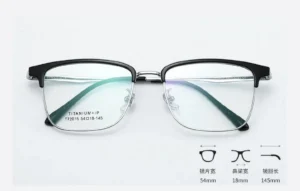
Our Titanium Production
Our factory operates a dedicated titanium fabrication line with in-house capability for both pure titanium and beta-titanium production. We work with documented titanium alloy specifications that we can share with buyers who need to verify material properties for their market requirements.
We produce both materials across a range of optical frame styles, from clean minimal profiles in pure titanium to more complex designs in beta-titanium where spring performance and polish quality are the priority. If you’re deciding between the two materials for your brand, we can supply samples in both so you can evaluate them directly against your customer profile.
- WhatsApp: +86 152 5809 0639 (Mimi)
- Email: mimi@wenzhouframe.com
Wenzhouframe — Established 2015. Wenzhou, China. Pure titanium and beta-titanium optical frames. In-house titanium fabrication. ISCC-certified eco-acetate option. OEM/ODM with NDA. Flexible MOQ for optical buyers.
FAQ
Is beta-titanium more expensive than pure titanium?
Yes, typically 15-30% more at the wholesale level depending on the design complexity and finishing requirements. The premium reflects the more complex fabrication process and the alloy cost.
Can I mix pure titanium and beta-titanium within the same collection?
Yes. Many optical brands use pure titanium for their entry-level premium styles and beta-titanium for their higher-end expressions — it gives them a tiered product structure without maintaining completely separate manufacturing relationships.
Do you offer titanium frames with prescription lens compatibility documentation?
We can provide documentation on frame geometry relevant to lens fitting (DBL, lens width, temple length) and, for EU-bound shipments, documentation supporting EN ISO 12870 compliance. Specific certification requirements vary by market.

6.17_11.webp)