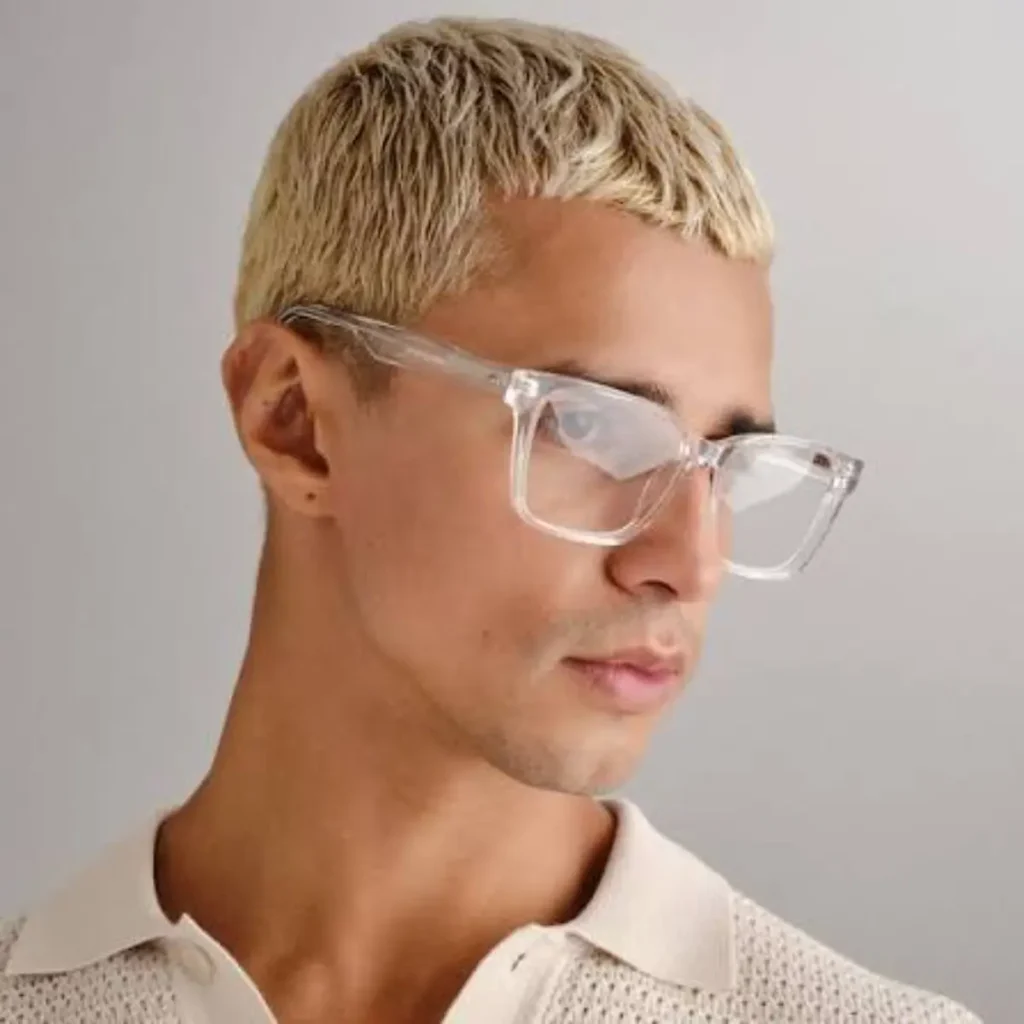
Walk into any optical boutique from Stockholm to Shibuya and you will see the same thing: racks of crystal-clear, translucent, and softly tinted frames pulling attention away from traditional black and tortoiseshell. Transparent frames are not a niche taste anymore. They outsold colored acetate by roughly 300% in key European markets this year.
But behind that minimalist look sits a surprisingly complex supply chain. The difference between a crystal frame that stays clear for three years and one that yellows in six months comes down to material grade, UV stabilizers, and finishing time — things most B2B buyers never think to ask about.
What “Transparent Crystal” Actually Means in Eyewear
The term covers three distinct looks that sell differently depending on your market:
1. Pure Crystal Clear
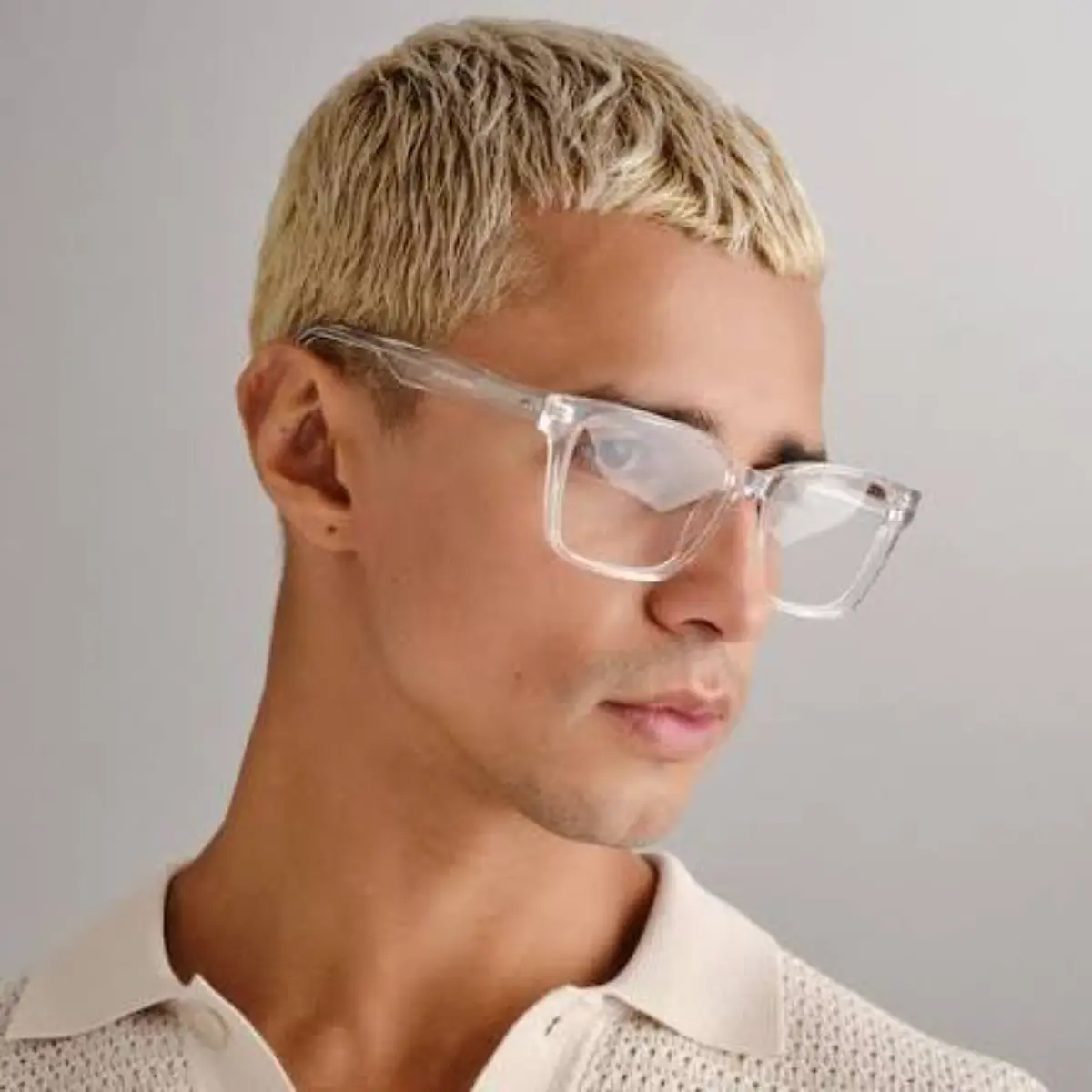
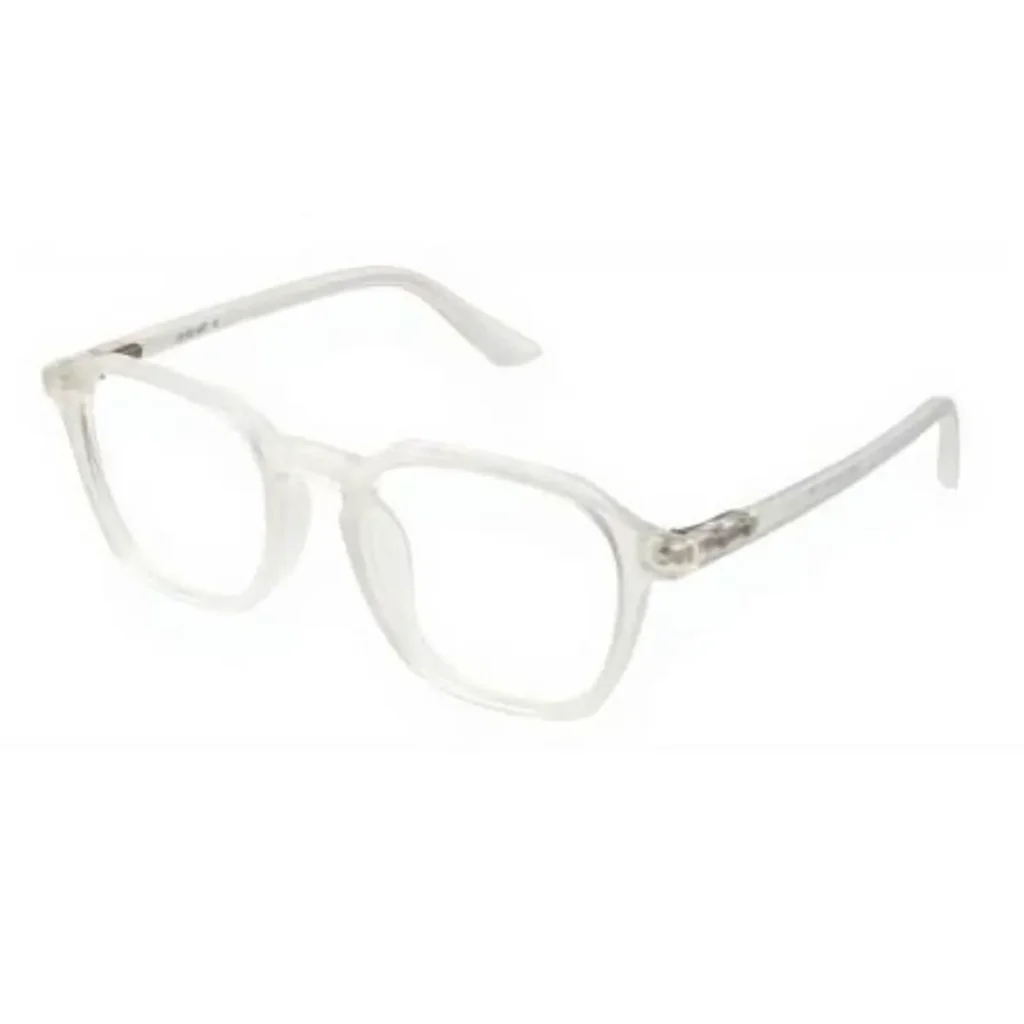
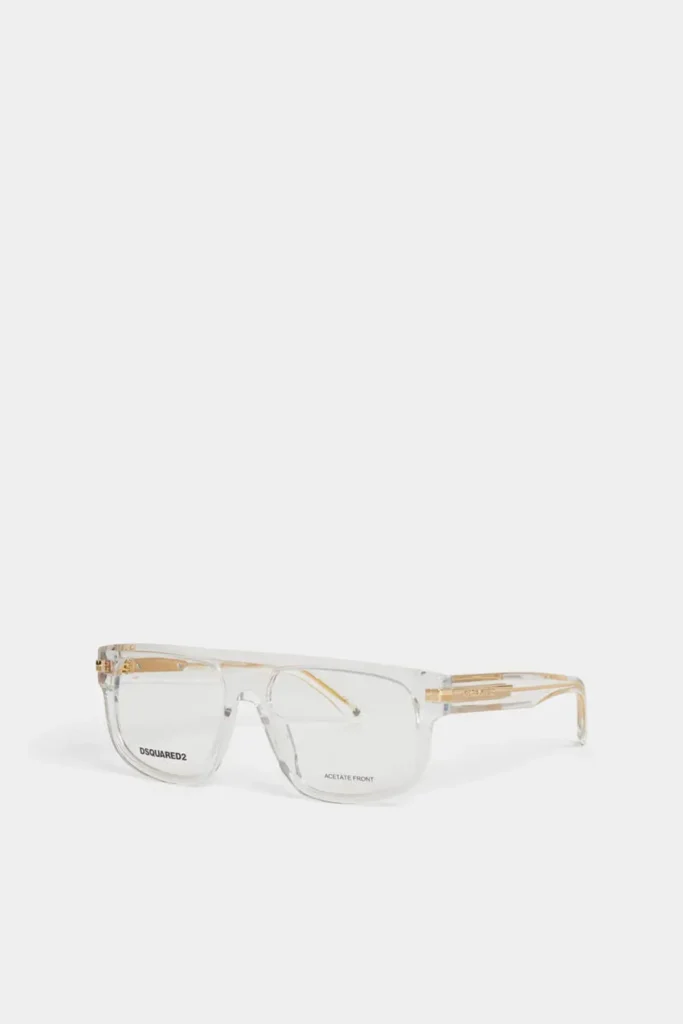
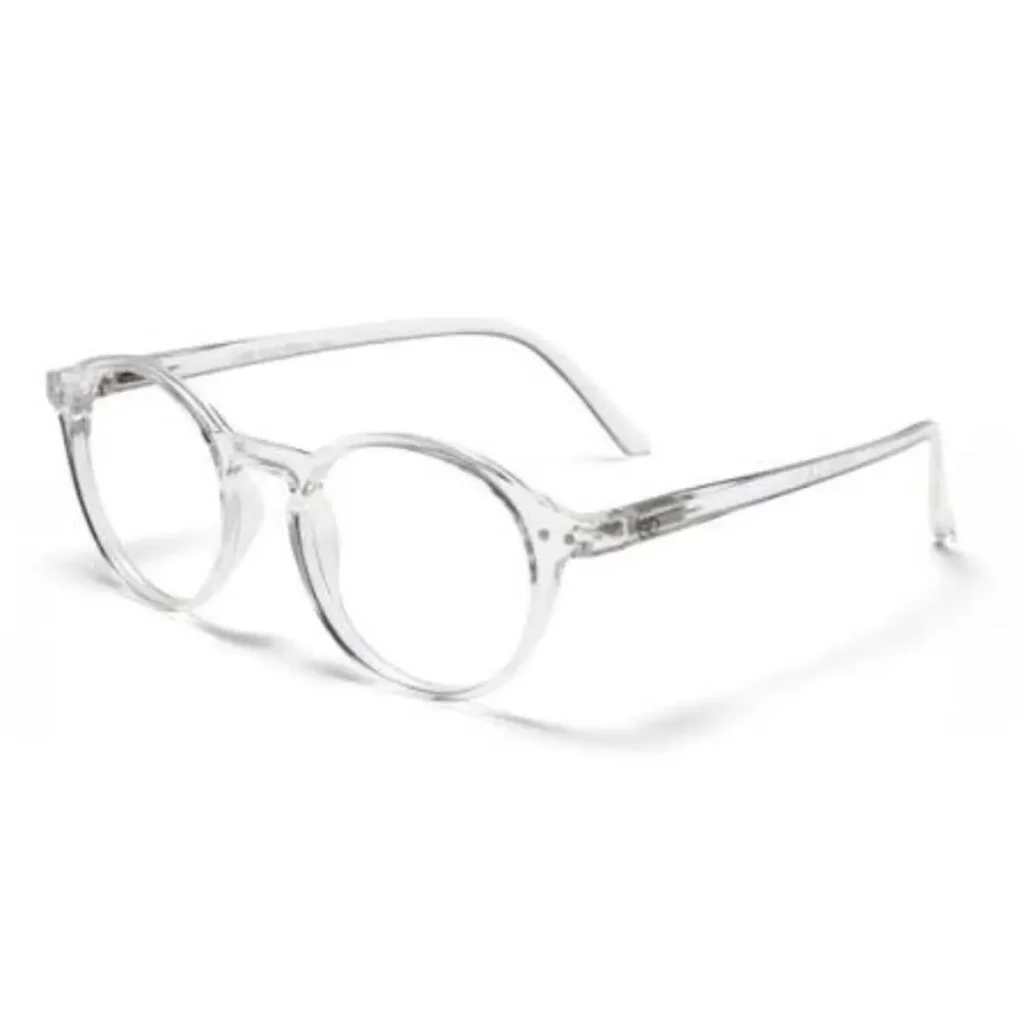
Completely colorless acetate or TR90. The “invisible frame” effect. Hugely popular with professionals who want eyewear that does not compete with their outfit. In 2026, this is the single fastest-growing style in Northern Europe and urban East Asia.
2. Frosted and Milky Translucent
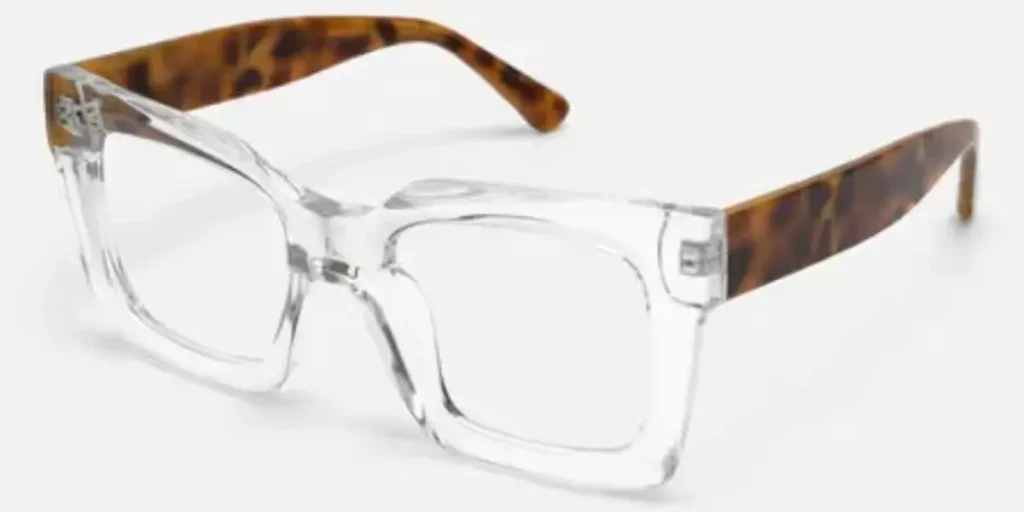
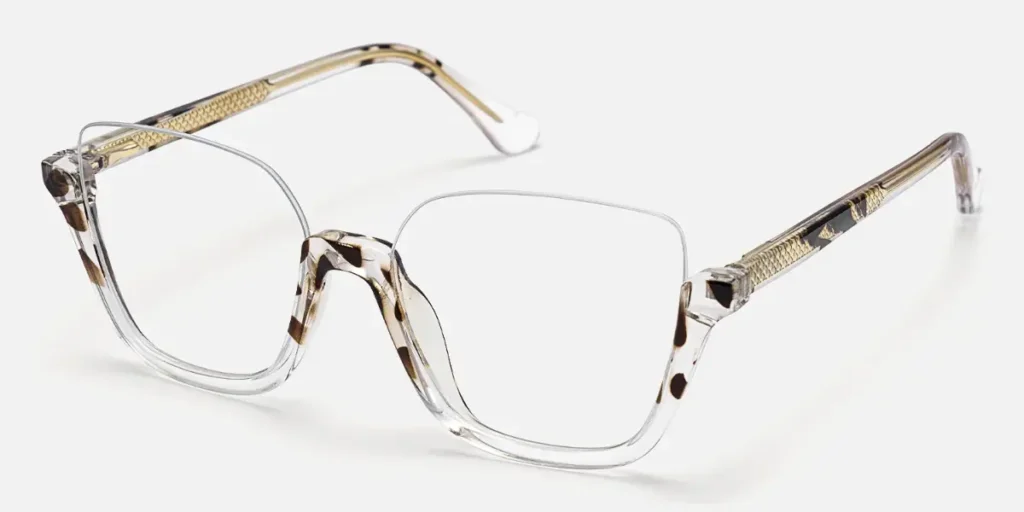
Think champagne, dew pink, smoke gray — barely-there tints with a slight pearlescent finish. This is the Gen Z favorite. The “soft aesthetic” crowd on TikTok and Instagram has made these frames viral. One tortoiseshell-clear hybrid sold 1.31 million units in a single month on social commerce platforms.
3. Crystal with Internal Color
Clear outer layer with a solid or gradient color visible only from the side or cross-section. This is where our TR90 dual-color injection process comes in — the transparent exterior with a colored core creates depth that single-material frames simply cannot match.


Brands That Sell Crystal Frames Best (and What You Can Learn from Them)
Premium End
Oliver Peoples ($350–$550) built an empire on the idea that frames should complement, not overpower, the face. Their clear acetate styles use proprietary Mazzucchelli colorways — custom translucent shades that no other brand has access to. The lesson: in crystal eyewear, color exclusivity matters more than in opaque frames because imperfections in the material are visible.
Gentle Monster ($200–$350) treats crystal acetate like sculpture. Oversized geometric shapes in translucent pink, smoke, and clear. Their retail spaces are art installations. The lesson: crystal frames sell best when the brand story is as transparent as the product.
Mid-Range Volume
Warby Parker ($95–$175) offers crystal options across most of their collection. Their transparent frames use standard Chinese acetate, not Mazzucchelli. At this price point, consumers accept that slight yellowing may appear after 18–24 months. The lesson: transparency about material grade builds trust — Warby Parker does not claim Italian acetate, and their customers do not expect it.
Quay Australia ($60–$90) dominates Gen Z crystal eyewear. Fast fashion pricing, trend-driven color rotations. The lesson: if your market is under 25, crystal is an impulse buy. Speed of design-to-shelf matters more than material longevity.
What These Brands Get Right
Every successful crystal frame brand understands one thing: with transparent material, you cannot hide flaws. A bubble in the acetate, an uneven polish, or a poorly seated hinge is instantly visible. Quality control for crystal frames needs to be tighter than for opaque colors — and your factory needs to know this before production starts.
Material Choices That Make or Break Crystal Frames
Acetate: Mazzucchelli vs. Everything Else
Not all clear acetate is created equal. The four tiers matter more for crystal frames than any other style because defects cannot be hidden by pigment:
- Italian Mazzucchelli 1849 — The gold standard. Colors go all the way through the sheet. UV stabilizers prevent yellowing for 3–5 years. Polishes to a liquid mirror gloss. Used by Persol, Oliver Peoples, and premium Ray-Ban lines. Costs 3–4× standard Chinese acetate.
- Japanese (Takiron, Shinko) — Exceptional durability and shape retention. 80% of original shape maintained after 5 years. Color range is narrower. Costs 2–3× standard Chinese.
- Premium Chinese (JH800 grade) — Close to mid-tier Italian quality. Acceptable color stability. The sweet spot for B2B buyers targeting $40–$80 retail. Gentle Monster uses this tier for many models.
- Economy Chinese (unbranded) — Visible impurities in crystal. Thickness inconsistency. UV yellowing in 12–18 months. Only suitable for promotional or ultra-fast-fashion use. Avoid for any brand-building product.
TR90: The Lightweight Crystal Alternative
For oversized crystal frames, TR90 is often the better engineering choice. Acetate in large sizes gets heavy and can warp in humid climates. TR90 stays stable, weighs 30–40% less, and resists sweat and cosmetics.
The three TR90 tiers again matter enormously for crystal:
- Grilamid TR-90 LX (Swiss EMS) — Crystal clarity that does not yellow. Resistant to cosmetics and skin oils. No plasticizers. This is the only TR90 grade that can genuinely compete with premium acetate for transparent frames. Costs 2–3× standard.
- Certified Standard TR90 — Good flexibility and impact resistance. May show slight yellowing after 2–3 years of UV exposure. Adequate for mid-range crystal frames.
- Generic TR90 — Inconsistent purity. Visible bubbles in crystal. Chemical sensitivity. Not suitable for any transparent application.
Our factory uses EMS Grilamid TR-90 LX for all crystal TR90 models. We also offer the dual-color injection process — a crystal outer layer over a solid or gradient core — that no commodity factory can replicate.
Polycarbonate: The Budget Crystal Option
Optical-grade PC can produce clear frames at the lowest cost. Suitable for safety glasses, children’s frames, and promotional items. Not recommended for brand-building crystal collections because of lower clarity and tendency toward flow marks.
Manufacturing Challenges Specific to Crystal Frames
Transparent frames expose every shortcut. Here is what separates a crystal frame that looks premium from one that looks cheap:
Polishing Time Cannot Be Cut
With black acetate, you can reduce tumbling from 72 hours to 24 hours and most buyers will not notice. With crystal, every scratch, sanding mark, and uneven surface is magnified by the transparency. Our crystal frames go through:
- Stage 1 tumbling: Hardwood media, 24–36 hours
- Stage 2 tumbling: Fine walnut shell media, 24–36 hours
- Hand polishing: Felt wheel + muslin wheel with matched polishing compound
- Post-assembly touch-up: Any scratch from hinge installation is visible and must be re-polished
Total polishing time for crystal: 72–96 hours. Budget factories try to do this in 16–24 hours. The result is a semi-gloss finish instead of liquid mirror clarity. In a crystal frame, the difference is obvious.
Mold Quality Is Everything
For injection-molded crystal TR90 or PC, the mold surface quality directly determines product quality. We use S136 steel molds (Ra ≤ 0.025µm, mirror finish) for all crystal TR90 production. Budget factories use P20 steel (Ra 0.4–0.8µm) — and you can see the parting lines and surface texture through the transparent material.
Read more about how mold steel grade affects quality in our Budget Collections guide.
100% Inspection Is Non-Negotiable
Every crystal frame must be checked under a calibrated light box. Bubbles, inclusions, uneven polish, and hinge seating gaps are all visible. We inspect 100% of crystal frames — not AQL sampling. A single visible defect in a transparent frame is a returned order.
Color Trends in Crystal for 2026–2027
| Trend | Colors | Market | Material |
|---|---|---|---|
| Pure Minimalist | Crystal clear, ice white | Professional / Northern Europe | Mazzucchelli clear / Grilamid LX |
| Soft Pastel | Champagne, dew pink, smoke gray | Gen Z / East Asia | Bio-acetate / TR90 LX |
| Tortoise-Clear Hybrid | Clear with tortoise temple or brow | Mainstream / Global | Two-tone acetate / Dual-injection TR90 |
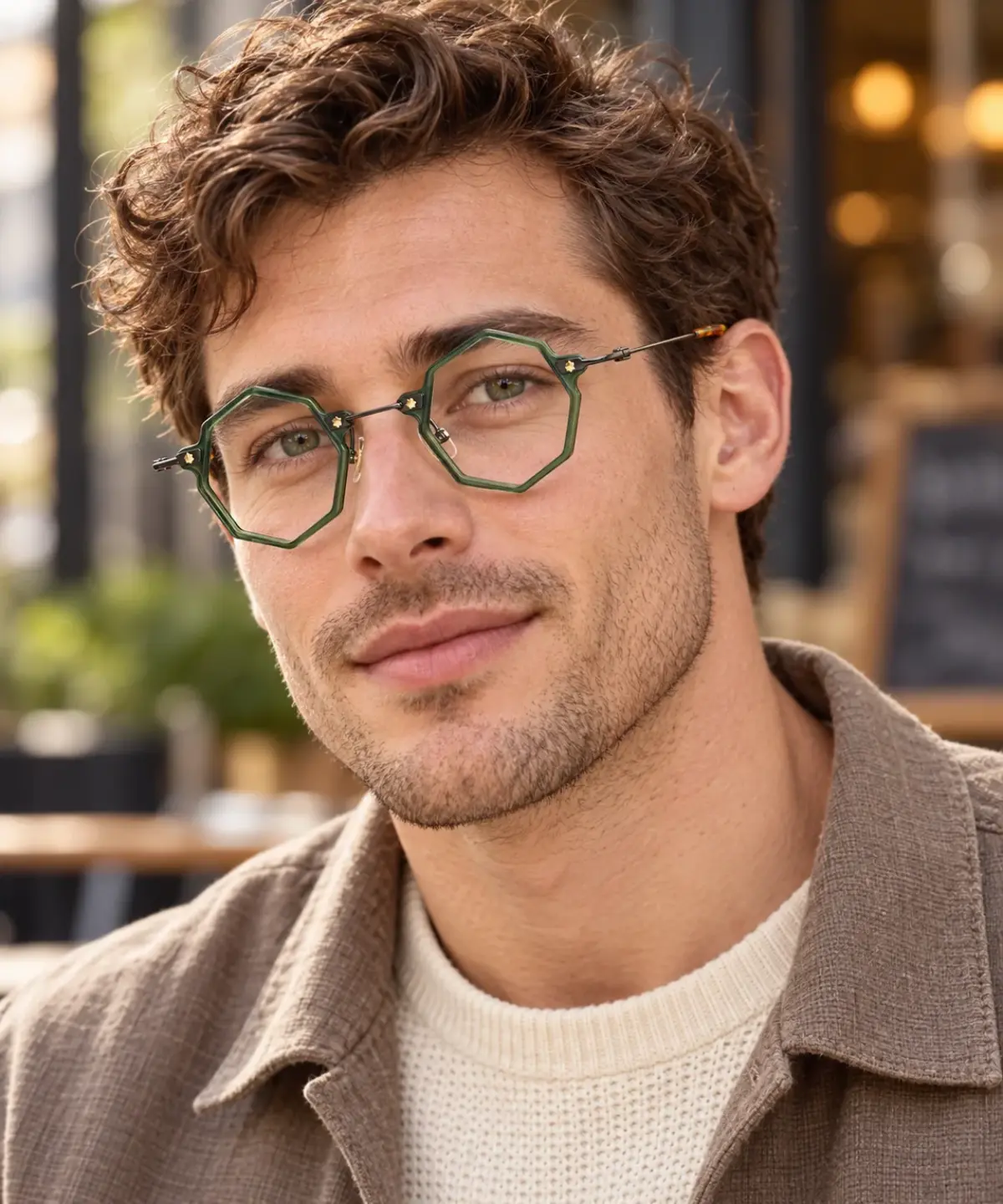
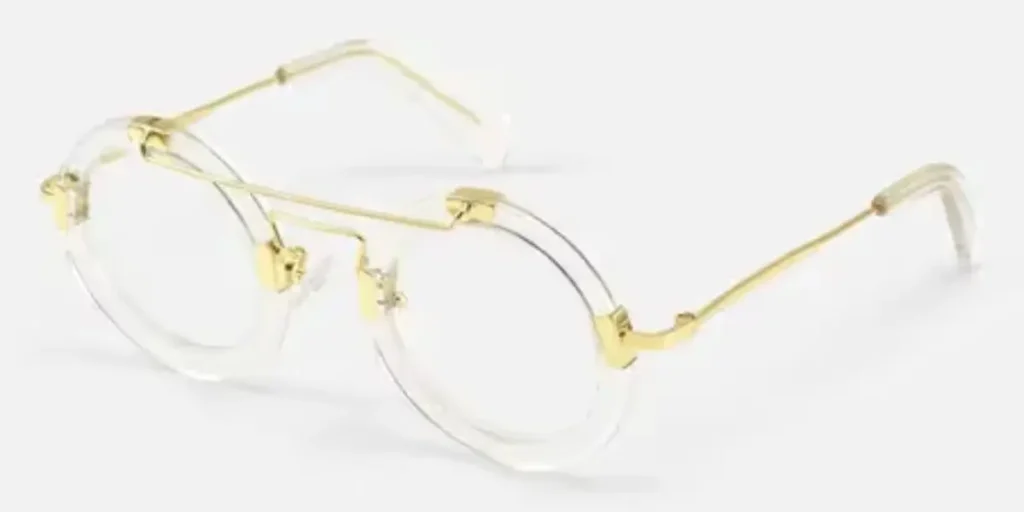
| Geo-Crystal | Hexagonal/octagonal in translucent | Fashion-forward / Urban | Sculpted acetate / Titanium combo |
Sourcing Checklist: Questions Your Factory Must Answer
- What acetate brand and grade are you quoting? (If they cannot name it, it is economy tier.)
- Is UV stabilizer included? What is the expected yellowing timeline?
- How many hours of tumbling and hand polishing are included in the price?
- What mold steel grade is used for TR90/PC crystal models?
- Is inspection 100% or AQL sampling for crystal frames?
- Can you provide gloss unit (GU) readings at 60° for finished crystal frames? (Target: 70–95 GU for premium.)
Wenzhouframe Crystal Collection
We produce crystal frames across all three material options:
- Acetate crystal: Mazzucchelli 1849 or premium Chinese JH800 grade. Your choice based on target retail price.
- TR90 crystal: EMS Grilamid TR-90 LX exclusively. No generic substitutes.
- Dual-color crystal: Our exclusive 3-mold sequential injection — crystal exterior with a colored core. Your customers will think it is acetate. Your margin will tell you it is not.
Every crystal frame goes through our three-pass polishing protocol and 100% light-box inspection. Send us a reference image or tell us your target market and price point — we will prepare a targeted selection with material documentation for your evaluation.
Reach out at mimi@wenzhouframe.com or WhatsApp +86 152 5809 0639.
Related Guides
- TR90 vs Acetate vs Metal: Complete Material Comparison
- Budget Eyewear Collections: Manufacturing Guide
- Premium Eyewear Collections: Craftsmanship Guide
- TR90 Dual-Color Injection: Exclusive Process
- North America Eyewear Market & Brand Analysis
Walk into any optical boutique from Stockholm to Shibuya and you will see the same thing: racks of crystal-clear, translucent, and softly tinted frames pulling attention away from traditional black and tortoiseshell. Transparent frames are not a niche taste anymore. They outsold colored acetate by roughly 300% in key European markets this year.
But behind that minimalist look sits a surprisingly complex supply chain. The difference between a crystal frame that stays clear for three years and one that yellows in six months comes down to material grade, UV stabilizers, and finishing time — things most B2B buyers never think to ask about.
What “Transparent Crystal” Actually Means in Eyewear
The term covers three distinct looks that sell differently depending on your market:
1. Pure Crystal Clear
Completely colorless acetate or TR90. The “invisible frame” effect. Hugely popular with professionals who want eyewear that does not compete with their outfit. In 2026, this is the single fastest-growing style in Northern Europe and urban East Asia.
2. Frosted and Milky Translucent
Think champagne, dew pink, smoke gray — barely-there tints with a slight pearlescent finish. This is the Gen Z favorite. The “soft aesthetic” crowd on TikTok and Instagram has made these frames viral. One tortoiseshell-clear hybrid sold 1.31 million units in a single month on social commerce platforms.
3. Crystal with Internal Color
Clear outer layer with a solid or gradient color visible only from the side or cross-section. This is where our TR90 dual-color injection process comes in — the transparent exterior with a colored core creates depth that single-material frames simply cannot match.
Brands That Sell Crystal Frames Best (and What You Can Learn from Them)
Premium End
Oliver Peoples ($350–$550) built an empire on the idea that frames should complement, not overpower, the face. Their clear acetate styles use proprietary Mazzucchelli colorways — custom translucent shades that no other brand has access to. The lesson: in crystal eyewear, color exclusivity matters more than in opaque frames because imperfections in the material are visible.
Gentle Monster ($200–$350) treats crystal acetate like sculpture. Oversized geometric shapes in translucent pink, smoke, and clear. Their retail spaces are art installations. The lesson: crystal frames sell best when the brand story is as transparent as the product.
Mid-Range Volume
Warby Parker ($95–$175) offers crystal options across most of their collection. Their transparent frames use standard Chinese acetate, not Mazzucchelli. At this price point, consumers accept that slight yellowing may appear after 18–24 months. The lesson: transparency about material grade builds trust — Warby Parker does not claim Italian acetate, and their customers do not expect it.
Quay Australia ($60–$90) dominates Gen Z crystal eyewear. Fast fashion pricing, trend-driven color rotations. The lesson: if your market is under 25, crystal is an impulse buy. Speed of design-to-shelf matters more than material longevity.
What These Brands Get Right
Every successful crystal frame brand understands one thing: with transparent material, you cannot hide flaws. A bubble in the acetate, an uneven polish, or a poorly seated hinge is instantly visible. Quality control for crystal frames needs to be tighter than for opaque colors — and your factory needs to know this before production starts.
Material Choices That Make or Break Crystal Frames
Acetate: Mazzucchelli vs. Everything Else
Not all clear acetate is created equal. The four tiers matter more for crystal frames than any other style because defects cannot be hidden by pigment:
- Italian Mazzucchelli 1849 — The gold standard. Colors go all the way through the sheet. UV stabilizers prevent yellowing for 3–5 years. Polishes to a liquid mirror gloss. Used by Persol, Oliver Peoples, and premium Ray-Ban lines. Costs 3–4× standard Chinese acetate.
- Japanese (Takiron, Shinko) — Exceptional durability and shape retention. 80% of original shape maintained after 5 years. Color range is narrower. Costs 2–3× standard Chinese.
- Premium Chinese (JH800 grade) — Close to mid-tier Italian quality. Acceptable color stability. The sweet spot for B2B buyers targeting $40–$80 retail. Gentle Monster uses this tier for many models.
- Economy Chinese (unbranded) — Visible impurities in crystal. Thickness inconsistency. UV yellowing in 12–18 months. Only suitable for promotional or ultra-fast-fashion use. Avoid for any brand-building product.
TR90: The Lightweight Crystal Alternative
For oversized crystal frames, TR90 is often the better engineering choice. Acetate in large sizes gets heavy and can warp in humid climates. TR90 stays stable, weighs 30–40% less, and resists sweat and cosmetics.
The three TR90 tiers again matter enormously for crystal:
- Grilamid TR-90 LX (Swiss EMS) — Crystal clarity that does not yellow. Resistant to cosmetics and skin oils. No plasticizers. This is the only TR90 grade that can genuinely compete with premium acetate for transparent frames. Costs 2–3× standard.
- Certified Standard TR90 — Good flexibility and impact resistance. May show slight yellowing after 2–3 years of UV exposure. Adequate for mid-range crystal frames.
- Generic TR90 — Inconsistent purity. Visible bubbles in crystal. Chemical sensitivity. Not suitable for any transparent application.
Our factory uses EMS Grilamid TR-90 LX for all crystal TR90 models. We also offer the dual-color injection process — a crystal outer layer over a solid or gradient core — that no commodity factory can replicate.
Polycarbonate: The Budget Crystal Option
Optical-grade PC can produce clear frames at the lowest cost. Suitable for safety glasses, children’s frames, and promotional items. Not recommended for brand-building crystal collections because of lower clarity and tendency toward flow marks.
Manufacturing Challenges Specific to Crystal Frames
Transparent frames expose every shortcut. Here is what separates a crystal frame that looks premium from one that looks cheap:
Polishing Time Cannot Be Cut
With black acetate, you can reduce tumbling from 72 hours to 24 hours and most buyers will not notice. With crystal, every scratch, sanding mark, and uneven surface is magnified by the transparency. Our crystal frames go through:
- Stage 1 tumbling: Hardwood media, 24–36 hours
- Stage 2 tumbling: Fine walnut shell media, 24–36 hours
- Hand polishing: Felt wheel + muslin wheel with matched polishing compound
- Post-assembly touch-up: Any scratch from hinge installation is visible and must be re-polished
Total polishing time for crystal: 72–96 hours. Budget factories try to do this in 16–24 hours. The result is a semi-gloss finish instead of liquid mirror clarity. In a crystal frame, the difference is obvious.
Mold Quality Is Everything
For injection-molded crystal TR90 or PC, the mold surface quality directly determines product quality. We use S136 steel molds (Ra ≤ 0.025µm, mirror finish) for all crystal TR90 production. Budget factories use P20 steel (Ra 0.4–0.8µm) — and you can see the parting lines and surface texture through the transparent material.
Read more about how mold steel grade affects quality in our Budget Collections guide.
100% Inspection Is Non-Negotiable
Every crystal frame must be checked under a calibrated light box. Bubbles, inclusions, uneven polish, and hinge seating gaps are all visible. We inspect 100% of crystal frames — not AQL sampling. A single visible defect in a transparent frame is a returned order.
Color Trends in Crystal for 2026–2027
| Trend | Colors | Market | Material |
|---|---|---|---|
| Pure Minimalist | Crystal clear, ice white | Professional / Northern Europe | Mazzucchelli clear / Grilamid LX |
| Soft Pastel | Champagne, dew pink, smoke gray | Gen Z / East Asia | Bio-acetate / TR90 LX |
| Tortoise-Clear Hybrid | Clear with tortoise temple or brow | Mainstream / Global | Two-tone acetate / Dual-injection TR90 |
| Geo-Crystal | Hexagonal/octagonal in translucent | Fashion-forward / Urban | Sculpted acetate / Titanium combo |
Sourcing Checklist: Questions Your Factory Must Answer
- What acetate brand and grade are you quoting? (If they cannot name it, it is economy tier.)
- Is UV stabilizer included? What is the expected yellowing timeline?
- How many hours of tumbling and hand polishing are included in the price?
- What mold steel grade is used for TR90/PC crystal models?
- Is inspection 100% or AQL sampling for crystal frames?
- Can you provide gloss unit (GU) readings at 60° for finished crystal frames? (Target: 70–95 GU for premium.)
Wenzhouframe Crystal Collection
We produce crystal frames across all three material options:
- Acetate crystal: Mazzucchelli 1849 or premium Chinese JH800 grade. Your choice based on target retail price.
- TR90 crystal: EMS Grilamid TR-90 LX exclusively. No generic substitutes.
- Dual-color crystal: Our exclusive 3-mold sequential injection — crystal exterior with a colored core. Your customers will think it is acetate. Your margin will tell you it is not.
Every crystal frame goes through our three-pass polishing protocol and 100% light-box inspection. Send us a reference image or tell us your target market and price point — we will prepare a targeted selection with material documentation for your evaluation.
Reach out at mimi@wenzhouframe.com or WhatsApp +86 152 5809 0639.