
Packaging serves as the first physical touchpoint between your brand and your customer’s hands. Especially for reading glasses—where consumers often purchase the product as a gift, an impulse buy, or a pharmacy pick-up—packaging directly influences purchase decisions and repeat business.
Packaging Tiers: From Budget to Premium
Basic: Poly Bag + UPC Label
This represents the most stripped-down option. Specifically, factories ship frames in clear poly bags with a barcode label attached.
-
Per-unit packaging cost: $0.05–$0.15
-
Best for: Bulk wholesale orders, warehouse distributors, and private label sellers who repackage the goods anyway.
-
Limitation: This option lacks retail shelf appeal and offers zero brand exposure.
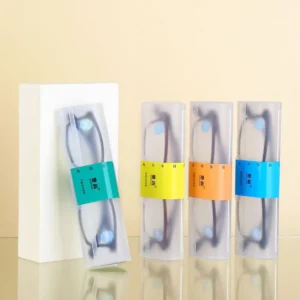
Standard: Soft Pouch or Sleeve
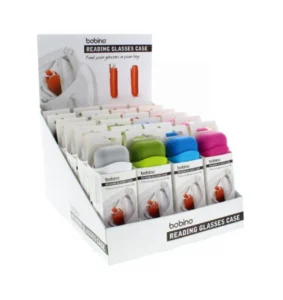
This option utilizes a microfiber or simulated leather pouch, and manufacturers often brand it with a printed logo. In this case, workers either pre-assemble the frames in the pouch or fold them inside.
-
Per-unit packaging cost: $0.30–$0.80
-
Best for: Mid-market retail, pharmacies, optical chains, and general e-commerce.
-
Advantage: It provides utility for consumers because it protects glasses. Furthermore, it offers a reusable, brand-building tool.
Mid-Range: Blister Card / Clamshell
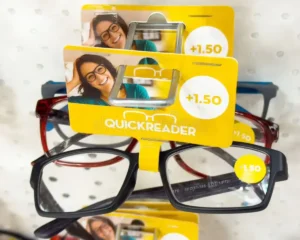
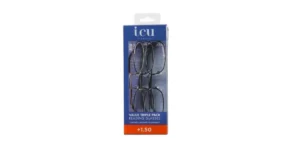
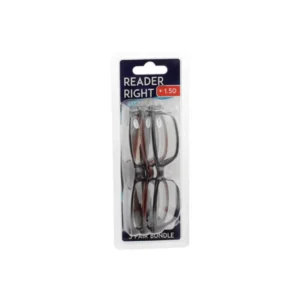
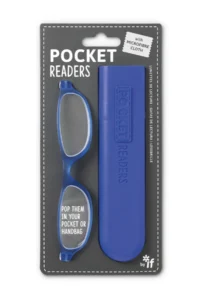
Alternatively, retail brands can mount frames on a printed cardboard backing and seal them in a clear plastic blister or clamshell. This style dominates pharmacies and discount retailers.
-
Per-unit packaging cost: $0.50–$1.20
-
Best for: Retail self-service environments where customers pick items from pegboard displays.
-
Advantage: It delivers high visibility, provides tamper-evident security, and displays clear power range labeling.
-
Disadvantage: However, it raises environmental concerns, presents opening difficulties, and prevents consumers from reusing it.
Premium: Rigid Gift Box
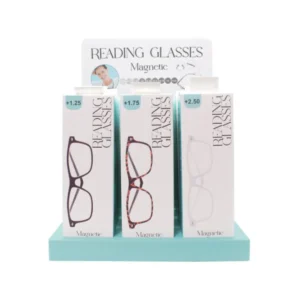
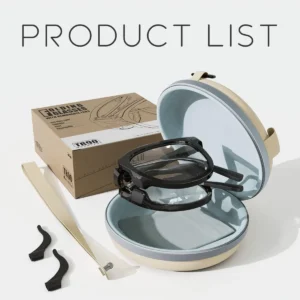
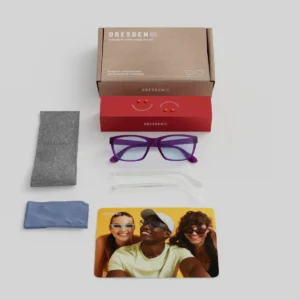
This premium tier features a printed rigid box with a microfiber cleaning cloth, which brands often wrap in tissue or a branded sleeve. Consequently, it sets the “gift-ready” standard for boutique optical stores and department stores.
-
Per-unit packaging cost: $1.00–$3.50
-
Best for: Premium reading glasses brands, optical boutiques, gift shops, and department stores.
-
Advantage: It generates the highest perceived value, offers a gift-ready presentation, and leaves a strong brand impression.
How Packaging Affects Your Retail Margin
Packaging cost compounds quickly at scale. To illustrate, on a 10,000-unit order, the difference between basic packaging ($0.10/unit) and premium packaging ($2.50/unit) amounts to $24,000.
Therefore, you must ask whether premium packaging generates enough additional retail margin to justify the cost. The answer is usually yes when:
-
Your target retail price sits at $25 or above.
-
You sell through boutique, gift, or specialty retail channels.
-
Your customers buy reading glasses as gifts.
-
You compete directly against mass-market brands on a retail shelf.
Custom Packaging Elements to Consider
-
Box design: You can customize dimensions, print the interior/exterior, emboss the logo, or apply foil stamping.
-
Microfiber cloth: Printing your logo on the cloth creates a double benefit as a brand reminder and a practical item.
-
Cleaning solution: Brands commonly include a small spray bottle in pharmacy reading glass gift sets.
-
Power range card: Printing a clear diopter chart inside the box helps gift buyers who do not know the recipient’s exact prescription.
-
UPC/EAN barcodes: Retail distribution requires these; hence, you must ensure your factory can print GS1-compliant barcodes.
Regulatory Labeling Requirements by Market
You must not overlook mandatory labeling because rules vary by destination country:
-
USA: The FDA regulates eyewear labeling. Specifically, regulations state that you must label “non-prescription” reading glasses as such. In addition, retail distribution requires a UPC barcode.
-
EU: Authorities require a CE marking on packaging, the manufacturer’s name and address, and the correct product classification.
-
Australia: The Therapeutic Goods Administration (TGA) enforces specific requirements for therapeutic claims, and the standard AS/NZS ISO 12870 applies here.
Packaging and MOQ: What to Expect
Custom packaging typically requires higher MOQs than the frames themselves. For example:
-
Custom printed boxes: 500–2,000 units minimum per design.
-
Custom microfiber pouches/cloths: 300–1,000 units.
-
Custom UPC labels: Printers can often produce these at low quantities digitally.
Wenzhouframe’s Packaging Services
Ultimately, we offer complete packaging solutions for your reading glasses orders. We provide standard polybag and pouch options for budget lines, supply custom rigid boxes and gift sets for premium brands, and handle full regulatory labeling for US, EU, and Australian markets. In terms of pricing, we quote MOQ requirements and per-unit costs together with your frame order. Contact us today to request a packaging catalog with current options and pricing.